101st Airborne Transfers Joint Task Force Southern Border Authority to 1st Armored Division
The 101st Airborne Division transferred authority of the Joint Task Force Southern Border mission to the 1st Armored Division on June 2 at Fort Huachuca, Arizona. The handoff shifts operational command of the Defense Department’s southern border support mission to a new headquarters element effective immediately.
 yna.co.kr
FORT HUACHUCA, Ariz. — The 101st Airborne Division transferred authority of the Joint Task Force Southern Border mission to the 1st Armored Division during a ceremony held here on June 2, according to a U.S. Central Command release.
The transfer affects the entire Joint Task Force Southern Border command structure, which coordinates Department of Defense support to U.S. Customs and Border Protection along the U.S.-Mexico border. The 1st Armored Division now assumes full operational responsibility for the mission that the 101st Airborne Division had led since its own assumption of command.
The change takes effect immediately upon the June 2 transfer-of-authority ceremony. Prior to the ceremony the 101st Airborne Division headquarters held command; afterward the 1st Armored Division headquarters assumed that role with no gap in authority.
Downstream, the 1st Armored Division must now execute all current task-force orders, maintain existing support relationships with Customs and Border Protection, and sustain the deployed force posture already in place. Any future adjustments to troop levels, mission scope, or rules of engagement will route through the new headquarters.
Congress and the Pentagon will receive the next routine operational update from the 1st Armored Division instead of the 101st Airborne Division.
This marks the latest routine rotation of headquarters elements for the southern border support mission. The Defense Department has periodically shifted lead divisions for the task force since its establishment, maintaining continuous command while rotating fresh leadership every 9 to 12 months.
Coverage spread
Substrate’s article above is written from the primary record. Below: how mainstream outlets reported the same event.
No mainstream coverage of this story has surfaced yet.
Transparency
Reported by a single outlet. This score reflects source tier and factual specificity — corroboration is limited with one source.
Related Stories
 abcnews.go.com
White House Correspondents’ Association Reschedules Annual Dinner for July 2026 After April Assassination Attempt on Trump
The White House Correspondents’ Association will hold its annual dinner on July 24, 2026. The date replaces the April 25 event that ended early after a gunman disrupted proceedings attended by President Trump.
 jpost.com
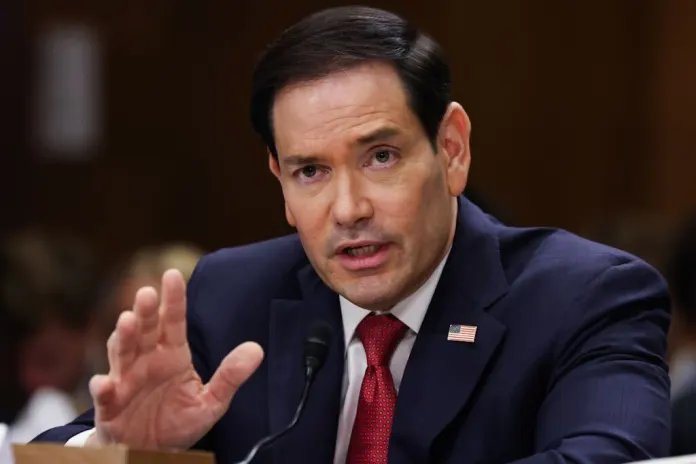
Secretary of State Rubio Testifies Before Senate on Iran War and Afghan Relocation Plans
Marco Rubio appeared before the Senate Foreign Relations Committee on Tuesday for his first testimony since the Iran war began, addressing U.S. foreign policy and Afghan relocation plans.
 Washington Examiner
Booker and Rubio Spar Over Iran’s Economy and U.S. Policy at Senate Hearing
Sen. Cory Booker told Secretary of State Marco Rubio that President Trump’s handling of the conflict that began in February has left Iran in a stronger negotiating position. Rubio countered that Iran’s economy is under severe strain from the U.S. blockade of the Strait of Hormuz.