Hungary Election: Opposition Led by Péter Magyar Defeats Viktor Orbán's Fidesz Party
In Hungary's national election, Péter Magyar's Tisza party secured a victory over Prime Minister Viktor Orbán's Fidesz, achieving a record-high voter turnout. The opposition gained a two-thirds majority in parliament, enabling constitutional amendments. Orbán conceded the defeat, marking the end of his 16-year rule.
 csmonitor.com
Hungary held national elections on April 12, 2026, resulting in the defeat of Prime Minister Viktor Orbán's Fidesz party by the opposition Tisza party led by Péter Magyar. Polls closed three hours before Magyar addressed supporters in Budapest, declaring victory and stating that Hungarians had replaced the Orbán system. The election saw a national record for voter turnout.
Magyar, a former Orbán loyalist who turned against him two years ago, led Tisza to a decisive win despite Fidesz's advantages, including rewritten election rules and control over media since 2010. Tisza secured a two-thirds legislative majority, sufficient to amend the constitution and reform bodies such as the Constitutional Court.
Orbán appeared on screen to concede, thanking his voters and acknowledging the defeat.
Election Context and Campaign The campaign featured competing claims of foreign influence.
Orbán portrayed the opposition as aligned with Brussels and Ukrainian President Volodymyr Zelensky's war aims, while emphasizing economic stability. Magyar promised to recover EU funds frozen due to rule-of-law issues, introduce a wealth tax, and hold Fidesz officials accountable for alleged corruption.
Independent polls showed Tisza with a lead, though concerns persisted about Fidesz's ability to mobilize voters or declare an emergency.
No civil unrest occurred despite warnings from Orbán's aides about potential violence by Tisza agents, which opposition representatives dismissed as pretexts for crackdown. A Fidesz mayor in a southern Hungarian village publicly supported the opposition on election day, citing European values and opposition to Russian influence.
He declared, "Fellow Hungarians, countrymen: We have done it. Together we have replaced the Orbán system.
Broader Implications Orbán's government had received support from the United States and Russia, including recent endorsements and economic assistance offers from the US.
The Kremlin stated it wishes to maintain contacts with Hungary's new government after the transition. Magyar echoed crowd chants by saying, "Russians, go home," in his victory speech.
Magyar vowed to build a functioning and humane home, with no consequences for past actions. The election outcome positions Hungary to undo elements of the system that controlled media, civil society, and public contracts. Voters expressed relief and optimism.
An 18-year-old first-time voter in Budapest stated that the result made it feel like there was a future again. A warehouse worker told reporters that Hungarians are stubborn and do not give up on each other.
Story Timeline
5 events- April 12, 2026 — evening
Péter Magyar addressed supporters in Budapest, declaring victory for Tisza party.
3 sourcesThe Atlantic · csmonitor.com · @sentdefender - April 12, 2026 — post-polls
Viktor Orbán conceded defeat in a televised appearance, drowned out by boos at opposition gathering.
2 sourcesThe Atlantic · csmonitor.com - April 12, 2026 — election day
National elections in Hungary achieved record-high voter turnout, leading to Fidesz loss.
3 sourcesThe Atlantic · csmonitor.com · @sentdefender - April 12, 2026 — morning
A Fidesz mayor in southern Hungary declared support for opposition on social media.
1 sourceThe Atlantic - Post-election
Kremlin voiced desire to continue contacts with Hungary's new government after transition.
1 source@sentdefender
Potential Impact
- 01
Tisza party amends constitution and reforms Constitutional Court with new majority.
- 02
New government imposes wealth tax and prosecutes former Fidesz officials for corruption.
- 03
Media regulations change under Tisza control, reducing prior government influence.
- 04
Hungary recovers frozen EU funds by addressing rule-of-law concerns.
- 05
Hungary shifts foreign policy away from Russian alignment toward European integration.
- 06
Kremlin maintains diplomatic contacts with post-transition Hungarian government.
Multi-source corroboration verifies facts, not framing. This panel scores the Substrate rewrite you just read (top score) and the raw source bundle it came from. A positive delta means the rewrite stripped framing from the sources; a negative or zero delta means our neutralizer let some through.
Orbán's defeat reflects a narrow, protest-driven vote amid economic woes, preserving core Fidesz policies and signaling caution for radical EU-aligned changes.
- Valence skewnotable“"replaced the Orbán system"; Fidesz's "advantages, including rewritten election rules"”systematically negative adjectives for Orbán/Fidesz vs positive for MagyarAdjectives and adverbs systematically slant toward one interpretation even though the underlying facts are neutral.
- Omitted counterpointnotable“No mention of potential benefits of Orbán's Russia ties or Fidesz economic policies”ignores reasonable pro-Orbán interpretations of foreign influence claimsA reasonable alternative reading of the facts isn't represented anywhere in the source bundle.
- Loaded metaphorminor“"replaced the Orbán system"; "Russians, go home"”narrative framing of Orbán era as replaceable system and anti-Russian chantSources share the same narrative framing verbs (“sow doubt”, “spark backlash”) — a sign of a shared template, not independent reporting.
- Selective sourcingminor“Quotes from Tisza supporters and opposition mayor; no Fidesz voices beyond concession”opposition viewpoints dominate without balancing Fidesz perspectivesEvery quoted expert shares one viewpoint; no counter-expert is given meaningful space.
Transparency Panel
Related Stories
 Nbc News
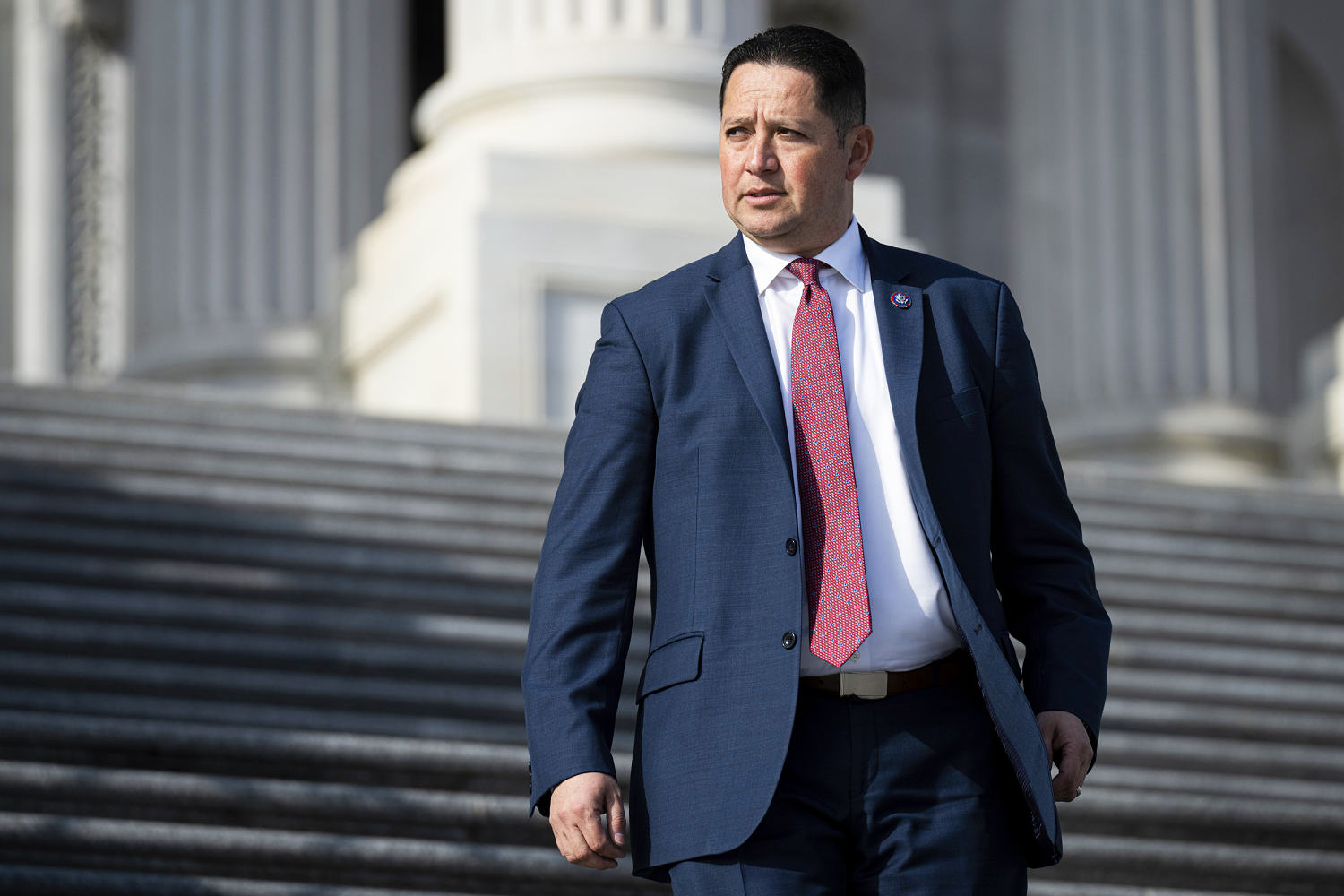
Rep. Tony Gonzales Announces Retirement from Congress Amid Ethics Probe Over Staffer Relationship
Rep. Tony Gonzales, R-Texas, announced on Monday that he will retire from Congress following a House Ethics Committee probe into his relationship with a former staffer who died by suicide. The announcement follows his decision last month to drop his re-election bid. Separately, R…
 reason.com
US Imposes Blockade on Strait of Hormuz Amid Tensions with Iran
President Trump has ordered a blockade of the Strait of Hormuz, with the measure coming into force as the United States blocks vessels doing business with Iran. Trump warned that Iranian fast attack ships approaching the blockade will be eliminated. TotalEnergies CEO Patrick Pouy…
 The Washington Post
Brazil's Former Intelligence Chief Alexandre Ramagem Detained by ICE in the United States
Alexandre Ramagem, Brazil's former intelligence agency chief and congressman, was arrested by U.S. Immigration and Customs Enforcement agents in Orlando. He had fled Brazil after his conviction for involvement in an alleged coup attempt with former President Jair Bolsonaro. The d…