Cuban President Reiterates Pledge to Defend Against Hypothetical US Invasion
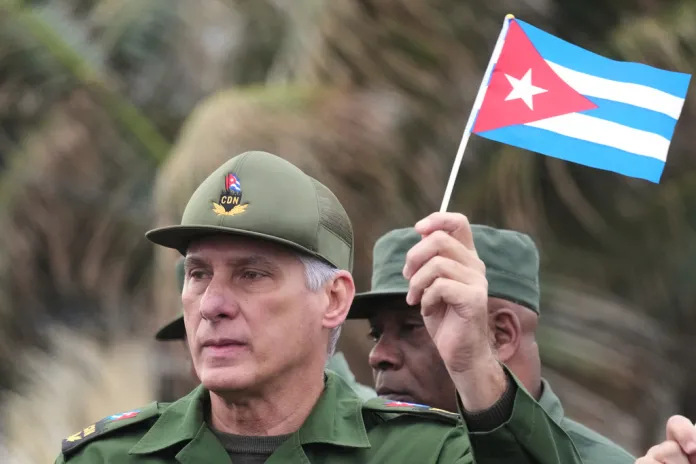
Cuban President Miguel Díaz-Canel stated on Sunday that he is prepared to give his life for the revolution in response to potential threats from the US government. He described such threats as part of US rhetoric during his first interview on American television. The comments highlight ongoing tensions between Cuba and the United States.
 Washington Examiner
Cuban President Miguel Díaz-Canel addressed potential threats from the United States during an interview on Sunday. He reiterated a commitment to resist a hypothetical US invasion, stating that he is ready to give his life for the revolution. The interview marked his first appearance on American television.
Díaz-Canel noted that threats are evident and form part of the rhetoric from the US government. This statement comes amid historical tensions between the two nations, which have included economic sanctions and diplomatic strains dating back decades. The US has maintained an embargo on Cuba since 1960, affecting trade and travel.
Historical Context of US-Cuba Relations Relations between the US and Cuba have been strained since the Cuban Revolution in 1959, which led to the establishment of a socialist government.
The US broke diplomatic ties in 1961 and has since imposed various restrictions. Recent years have seen fluctuations in policy, with periods of normalization followed by renewed pressures. The president's remarks underscore Cuba's defensive posture against perceived external threats.
Such statements aim to rally domestic support and signal resolve to the international community. No specific invasion plans have been announced by the US government.
Implications for Regional Stability These comments occur against a backdrop of global geopolitical shifts, including discussions on migration, security, and hemispheric relations.
Affected parties include Cuban citizens, who face economic challenges partly linked to US policies, and US interests in the region. Future diplomatic engagements could influence the trajectory of bilateral ties. The interview provides insight into Cuba's leadership perspective on foreign policy.
Observers will monitor how these statements impact ongoing dialogues or escalations. As of the current date, no immediate actions have been reported in response.
Story Timeline
2 events- Sunday, 2026 (approximate)
Cuban President Miguel Díaz-Canel gave his first interview on American television, pledging to fight against a hypothetical US invasion.
1 sourceWashington Examiner - Ongoing since 1960
US has maintained an economic embargo on Cuba, contributing to bilateral tensions.
1 sourceWashington Examiner
Potential Impact
- 01
Statements may heighten diplomatic scrutiny between US and Cuba officials.
- 02
Regional discussions on security and migration might intensify.
- 03
Cuban domestic support could strengthen in response to perceived external threats.
Multi-source corroboration verifies facts, not framing. This panel scores the Substrate rewrite you just read (top score) and the raw source bundle it came from. A positive delta means the rewrite stripped framing from the sources; a negative or zero delta means our neutralizer let some through.
The Cuban leader's remarks underscore national sovereignty and determination to defend against external interference, reflecting routine diplomatic posturing amid longstanding tensions.
- Lede misdirectionnotable“TITLE: Cuban President Reiterates Pledge...; lede focuses on Díaz-Canel's interview and statement”Foregrounds messenger's reiteration over core event of ongoing US-Cuba threatsThe headline leads with who shared, posted, or reacted to the event rather than the substantive event itself — burying the actual news behind the messenger.
- Valence skewminor“Cuba's 'defensive posture against perceived external threats'; US 'rhetoric' and 'embargo affecting trade'”Slightly sympathetic framing of Cuba's resolve versus US actionsAdjectives and adverbs systematically slant toward one interpretation even though the underlying facts are neutral.
- Anonymous speculationminor“'Observers will monitor how these statements impact...'”Vague unnamed observers introduce speculative monitoring angleUnnamed analysts, experts, or critics used to inject predictions or negative-valence claims that aren't sourced to named individuals.
Transparency Panel
Related Stories
 Washington Examiner
Rep. Eric Swalwell Denies Sexual Misconduct Allegations Amid California Governor Campaign
Rep. Eric Swalwell, a Democratic congressman from California, faces allegations of sexual misconduct from four women, including a claim of rape by a former staffer. Swalwell has denied the accusations as false and intends to continue his bid for governor in 2026. Democratic colle…
 Ed (supergolfdude) / Wikimedia (CC BY-SA 2.0)
Rory McIlroy Wins Second Masters Title with Focused Approach in Final Round
Rory McIlroy captured his second green jacket at the Masters by maintaining a steely focus during the final round paired with Cam Young. The two players, tied at 11-under entering Sunday, had limited interaction as McIlroy held off challengers to finish at 12-under. Scottie Schef…
 Elgaard / Wikimedia (CC BY-SA 3.0)
Clashes Intensify in Southern Lebanese Town Ahead of Israel-Lebanon Talks
Fierce fighting occurred in the southern Lebanese town of Bint Jbeil as Israeli troops encircled the area and Hezbollah militants responded with rockets and artillery. The clashes escalated over the past week following a temporary truce between Iran and the United States. Lebanon…