US Government Interest Payments Reach 18% of Revenue in Fiscal Year 2025
The US government allocated 18 cents of every dollar of revenue to interest expenses in Fiscal Year 2025, the highest level since the 1990s. This figure represents a tripling of interest expense as a percentage of revenue since 2015. Projections from the Congressional Budget Office indicate continued increases in these costs.
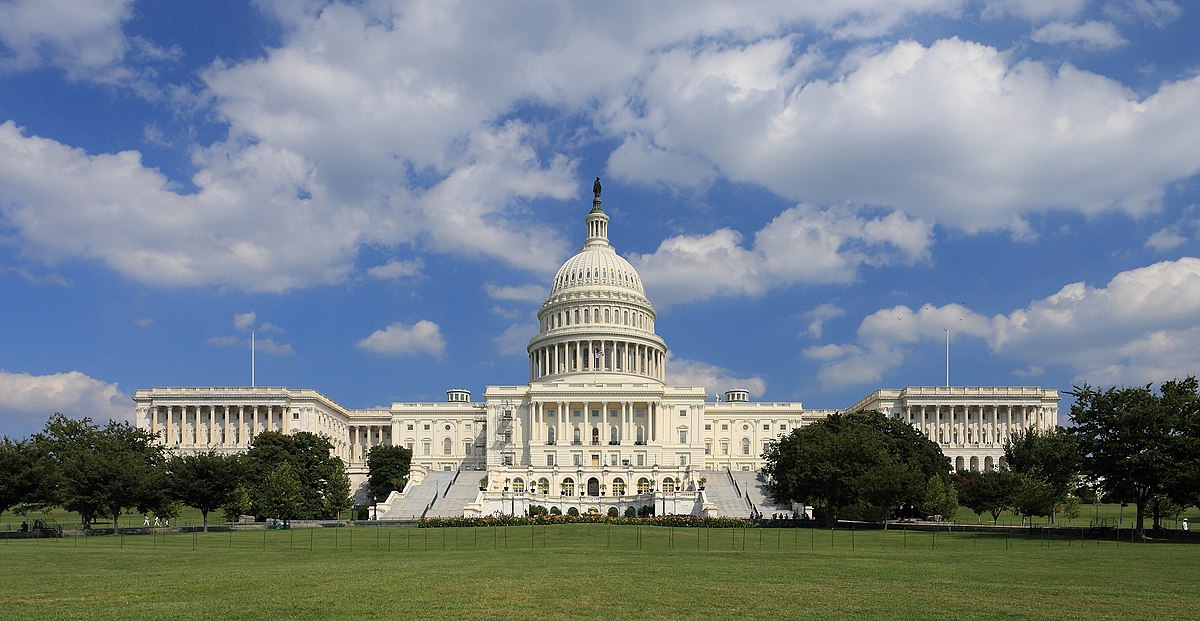 Architect of the Capitol / Wikimedia (Public Domain)
Background on Federal Debt Trends
Interest payments on this debt have become a significant portion of the federal budget. The tripling to 18% highlights the impact of higher borrowing and elevated rates following monetary policy adjustments.
These projections account for expected increases in federal debt and potential changes in interest rates.
Policymakers face decisions on spending, taxation, and debt management to address these trends. Affected parties include taxpayers, who bear the cost through revenue allocation, and investors holding US Treasury securities.
Monitoring economic indicators will be essential for assessing further developments.
Story Timeline
3 events- Fiscal Year 2025
US government spent 18% of revenue on interest expenses, highest since 1990s.
1 source@KobeissiLetter - Since 2015
Interest expense as percentage of revenue tripled from prior levels.
1 source@KobeissiLetter - Projected future
Congressional Budget Office projects continued rise in interest costs.
1 source@KobeissiLetter
Potential Impact
- 01
Higher interest payments may reduce funds available for other federal programs.
- 02
Increased debt servicing could influence future tax or spending policies.
- 03
Rising costs might affect investor confidence in US Treasury securities.
- 04
Projections could prompt congressional debates on fiscal adjustments.
Transparency Panel
Related Stories
 Semafor
US Energy Secretary Sees Aggressive Timeline for Oil Prices to Decline by Summer
US Energy Secretary Chris Wright stated that a decline in oil and gas prices by this summer represents an aggressive timeframe. His comments followed President Donald Trump's remark that gas prices could rise before midterm elections. Separately, Chinese industrial profits rose 1…
 Washington Examiner
Qantas Airways Cuts Domestic Capacity Amid Surging Fuel Costs from Iran War
Qantas Airways has reduced its domestic flight capacity due to sharply increased fuel costs linked to the war in Iran. German officials announced a temporary cut in gasoline and diesel duties to ease consumer impacts. Protests over high fuel prices have erupted in Ireland, blocki…
 Ballota / Wikimedia (CC BY-SA 4.0)
USS George H.W. Bush Carrier Strike Group Sails Around Africa to Avoid Houthi-Controlled Waters
The USS George H.W. Bush and its escorts are taking an extended route around the southern tip of Africa to reach the Persian Gulf. This path bypasses the Strait of Gibraltar, the Mediterranean Sea, and the Red Sea, including the Bab el-Mandeb Strait. The decision avoids areas con…