science
50 Reefs+ Study Maps 64,000 Square Miles of Climate-Resilient Coral Reefs
New research identifies reefs across 71 countries that may survive future warming. Only 28 percent currently have formal protection.
 Inside Climate News
Audio version
Tap play to generate a narrated version.
Developing·Limited corroboration so far. This page will refresh as more sources emerge.
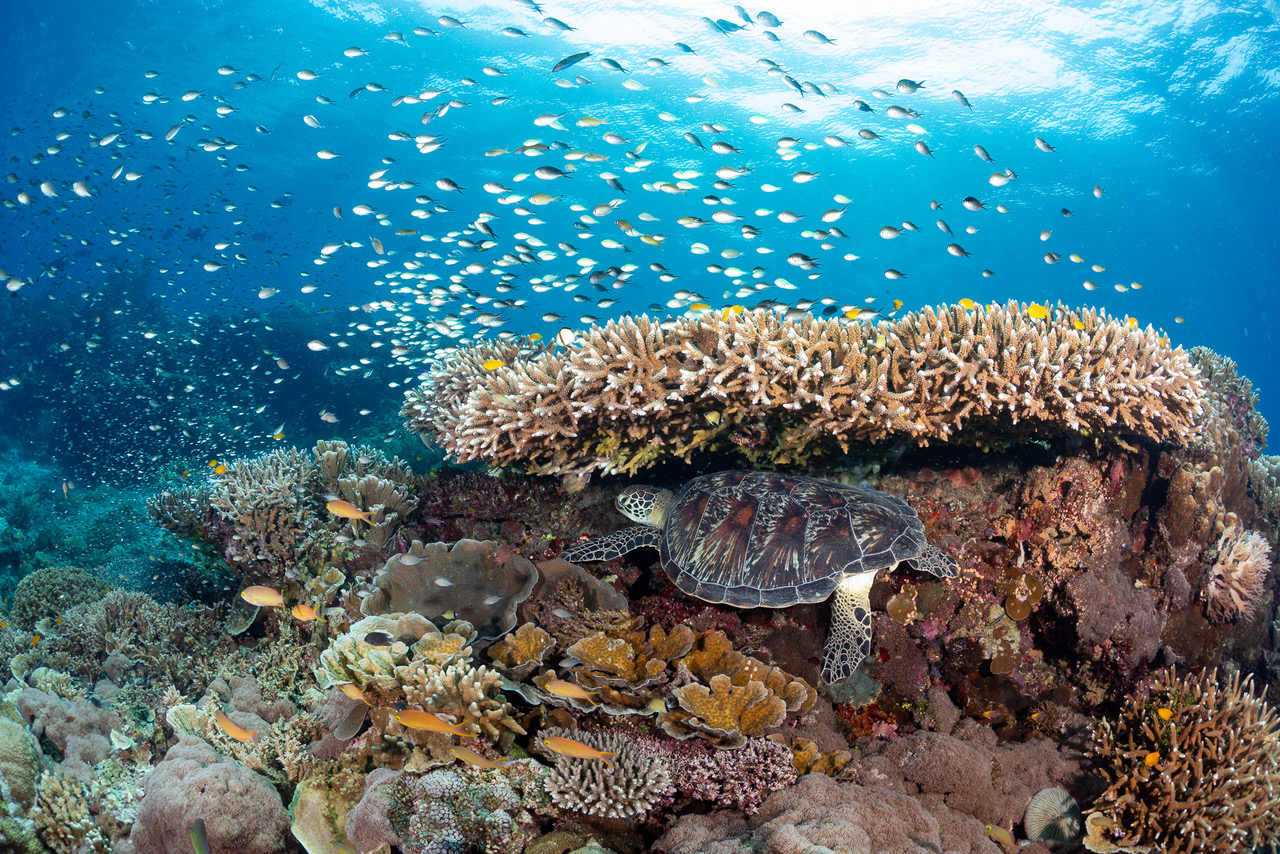
A new global assessment has identified more than 64,000 square miles of coral reefs that researchers say show potential to endure future warming. The 50 Reefs+ study, released Tuesday by the Wildlife Conservation Society and Macquarie University, expands on a 2018 assessment and covers reefs in 71 countries and 100 territories.
The study draws on more than 45,000 coral field observations collected between 1960 and 2025, combined with climate, oceanographic and human-impact data.
Researchers used the data to locate reefs that can avoid, resist or recover from heat stress and other disturbances such as cyclones. More than half of the identified reefs are concentrated in Australia, the Bahamas, Cuba, Indonesia and the Philippines.
The analysis adds 30 countries and 54 territories not included in the 2018 assessment, including newly identified resilient areas in Belize, Panama and the Turks and Caicos Islands.
SkyTruth produced the accompanying global map using satellite imagery and artificial intelligence. “Coral reefs are often framed as ecosystems beyond saving,” said Emily Darling, a co-author and director of coral reefs at the Wildlife Conservation Society.
” Just 28 percent of the identified climate-resilient reefs fall within protected or conserved areas, leaving approximately 46,000 square miles without formal safeguards.
The study’s findings were presented at the Our Ocean Conference, held June 16-18 in Mombasa, Kenya. On Tuesday, Kenya signed the first high-level global commitment to protect climate-resilient coral reefs. More than a dozen other governments have pledged to use the data to guide future conservation priorities.