Some Wall Street Firms Enter Prediction Markets While Major Trading Firms Stay Out
Certain Wall Street participants have begun participating in prediction markets. However, several large trading firms, including Citadel Securities, IMC Trading, and Hudson River Trading, have not entered the space. The article examines this divide in the financial industry's approach to prediction markets.
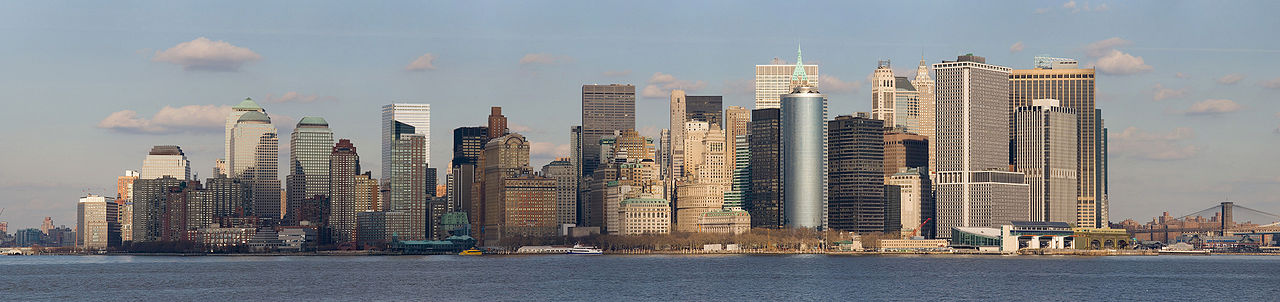 Diliff / Wikimedia (CC BY 2.5)
Prediction markets allow participants to bet on the outcomes of future events, such as elections or economic indicators, using financial instruments. These markets have gained attention in recent years as tools for aggregating information and forecasting. As of April 2026, some entities on Wall Street have started engaging with these platforms.
Several trading firms have taken initial steps into prediction markets, according to reports from Bloomberg. This involvement includes exploring or implementing strategies to trade on these platforms. The move reflects growing interest in alternative data sources for investment decisions.
In contrast, many large trading firms have not participated. Citadel Securities, IMC Trading, and Hudson River Trading are among those that have stayed away from prediction markets so far, as reported by Bloomberg. These firms, which handle significant volumes of trades, appear to be observing the developments without direct entry.
Background on Prediction Markets Prediction markets operate similarly to stock exchanges but focus on event probabilities rather than company shares.
Participants buy and sell contracts that pay out based on whether a predicted event occurs. The prices of these contracts can serve as indicators of collective expectations. The entry of Wall Street players into this space follows advancements in technology and regulatory clarity in some areas.
However, challenges such as liquidity, regulatory oversight, and integration with traditional trading systems remain. Firms that have entered may be testing these markets for potential advantages in hedging or information gathering.
Reasons for Non-Participation Large trading firms like Citadel Securities, IMC Trading, and Hudson River Trading have not disclosed specific reasons for their absence from prediction markets, per Bloomberg reports.
Possible factors include concerns over market maturity, compliance requirements, or strategic priorities focused on established asset classes. These firms dominate high-frequency and market-making activities in equities and other securities. The divide highlights varying risk appetites within the industry.
While early adopters seek opportunities in emerging markets, others may wait for more established infrastructure. This situation affects the overall liquidity and credibility of prediction markets, as participation from major players could enhance their functionality. Looking ahead, increased involvement from Wall Street could expand the scale of prediction markets.
Regulators continue to monitor these platforms for potential impacts on financial stability. The coming months may see shifts as firms evaluate the evolving landscape.
Story Timeline
2 events- As of April 2026
Some Wall Street players begin initial participation in prediction markets.
1 source@business - Ongoing
Major trading firms including Citadel Securities, IMC Trading, and Hudson River Trading do not enter prediction markets.
1 source@business
Potential Impact
- 01
Limited participation by major firms may slow liquidity growth in prediction markets.
- 02
Early entrants could gain advantages in using market data for trading strategies.
- 03
Observation by large firms might lead to future entries if markets mature.
Transparency Panel
Related Stories
 Semafor
US Energy Secretary Sees Aggressive Timeline for Oil Prices to Decline by Summer
US Energy Secretary Chris Wright stated that a decline in oil and gas prices by this summer represents an aggressive timeframe. His comments followed President Donald Trump's remark that gas prices could rise before midterm elections. Separately, Chinese industrial profits rose 1…
 Washington Examiner
Qantas Airways Cuts Domestic Capacity Amid Surging Fuel Costs from Iran War
Qantas Airways has reduced its domestic flight capacity due to sharply increased fuel costs linked to the war in Iran. German officials announced a temporary cut in gasoline and diesel duties to ease consumer impacts. Protests over high fuel prices have erupted in Ireland, blocki…
 Ballota / Wikimedia (CC BY-SA 4.0)
USS George H.W. Bush Carrier Strike Group Sails Around Africa to Avoid Houthi-Controlled Waters
The USS George H.W. Bush and its escorts are taking an extended route around the southern tip of Africa to reach the Persian Gulf. This path bypasses the Strait of Gibraltar, the Mediterranean Sea, and the Red Sea, including the Bab el-Mandeb Strait. The decision avoids areas con…