Iran War Deepens Gulf Arab Distrust of Israel Amid Failed Peace Talks and Ceasefire
A tentative ceasefire holds between the United States and Iran following failed peace talks in Pakistan, but the conflict has strengthened Gulf Arab ties with regional partners while increasing distrust toward Israel. Gulf states report infrastructure damage from retaliatory strikes and view Israel as a source of regional instability. Markets showed volatility with rallies in risk assets last week
 csmonitor.com
A tentative ceasefire between the United States and Iran has mostly held despite the collapse of peace talks held in Islamabad, Pakistan, over the weekend. The talks, which began on Saturday morning and continued nearly all day, stalled due to significant differences between the two sides.
The Iran war, launched nearly six weeks ago against the advice of Gulf Arab states, has not prompted them to align closer with Israel.
Instead, the conflict has deepened distrust in Gulf capitals toward Israel, perceived as instigating the war and expanding its military reach at the expense of Arab states' security and economies. Gulf officials report that Iranian missiles and drones have targeted their infrastructure in retaliation for Israeli strikes on Iranian assets.
This has driven Gulf states to strengthen alliances with partners like Pakistan, Turkey, and Ukraine to bolster their military capabilities.
Saudi Arabia and the United Arab Emirates have set aside differences to coordinate defenses and enhance domestic military industries. The war has not led Gulf states to abandon their security partnership with the United States, but it has highlighted frustrations over the decision to engage Iran. Early hopes for a broader anti-Iran coalition including Gulf states did not materialize.
Regional Alliances and Infrastructure Damage In one reported exchange, Israeli forces struck Iranian gas fields, prompting Iran to attack Qatar's gas fields and take offline 18% of its production, potentially for the next five years.
Smoke was observed in the Fujairah oil industry zone of the United Arab Emirates after air defenses intercepted a drone on March 14, 2026. These incidents have fueled perceptions that Israel is gambling with Arab lives, prosperity, and infrastructure. Gulf states view both Israel and Iran as threats to regional cooperation and stability.
Officials express readiness for integration but see Israel as offering only instability through its actions. The conflict has cemented views of Israel as a potential hegemon seeking control over Arab lands, similar to Iran. Pre-war sentiment toward Israel was already souring due to its policies in Gaza and the West Bank.
The ongoing Israeli occupation in southern Syria and refusal to agree with the new Syrian government, despite Gulf mediation, added to frustrations. Distrust has now evolved into a perceived national security threat for Gulf states.
Market Reactions and Economic Pressures Last week, markets rallied as plans for peace talks emerged, with the S&P 500 rising almost 4%, oil prices falling under $100 per barrel, and gains in gold, bonds, and bitcoin.
Bitcoin outperformed other assets, rallying nearly 10% and holding stronger than traditional safe havens like gold during geopolitical stress. The S&P 500 has now surpassed its level from February 27, 2026, the last trading day before the US and Israel initiated the war against Iran.
The energy crisis, described in some reports as the worst in history, had threatened a global recession but appeared to ease temporarily with talk prospects.
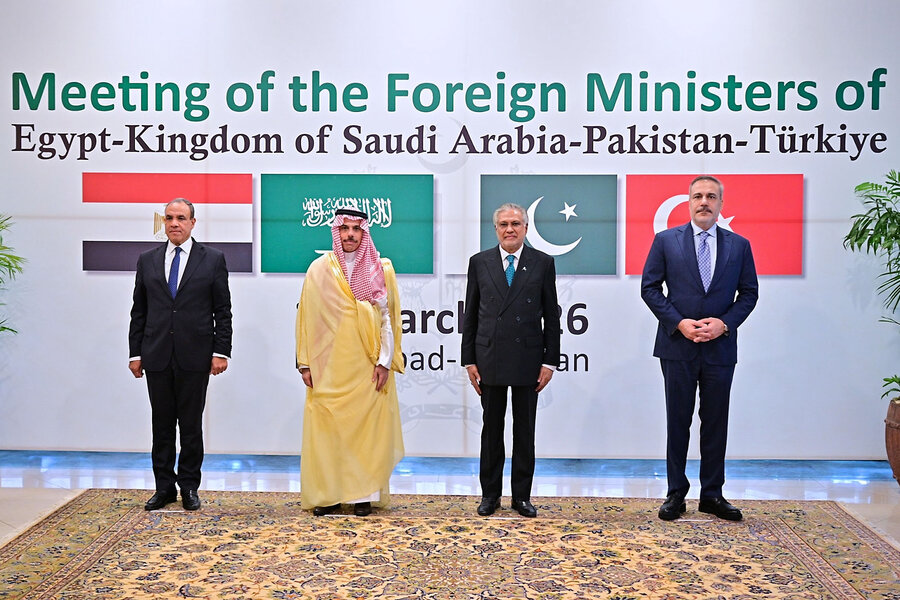
However, the implosion of talks has renewed concerns, coinciding with reports of a US blockade. Peace efforts failed to bridge gaps, leading to stalled progress. Foreign ministers from Egypt, Saudi Arabia, Pakistan, and Turkey met in Islamabad on March 29, 2026, to discuss the war.
The gathering underscored Gulf states' push for stronger regional ties excluding Israel.
Broader Implications for Stability The war's launch, persuaded by Israeli prodding despite Gulf warnings of consequences, has strengthened Iran's position according to some Gulf analysts.
Resentment hardened over Israel's conduct, including strikes that provoked responses affecting Arab infrastructure. Gulf states now prioritize alliances that enhance air defenses and military self-reliance. A senior Saudi official stated that both Israel and Iran hinder regional cooperation.
“Both Israel and Iran are not acting in a way that supports a region of cooperation, stability, and shared prosperity.”
Story Timeline
5 events- April 12-13, 2026
Peace talks in Islamabad stall after a full day due to significant differences between US and Iran.
2 sourcesBenzinga · csmonitor.com - Last week (early April 2026)
Markets rally with S&P 500 up 4%, bitcoin up 10%, and oil under $100 as peace talks shape up.
1 sourceBenzinga - March 29, 2026
Foreign ministers from Egypt, Saudi Arabia, Pakistan, and Turkey meet in Islamabad to discuss the war.
1 sourcecsmonitor.com - March 14, 2026
Air defenses in UAE's Fujairah intercept drone, causing smoke in oil zone.
1 sourcecsmonitor.com - February 27, 2026
US and Israel start war against Iran, marking last normal S&P 500 trading day before conflict.
2 sources@JavierBlas · csmonitor.com
Potential Impact
- 01
Gulf states strengthen military alliances with Pakistan and Turkey for air defenses.
- 02
Qatar's gas exports decline due to damaged fields, affecting global energy supply.
- 03
Regional distrust of Israel grows, hindering normalization efforts.
- 04
Oil prices fluctuate above $100 per barrel amid renewed crisis fears.
- 05
US security partnerships with Gulf states face strain from war decisions.
- 06
Bitcoin outperforms traditional assets during geopolitical uncertainty.
Multi-source corroboration verifies facts, not framing. This panel scores the Substrate rewrite you just read (top score) and the raw source bundle it came from. A positive delta means the rewrite stripped framing from the sources; a negative or zero delta means our neutralizer let some through.
The Iran war, initiated by US-Israel to counter Iranian aggression, could ultimately foster Gulf-Israeli security cooperation against a common foe despite initial hesitations.
- Valence skewsevere“Israel perceived as instigating the war and expanding its military reach at the expense of Arab states' security”Systematically negative adjectives portray Israel as aggressorAdjectives and adverbs systematically slant toward one interpretation even though the underlying facts are neutral.
- Loaded metaphornotable“Israel is gambling with Arab lives, prosperity, and infrastructure”Metaphor frames Israel as reckless endangering ArabsSources share the same narrative framing verbs (“sow doubt”, “spark backlash”) — a sign of a shared template, not independent reporting.
- Anonymous speculationnotable“The war's launch, persuaded by Israeli prodding despite Gulf warnings, has strengthened Iran's position according to some Gulf analysts”Unnamed analysts speculate negatively on Israel's influenceUnnamed analysts, experts, or critics used to inject predictions or negative-valence claims that aren't sourced to named individuals.
- Selective sourcingnotable“Gulf officials report... A senior Saudi official stated that both Israel and Iran hinder regional cooperation”Only Gulf/Arab sources cited, no pro-Israel counter-viewEvery quoted expert shares one viewpoint; no counter-expert is given meaningful space.
- Omitted counterpointminor“No mention of potential benefits or Israeli perspective on security needs”Ignores reasonable Israeli rationale for actionsA reasonable alternative reading of the facts isn't represented anywhere in the source bundle.
Transparency Panel
Related Stories
 Ballota / Wikimedia (CC BY-SA 4.0)
USS George H.W. Bush Carrier Strike Group Sails Around Africa to Avoid Houthi-Controlled Waters
The USS George H.W. Bush and its escorts are taking an extended route around the southern tip of Africa to reach the Persian Gulf. This path bypasses the Strait of Gibraltar, the Mediterranean Sea, and the Red Sea, including the Bab el-Mandeb Strait. The decision avoids areas con…
 Washington Examiner
Rep. Eric Swalwell Suspends California Gubernatorial Campaign Amid Sexual Assault Allegations
Rep. Eric Swalwell suspended his campaign for California governor on Sunday evening following allegations of sexual assault and misconduct. The Manhattan District Attorney's Office is investigating a claim of assault in New York City in April 2024. Swalwell denied the allegations…
 שלמה רודד / Wikimedia (CC BY 2.5)
Hezbollah Leader Urges Lebanon to Reject US-Led Talks with Israel
Naim Qassem, leader of Hezbollah, called on Lebanese officials to reject US-led peace talks with Israel scheduled for Tuesday in Washington. He delivered the statement in a televised speech on the eve of the meeting, demanding cancellation of the negotiations. The remarks come am…