Substrate
ai

AI Helps Design New Materials for Stronger Hip Implants

Researchers are using machine learning to create metamaterials that mimic bone properties. The work aims to produce longer-lasting hip replacements and better fracture repair implants.

bbc.com
1 source·May 21, 10:00 AM(8 days ago)·1m read
AI Helps Design New Materials for Stronger Hip Implantsbbc.com
Audio version
Tap play to generate a narrated version.

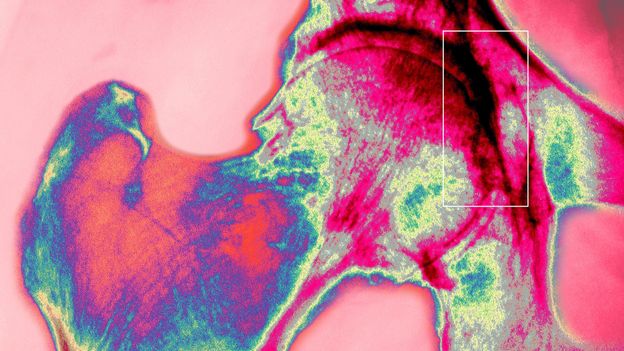
Scientists are using artificial intelligence to design new materials that could make hip replacements last longer and improve fracture healing. The materials are engineered to behave like bone, which gets thicker under certain loads instead of thinning.

Amir Zadpoor, a professor of orthopaedics at Leiden University Medical Center, led work on a metamaterial that thickens when stretched or compressed. The goal is to create an implant that stays fixed against bone while absorbing the two million steps people take each year.

Kumar, an associate professor of materials science at TU Delft, and colleagues used AI to generate a soft, porous metamaterial for complex fractures common in older adults. The design is intended to let bone cells grow into the structure during early healing.

Xiao-Hua Qin, an assistant professor at ETH Zurich, noted that the early stage of fracture healing determines long-term success. Current metal plates and screws can be stiffer than bone and may limit natural strain during movement. Mohammad Mirzaali, an associate professor of biomedical engineering at TU Delft, said the spinodoid designs can vary stiffness and porosity in different regions of an implant.

The team showed the material can be produced with three-dimensional printing. Kumar said tests are still needed to determine how the implants would perform inside the human body. He added that mimetic bone implants could be available within a few years.

Key Facts

Two million steps
annual load on a typical hip implant
AI model training
takes about one year before rapid design generation
Spinodoid structures
mimic porous trabecular bone with variable stiffness
3D printing
used to fabricate the metamaterial designs

Potential Impact

  1. 01

    Patients may require fewer revision surgeries if implants last longer than current devices.

  2. 02

    Fracture patients could see improved healing rates if soft metamaterials integrate with bone.

  3. 03

    Hospitals may adopt new implant designs once human testing is completed.

Transparency Panel

Sources cross-referenced1
Confidence score65%
Synthesized bySubstrate AI
Word count231 words
PublishedMay 21, 2026, 10:00 AM
Bias signals removed2 across 1 outlet
Signal Breakdown
Loaded 1Editorializing 1

Related Stories

Anthropic Raises $65 Billion at $965 Billion ValuationSemafor
ai51 min agoDeveloping

Anthropic Raises $65 Billion at $965 Billion Valuation

Anthropic completed a $65 billion funding round at a $965 billion valuation. The round follows earlier growth that exceeded internal forecasts and a separate agreement to lease computing capacity.

Semafor
1 source
South African Researchers Develop Quantum and AI Tools for Cybersecuritythesouthafrican.com
ai51 min agoDeveloping

South African Researchers Develop Quantum and AI Tools for Cybersecurity

Scientists and startup companies in South Africa are applying quantum communication and AI-powered tools to address rising global cyber threats. The work focuses on strengthening data protection methods.

Reuters
1 source
EU Discusses Readiness for Artificial Intelligence ChangesFrance 24
ai4 hrs agoDeveloping

EU Discusses Readiness for Artificial Intelligence Changes

A France 24 program examined whether European Union policies can address the effects of artificial intelligence. The discussion covered potential impacts across daily life and economic sectors.

France 24
1 source