AI Math Startups Axiom and Harmonic Raise Hundreds of Millions Amid Funding Concerns and Uncertain Payoff
Two Palo Alto companies are developing AI systems that generate and verify mathematical proofs. Investors have committed hundreds of millions of dollars to the effort.
Axiom Math and Harmonic, two start-ups located a few doors apart in Palo Alto, California, are developing AI systems designed to solve advanced mathematics problems and verify their own outputs. The companies occupy nondescript offices in Silicon Valley and have received hundreds of millions of dollars from investors since their founding within the last two years.
Axiom Math was founded by Carina Hong, a former Stanford University student.
Ken Ono, who went on leave in 2025 from a professorship at the University of Virginia, joined the company after Epoch AI asked him to create difficult math problems to test AI capabilities. Five papers produced entirely with Axiom Math’s tools have been accepted in mathematical journals. Ono said the company aims to generate dozens of papers by 2027.
Harmonic, led by chief executive Tudor Achim, is pursuing a similar goal of building what it calls a mathematical superintelligence that produces verifiable results. Achim said verification is becoming more valuable as AI generates increasing amounts of code, because humans remain the bottleneck for checking correctness. Both companies see software verification as their primary revenue source.
Shubho Sengupta of Axiom Math noted that some mathematical modeling performed by large hedge funds is already paywalled as intellectual property. He added that advancing the bounds of mathematical knowledge should remain free. Achim said users should have the option to pay for useful mathematical tools.
OpenAI researchers are also advancing mathematical capabilities without optimizing specifically for the field. Chief scientist Jakub Pachocki said mathematics is useful for developing AI because results are measurable. Sébastien Bubeck at OpenAI said recent models no longer produce nonsense in fields where they previously failed.
The most recent models have won gold medals at the International Mathematical Olympiad and disproved an 80-year-old conjecture. Stanford University mathematician Ravi Vakil said the current level of funding may not last. He noted there is little money to be made from solving problems such as the Riemann hypothesis.
Ono recalled a conversation with his late father about embracing unexpected mathematical discoveries, comparing the current moment to the arrival of Srinivasa Ramanujan in the early twentieth century.
Transparency
Reported by a single outlet. This score reflects source tier and factual specificity — corroboration is limited with one source.
Story details
Related Stories
 abcnews.go.com
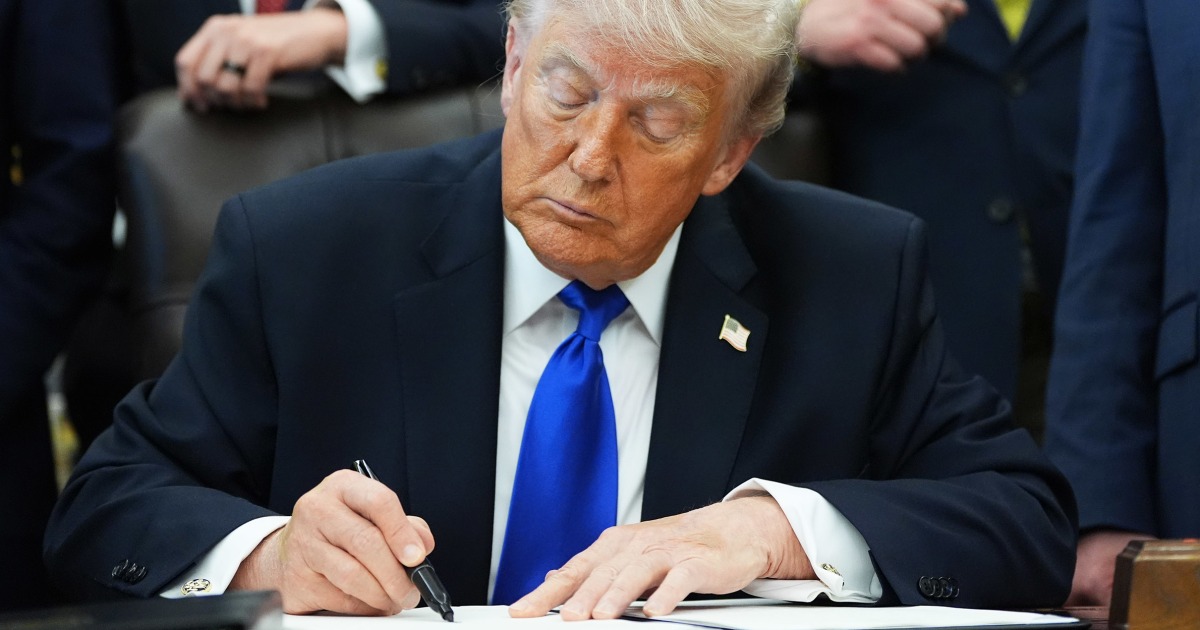
Trump Signs Executive Order Prioritizing AI for Cybersecurity Innovation
President Donald J. Trump signed an executive order on June 2 directing federal agencies to accelerate artificial intelligence development for protecting critical infrastructure. The order reverses earlier emphasis on slower deployment and risk reviews.
 nbcnews.com
Trump Signs AI Executive Order Promoting Innovation While Requiring Security Reviews
The order directs federal agencies to promote advanced AI development while addressing security concerns and reduces government review compared with an earlier draft.
 nbcnews.com
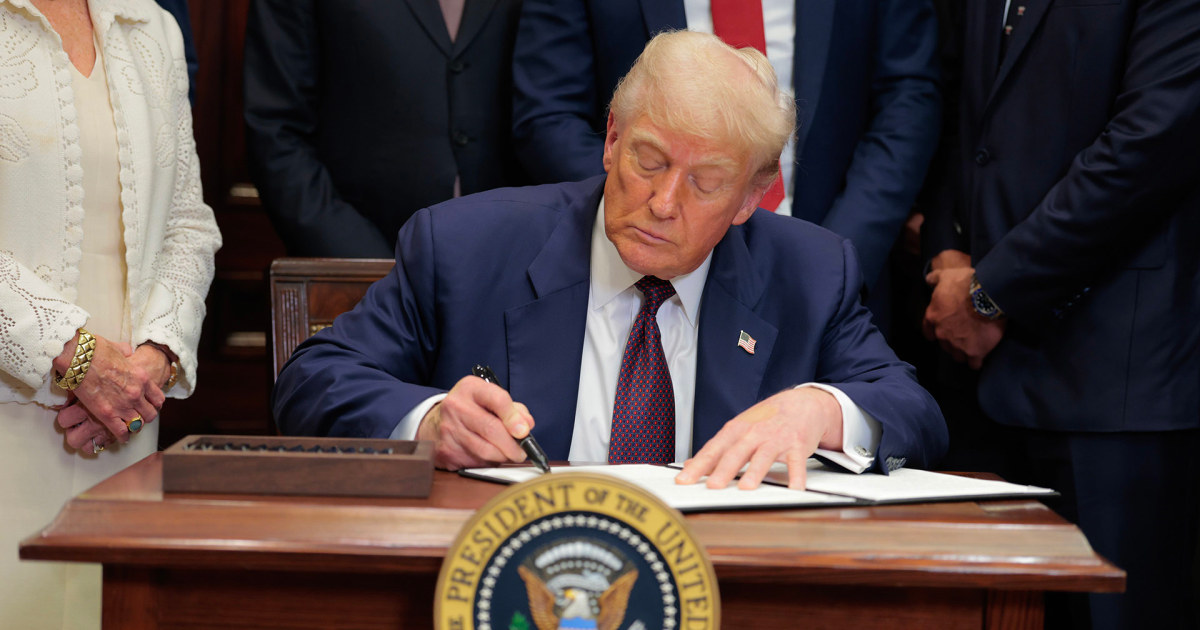
Trump Orders Voluntary 30-Day AI Model Sharing to Boost Innovation, Cybersecurity
President Trump signed an executive order on artificial intelligence and cybersecurity on June 2, 2026, establishing a voluntary 30-day pre-release window for frontier models and an industry collaboration on vulnerability scanning.