AI Models from Major Companies Show Low Accuracy in Predicting Premier League Soccer Outcomes
A study reported by Ars Technica evaluated the performance of AI systems from Google, OpenAI, Anthropic, and xAI in predicting soccer match results in the English Premier League. The models, including xAI's Grok, achieved low success rates in betting simulations. The findings highlight limitations in AI's ability to handle sports predictions based on available data.
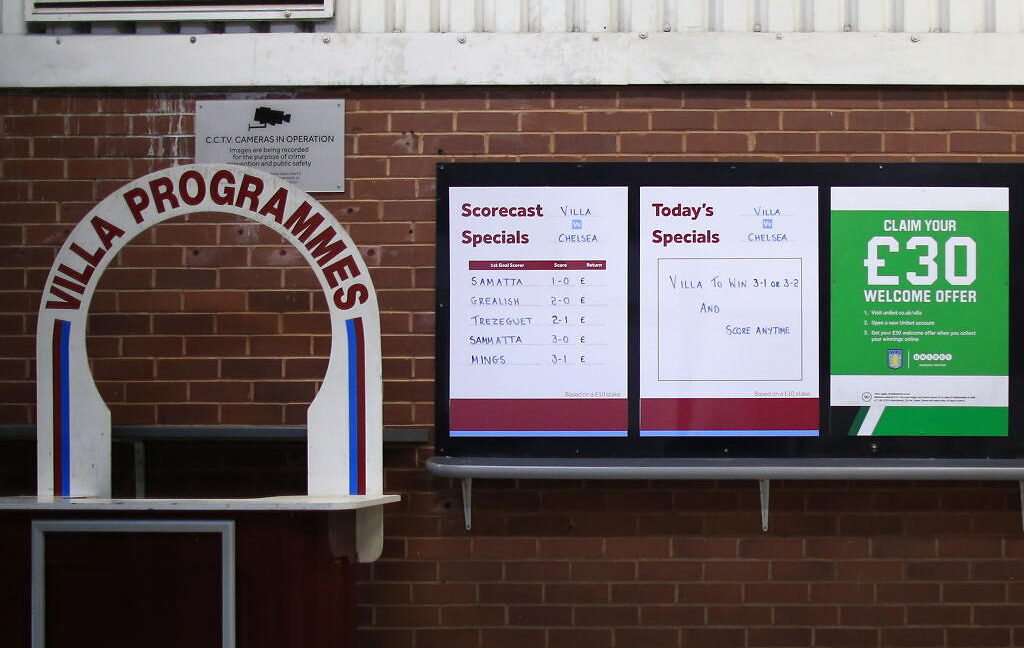
Ars TechnicaAI systems developed by several leading technology companies have demonstrated limited effectiveness in predicting outcomes of soccer matches in the English Premier League. According to a report from Ars Technica, models from major companies were tested on their ability to simulate betting decisions.
The evaluation focused on the 2023-2024 Premier League season, where teams compete in a 38-match schedule per club.
The study involved prompting the AI models with match details, team statistics, and historical performance data to forecast winners and scorelines. The models frequently mispredicted results, leading to simulated betting losses. Ars Technica reported that across multiple tests, the overall accuracy remained below 50 percent, indicating challenges in processing complex variables like player injuries, weather conditions, and tactical shifts.
tests highlighted inconsistencies among the systems.
For instance, one model correctly predicted fewer than one-third of match outcomes in a sample of games. Other models showed similar patterns, with success rates varying by a few percentage points depending on the prompt structure. The report noted that none of the models consistently outperformed random chance in high-stakes scenarios.
One model was particularly scrutinized due to its data capabilities. In simulations, it achieved an accuracy of around 40 percent for outright winner predictions but dropped to 25 percent for exact scorelines. Ars Technica's analysis included comparisons to baseline betting odds from bookmakers, where AI predictions aligned poorly with market consensus.
The evaluation was conducted by researchers who fed the models publicly available data sources, such as league tables and recent form guides.
No proprietary training data specific to soccer was used beyond the models' general knowledge. The Premier League, featuring 20 teams, provides a dataset of matches annually, making it a standard benchmark for predictive testing. Stakes in such predictions extend to sports betting industries, where accurate forecasts influence odds and user decisions.
Fans, bettors, and analysts rely on tools for insights, but the study's results suggest AI remains unreliable for precise wagering. Future improvements may involve specialized fine-tuning for sports data, though no timelines were specified in the report.
Those affected include AI developers seeking to expand applications in entertainment and finance, as well as soccer enthusiasts using tech for game analysis.
Next steps could involve broader testing across other leagues or sports to assess generalizability. Regulatory bodies in gambling may monitor AI's role in betting platforms for fairness.
Key Facts
Story Timeline
2 events- 2023-2024 Season
AI models tested on Premier League match predictions using historical and statistical data.
1 sourceArs Technica - Late 2023
xAI releases Grok model, later evaluated for soccer betting accuracy.
1 sourceArs Technica
Potential Impact
- 01
AI developers may prioritize sports-specific training data improvements.
- 02
Sports analytics firms might integrate hybrid human-AI systems.
- 03
Bettors could reduce reliance on AI tools for soccer predictions.
Transparency Panel
Related Stories
Shivon Zilis Testifies in Musk v. OpenAI Trial
Shivon Zilis, a Neuralink executive and mother of four of Elon Musk's children, testified on Wednesday in the second week of the trial. The testimony detailed her role at OpenAI and relationship with Musk. Other witnesses described internal conflicts during the company's shift fr…
Anthropic Acquires Full Compute Capacity of SpaceX Colossus 1
Anthropic announced a partnership to access all compute resources at SpaceX's Colossus 1 data center. The agreement delivers more than 300 megawatts of capacity across over 220,000 Nvidia GPUs and includes interest in future orbital data centers. It follows Musk's recent meetings…
Anthropic Launches 'Dreaming' Research Preview for Its AI Agents
Anthropic announced the Dreaming feature at its developer conference in San Francisco as part of its AI agent infrastructure. The tool analyzes agent activity transcripts to identify patterns and improve performance. It operates alongside memory functions to support self-improvin…