ai
AI Tools Accelerate Nuclear Fusion Research to Meet Data Center Energy Demand
Researchers are using artificial intelligence to speed up development of nuclear fusion as a baseload power source. The technology aims to address rising electricity consumption from AI data centers. Projects include DuctGPT for alloy discovery and a new UK supercomputer for virtual testing.
May 13, 5:00 PM·2m read4 sources

 +1
+1
 interestingengineering.com
Audio version
Tap play to generate a narrated version.
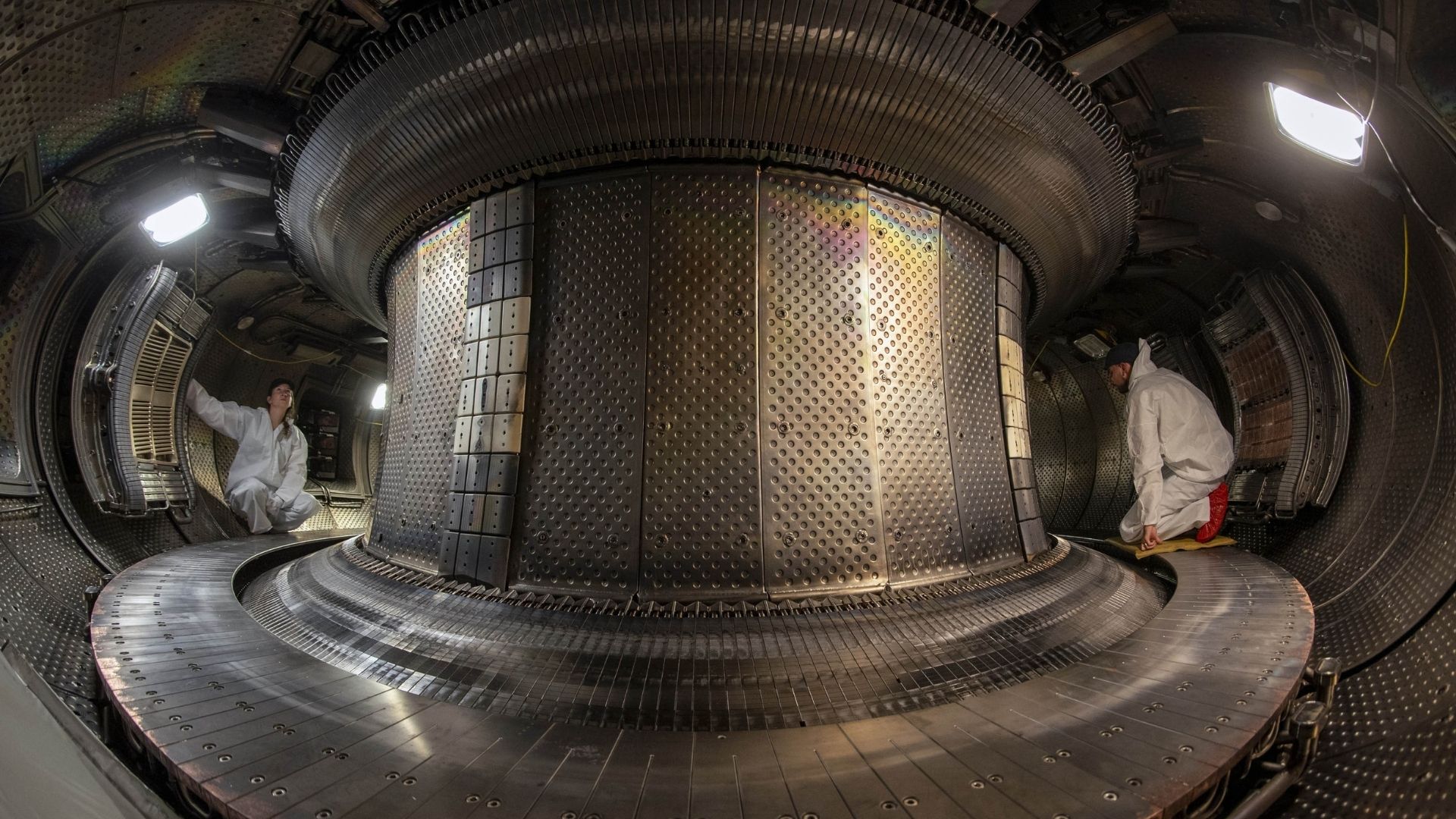
Researchers are using artificial intelligence to address challenges in the energy sector, including the increased electricity demand created by AI systems themselves. The current and projected rise in energy consumption from data centers has prompted investment in nuclear fusion and other technologies capable of producing large amounts of baseload power with low greenhouse gas emissions.
Nuclear fusion has advanced in laboratories in recent years with assistance from AI tools. Scientists at the Ames National Laboratory in Ames, Iowa, are developing an AI system to identify materials suitable for fusion reactors. The tool, known as DuctGPT, has reduced the time required to discover fusion-suitable alloys from months to hours by modeling material performance under extreme temperatures.
AI applications in fusion research also include systems that monitor plasma stability. One such tool is Diag2Diag. In the United Kingdom, the £45 million supercomputer Sunrise is scheduled to begin operations next month. It will accelerate virtual testing of fusion experiments.
The surge in electricity use by large language models and data centers has increased focus on reliable, low-emission power sources. Nuclear fusion is viewed as one option that could provide continuous baseload electricity without substantial greenhouse gas emissions.
AI is being applied to overcome technical hurdles that have historically slowed fusion development.
DuctGPT has shortened the alloy discovery process significantly. The system evaluates how materials withstand the intense heat and conditions inside fusion reactors. This capability allows researchers to iterate designs more rapidly than traditional methods permitted.
The Ames National Laboratory project forms part of broader efforts to integrate AI into energy research. By compressing timelines for material screening, the tool supports faster progress toward practical fusion power. Fusion remains in the experimental stage but has drawn increased attention as data center demand grows.


