Unbiased AI-powered news
Documents shown in private consultations outline three northern routes and six ports. Alberta aims to submit a one-million-barrel-per-day project to the federal Major Projects Office by July 1.
calgaryherald.comDocuments obtained by CBC News show that the Alberta government has considered three different pipeline routes through northern British Columbia and six ports along the northern coast. The documents were shown to local community leaders during private consultations this spring.
And a port in the Vancouver area. One route begins near Fort McMurray, travels west to Fort St. John, and ends near Observatory Inlet, more than 800 km north of Vancouver and 130 km north of Prince Rupert.
Two other routes begin near Fort Saskatchewan, northeast of Edmonton. One extends slightly north after crossing the Rocky Mountains and ends at Nasoga Gulf. The second continues west and splits to connect with Kitimat and Prince Rupert.
One of the routes follows the same path as Enbridge’s failed Northern Gateway project. ’s coast. All port options shown in the documents lie within the area covered by the federal oil tanker moratorium.
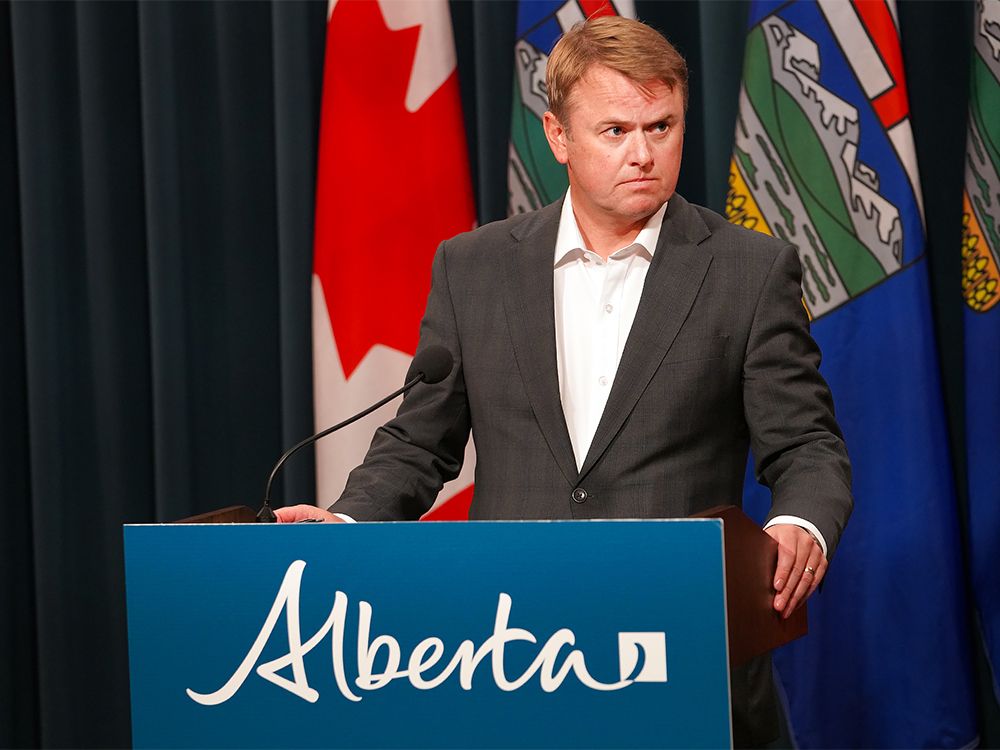
U.S. or Asia. Alberta Premier Danielle Smith is aiming to submit the project to the federal Major Projects Office by July 1 so it can be designated a nation-building project and fast-tracked.
The proposal calls for a pipeline that would export one million barrels of oil per day, with construction targeted to begin as early as 2027. Sam Blackett, Smith’s press secretary, said Alberta’s government is still finalizing its proposal for submission by that date.
Alberta’s Indigenous Relations minister Rajan Sawhney has led consultations that have included talks with more than 40 Indigenous communities.
In some meetings, officials provided information about possible pipeline ownership opportunities and financial support through the Alberta Indigenous Opportunities Corporation. Sawhney said no route has been determined and that the current phase is focused on technical requirements, costs, partnerships, and making the case for the project in the national interest.

Several officials involved in the consultations said routes have been revised.
In more recent meetings, Alberta officials showed a general corridor instead of specific routes. A government official said a corridor could form part of the July 1 submission, with a specific route chosen later. Grant Sprague, former deputy minister for energy in Alberta, reviewed the maps and said some port options lack easy access to the Pacific Ocean for tankers, with the exception of Prince Rupert and Grassy Point.
He added that all three northern routes face difficult terrain, including mountains, protected areas, and important salmon habitat along the Nass River or the Skeena. C. but appears to have chosen routes through communities more supportive of pipelines and ports.
She described the choice as strategic for political reasons rather than economic ones. D.C. Premier David Eby has opposed a new oil pipeline through the province. In a news release earlier this month, Eby said it is time to stop rewarding bad behaviour and that projects should not be prioritized because a premier threatens to leave the country.
C. C. government on board.
Ron Poole, acting as an Alberta government representative, told participants there is no route yet and that he cannot say whether the pipeline would go north or south. Poole had already met with the Bulkley-Nechako, Fraser-Fort George, and Kitimat-Stikine regional districts and has a planned meeting with the North Coast Regional District, which includes Haida Gwaii and Prince Rupert.
Smith and Prime Minister Mark Carney are working together on the pipeline as part of a broader agreement that includes new methane and industrial carbon tax regulations and reviewing major project proposals.
The two governments still need to reach a deal with oilsands companies on a large-scale carbon capture project in northern Alberta. The documents are labelled confidential. Community leaders were asked to rank the options from best to worst and to identify any that would be showstoppers.
A court ruling in 2018 temporarily halted construction of the Trans Mountain expansion due to consultation issues.
Single source — no framing comparison available.
news.sky.comPrime Minister Andy Burnham said the new Labour government will scrap the tax to ease household energy costs. The change takes effect October 1 and will be funded by canceling a digital ID program.
axios.comA new CNBC All-America Economic Survey shows 49% of registered voters view federal ownership stakes in U.S. companies as inappropriate. The results arrive as the Trump administration pursues equity positions tied to grants and national security deals.
news.sky.comThe Irish carrier cut fares to offset weaker bookings as jet fuel costs rose after U.S. and Israeli strikes on Iran. Revenue edged higher while passenger numbers increased 6 percent.