Substrate
politics

Alberta Separatist Group Delivers 300,000 Signatures for Independence Referendum

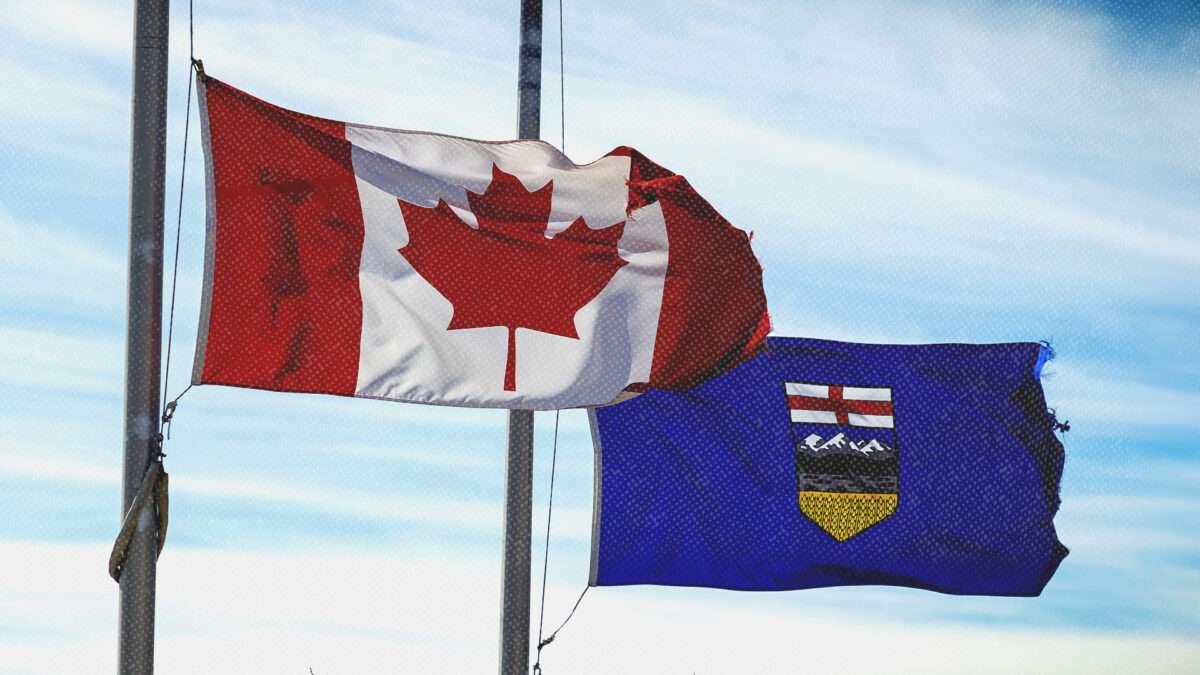
A separatist group delivered more than double the required signatures on Monday to force a vote on Alberta's separation from Canada. The move comes amid long-standing economic grievances, cultural differences and political underrepresentation cited by western provinces. Quebec held two prior referendums on secession, with the 1995 vote prompting a Supreme Court opinion that could apply to Alberta.

Reason
1 source·May 7, 5:55 PM(22 days ago)·2m read
Alberta Separatist Group Delivers 300,000 Signatures for Independence ReferendumReason
Audio version
Tap play to generate a narrated version.
Developing·Limited corroboration so far. This page will refresh as more sources emerge.

A separatist group in Alberta submitted over 300,000 signatures in support of a referendum to leave Canada on Monday. The total is nearly double the amount required by law to trigger a referendum vote in the province. Recent reporting shows that at least one quarter of Alberta's population would vote to leave Canada.

While Alberta has never formally begun the long road to secession until now, the Francophone province of Quebec has twice held referendums on whether to leave Canada. The second Quebec referendum occurred in 1995. 58 percent of the vote.

The Supreme Court of Canada issued an advisory opinion on the terms under which Quebec could secede following the 1995 referendum. " Reason reported that the Quebec opinion provides the legal basis on which Alberta could also separate. Some indigenous groups have argued in court that Alberta separation would infringe on collective indigenous rights granted through treaties and enshrined in the Canadian Charter of Rights and Freedoms.

The language in the Supreme Court opinion requiring a seceding province to respect the rights of others is now being leveraged in those arguments. Alberta contains approximately 167 billion barrels of oil reserves, nearly four times the volume in the United States.

Alberta is one of only two landlocked provinces in Canada, meaning it cannot get this oil to the international market absent the cooperation of other provinces.

Canadian provinces maintain extensive interprovincial trade barriers against each other. A 2019 report from the International Monetary Fund observed that international free trade agreements allow foreign companies better access to Canada than Canadian companies have to each other. Reason reported that this internal absence of free trade creates bad incentives for provinces that rely on cheap oil.
The equalization payments program began in 1957. Between 2015 and 2025, Quebec received $129 billion in equalization payments, for which Alberta footed most of the bill.

Quebec's hydropower is exempt from the equalization payments formula. m. on weekends. These economic issues have contributed to Canada now having a lower gross domestic product per capita than Alabama.

In 2024, Tucker Carlson went on a sold-out tour of Alberta. Tucker Carlson charged 200 CAD per seat for his 2024 speaking events in Alberta, equivalent to $147 per seat. Alberta is home to the Calgary Stampede, the world's largest outdoor rodeo.

Early migrants to Alberta included Mormons, Germans, Ukrainians, and other Eastern Europeans who mostly immigrated north from the United States. Reason reported that these origins underscore cultural differences between Alberta and the francophone and monarchist east.

Canada is a parliamentary system in which citizens elect a single representative for their electoral district, known as a riding, and the party with the most representatives forms government.

Because of Alberta's concentration of conservative voters, ridings there are often won by margins well over 70 percent. Eastern provinces are often won nearer to the 50 percent mark or below in competitive ridings. This political reality is compounded by districting rules that prevent provinces with relatively waning populations from losing seats.

Unlike the American Senate, section 22 of the Canadian Constitution does not provide equal Senate seats for each province but rather between Quebec, Ontario, the Western provinces including Alberta as a bloc, and the Atlantic provinces as a bloc.

Key Facts

Over 300,000 signatures submitted for Alberta separation ref
The submission on Monday is nearly double the legal threshold required to trigger a vote, with recent polling indicating at least one quarter of the province's
Supreme Court opinion from 1995 Quebec referendum could appl
The court stated that other provinces and the federal government would have no basis to deny secession with a clear majority so long as rights of others are res
Alberta has never received equalization payments since 1957
In contrast, Quebec received $129 billion between 2015 and 2025, with Alberta funding most of it, while Quebec's hydropower remains exempt from the formula.
Alberta holds 167 billion barrels of oil reserves
The reserves are nearly four times those of the United States, yet the province is landlocked and faces interprovincial trade barriers that limit market access.

Story Timeline

5 events
  1. 2026-05-05

    Separatist group in Alberta submits over 300,000 signatures to trigger referendum on leaving Canada

    1 sourceReason
  2. 2024

    Tucker Carlson conducts sold-out speaking tour in Alberta charging 200 CAD per seat

    1 sourceReason
  3. 2015-2025

    Quebec receives $129 billion in equalization payments, mostly funded by Alberta

    1 sourceReason
  4. 1995

    Quebec holds second referendum on leaving Canada; 'remain' wins with 50.58 percent

    1 sourceReason
  5. 1957

    Equalization payments program begins; Alberta has received none since inception

    1 sourceReason

Potential Impact

  1. 01

    Heightened tensions between western and eastern Canadian provinces over economic redistribution and political representation

  2. 02

    Further economic debate over interprovincial trade barriers and equalization formula exemptions

  3. 03

    Potential court challenges from indigenous groups citing treaty rights could delay or block separation efforts

  4. 04

    Possible referendum process that tests the 1995 Supreme Court framework on secession

Transparency Panel

Sources cross-referenced1
Confidence score65%
Synthesized bySubstrate AI
Word count538 words
PublishedMay 7, 2026, 5:55 PM
Bias signals removed4 across 4 outlets
Signal Breakdown
Loaded 4

Related Stories

Trump Meets Advisers to Decide on Iran Ceasefire ExtensionBBC News
politics1 hr ago

Trump Meets Advisers to Decide on Iran Ceasefire Extension

President Trump said he is holding a Situation Room meeting to make a final decision on a possible deal with Iran. The proposed agreement would extend the ceasefire by 60 days and reopen the Strait of Hormuz.

Al Jazeera
JA
MA
AF
AJ
+6
11 sources
Trump to Decide on Iran Deal in Situation Room Meetingmiddleeasteye.net
politics1 hr ago

Trump to Decide on Iran Deal in Situation Room Meeting

President Trump said Friday he is heading into the Situation Room to make a final determination on a potential agreement with Iran. The proposed deal would reopen the Strait of Hormuz without tolls and require destruction of Iran's highly-enriched uranium.

LI
Just the News
CBS News
3 sources
Vietnam Clears Graves for Trump Organization Project in Hung Yen Provincebenzinga.com
politics1 hr ago

Vietnam Clears Graves for Trump Organization Project in Hung Yen Province

Farmers in Hung Yen province are exhuming family graves to make way for a $1.5 billion Trump Organization development that includes hotels, villas and a golf course. The project, approved last year, has drawn local resistance over compensation levels and relocation of remains.

The Independent
1 source