The Andes virus is endemic to Chile and Argentina, which is where the MV Hondius cruise began. — Substrate
world
The Andes virus is endemic to Chile and Argentina, which is where the MV Hondius cruise began.
The Andes virus is endemic to Chile and Argentina, which is where the MV Hondius cruise began. Health officials believe the couple who first came down with symptoms and later passed away may have been exposed to the virus while visiting Argentina before the ship’s departure.
MA
4 sources·May 8, 2:51 PM(4 days ago)·15m read
The Guardian
Audio version
Tap play to generate a narrated version.
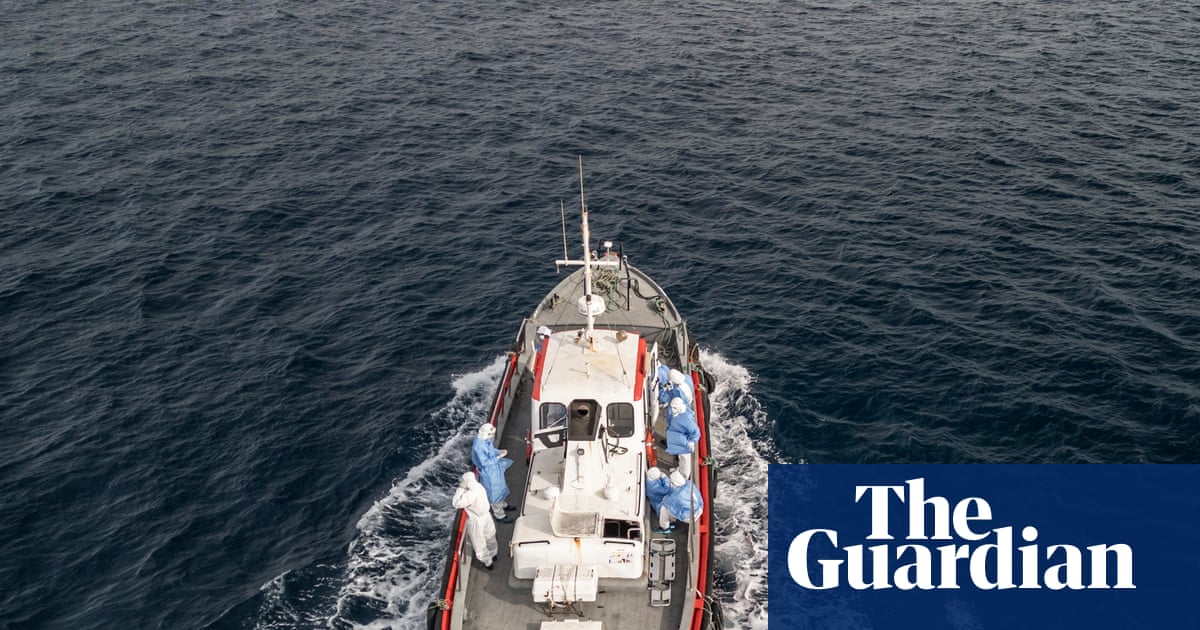
[The Guardian] Hantavirus misinformation runs rampant as the US is unequipped to respond to infectious disease health scare The outbreak of hantavirus on the Dutch cruise ship MV Hondius illuminates major gaps in the US public health system – a worrying sign for stopping this outbreak quickly and preparing for a potential pandemic of a more widespread pathogen in coming years, experts say.
Post via X — linked by one of this story's sources.
Passengers and their close contacts are at risk of hantavirus and need to follow public health guidance, but the danger for most people is near zero, officials and scientists say. Experts expect more cases in this outbreak to be identified, but they are emphatic that a hantavirus pandemic is highly unlikely.
“This is not Covid, this is not influenza. It spreads very, very differently,” Maria Van Kerkhove, director of epidemic and pandemic management at the World Health Organization (WHO), said at a briefing on Thursday. “This is not the same situation we were in six years ago ...
” The WHO has been coordinating a response with several countries. But Trump pulled out of the organization soon after taking office, and US leadership has been conspicuously absent in the global hantavirus response, experts say. While not a virus with pandemic potential, hantavirus is a warning sign that reveals how cuts to US capacity have severely limited the ability of officials and scientists to track and understand pathogens like these, with troubling implications for rare outbreaks and for pandemic preparedness writ large.
There are now three suspected and five confirmed cases of Andes virus, a type of hantavirus that can sometimes spread with close, intimate contact but is typically spread by rodents. Three people have died, and three have been hospitalized, including in intensive care – though those patients are showing signs of improving, officials said on Thursday.
One of the patients, a Dutch flight attendant, has tested negative for Andes virus, according to Inside Medicine. The risk to global health “My personal worry is essentially zero,” said Bill Hanage, professor of epidemiology at the Harvard TH Chan School of Public Health.
“The vast majority of the world has absolutely no worry at all ... ” Hanage is concerned that health leadership cuts, growing misinformation, and distrust of public health measures could complicate that process and contribute to some onward transmission.
In the absence of trusted information, misinformation about the outbreak is swirling – including fears of another pandemic. The “radio silence” from officials is one of the most concerning parts of the outbreak for Boghuma Titanji, an infectious disease physician and assistant professor at the Emory School of Medicine, because “it just fuels the public anxiety”, she said.
“People are still reeling from the trauma that was Covid-19, and a lot of people who experienced that still have a degree of PTSD. ” The US Centers for Disease Control and Prevention (CDC) has not held a briefing or created a resource page for the public concerning the hantavirus; top officials haven’t gone on TV shows and held interviews about the risk to the American public.
That is a significant departure from how the US typically communicates about an outbreak like this, Titanji said. Two Dutch physicians and an infectious disease expert were deployed by the European Centre for Disease Prevention and Control to provide medical and psychosocial support on the cruise ship.
“A [US] CDC crew would have been with them, or at least been offered. Now they’re nowhere to be found,” Titanji said. On Friday afternoon, CNN reported that the CDC was dispatching staffers to meet the ship in the Canary Islands and had made “plans to escort its American passengers back to the US aboard a charter flight”.
The network also reported that a separate CDC team was sent to Nebraska, where passengers are expected to be placed into quarantine to ensure that the virus doesn’t spread. The US Department of State is now leading the US response, according to the first and only CDC press release on the issue, sent on Wednesday evening after days of no guidance.
State officials are engaged in “direct contact” with passengers, diplomacy, and coordination with domestic and global health officials, the short announcement said. That move is highly unusual, Titanji said. Typically the CDC, with decades of experience responding to Andes virus outbreaks, would take the lead on health coordination.
“CDC is aware of the reports of hantavirus on a cruise ship and is providing technical input and guidance as requested,” a CDC official said. The CDC did not grant the Guardian’s request to speak with an agency hantavirus expert and did not respond to questions about whether the agency has testing and laboratory capacity for hantavirus, what precautions passengers have been advised to take upon their return, and how the agency plans to support local health providers and officials if they encounter hantavirus patients.
When it comes to rare diseases that a physician might only encounter once or twice in their career, the first step is usually to call the CDC for advice on how to test and diagnose and how to contain further transmission, Titanji said. ” Public health in the US under Trump US health agencies have suffered body blows under Trump.
Agencies are hollowed out after staff were laid off and fired, with some driven to quit; key posts are left vacant. All of the full-time cruise ship inspectors with the CDC were unexpectedly laid off last year while the teams were actively investigating two outbreaks.
Research, especially the kind of virological work that might illuminate hantavirus transmission, has been heavily politicized and slashed. Funding for the rapid development of new vaccines has been halted while misinformation about vaccines flourishes.
Laboratory staff have been gutted, and it’s not clear if the US has tests and laboratory capacity for hantaviruses. States cannot send samples to the CDC for orthopoxvirus testing – like mpox – because that division has been temporarily paused, and labs can no longer test to see which parasite is causing leishmaniasis, Titanji said.
In April, rabies testing at the CDC was also temporarily halted. Research on virology itself has come under intensely politicized scrutiny and limitations. The White House issued an executive order to curb research on viruses in May, and the National Institutes of Health made sweeping cuts to this work.
Lawmakers have also introduced bills to cut what they have loosely termed “gain of function” research. The scientific consensus on the origins of Sars-CoV-2 points strongly to a spillover from animals into people, yet officials continue investigating a lab leak scenario, which means scientists are facing subpoenas, arrests and prosecution.
“We should be investing in doing more to understand how these spillover events take place – and that’s actually the very opposite of what’s going on at the moment,” Hanage said. The damage isn’t only at the federal level. More than half of US states passed laws to restrict health officials’ ability to require quarantine and isolation or recommend masks; some schools are being prevented from requiring some vaccines for attendance and are forbidden from shutting down during another health crisis.
Seeing the response to an outbreak of hantavirus, which is not considered a high-consequence virus, is disconcerting, Titanji said. ” The WHO is narrowing in on human-to-human transmission in this outbreak, but the spread is still very limited to those who had very close contact with patients.
In late 2018 and early 2019, there was a similar outbreak in Argentina, when 34 people ultimately tested positive and 11 died. “We believe that’s happening” in this case as well, with transmission from the first two patients to close contacts, including the doctor who treated them on the cruise ship, Van Kerkhove said.
“If we follow public health measures and the lesson we learned from Argentina now is shared across all countries – what needs to happen in contact tracing, isolation – we can break this chain of transmission,” said Abdirahman Mahamud, infection prevention control specialist at WHO.
That kind of outbreak investigation is how the patient in Switzerland was identified, Van Kerkhove said. ” Passengers from 12 countries, including the US, disembarked from the ship before the outbreak was discovered and have now returned home. Following up with these individuals – and, if they were ill while they traveled, others they may have encountered – is critical work, Hanage said.
“It’s very important to be doing some extremely aggressive contact tracing of everybody who left the boat, and they should be quarantined,” he said. It may be more complicated than the measures that worked in Argentina, he said, because “we have multiple authorities and multiple jurisdictions, which means that it may take more time to coordinate an adequate response”.
Given misinformation and mistrust in officials in the US, “it remains to be seen” how closely people will follow health guidance – and how willing authorities will be to implement it following the Covid backlash, Hanage said. “Everything that we know about both this outbreak and previous ones indicates that this is controllable, and I expect that it will be controlled.
How long it will take to be controlled is another question. ” While the US is withdrawn from the WHO, it has not yet withdrawn from the International Health Regulations (IHR), which means officials are still receiving all the latest technical information.
“In terms of collaboration with US and US institutions, it has been going very well,” Mahamud said. ” But, he added, “this outbreak has seen why the world needs a global entity that coordinates” the response. “This is what makes a platform like WHO very, very important,” said Tedros Adhanom Ghebreyesus, director-general of the WHO, who expressed hope that the US and Argentina will “reconsider” decisions to leave the organization.
“Any vacuum, any space which is not covered, actually gives advantage to the virus.
---
[The New York Times] Experts Stress Hantavirus Risk Remains Low As Officials Track Cruise Ship Passengers Efforts are underway across the globe to trace and monitor people who have left a cruise ship hit by a hantavirus outbreak, as well as the over 100 passengers that remain on board but are expected to depart the ship in the coming days.
Since April 11, there have been five confirmed cases of hantavirus, a rare and sometimes fatal infection, among people who had been on board the MV Hondius, including three who have died. There are also three suspected cases among other passengers. Health officials are focused on people in several countries who have disembarked from the cruise ship or who have come into contact with its passengers.
In the United States, officials are observing people in at least three states — Georgia, Arizona and California — who had been on the ship. While most strains of hantavirus only spread through contact with the urine, feces or saliva of infected rodents, the Andes strain involved in this outbreak can spread between humans who are in prolonged, close contact.
It can take between one and six weeks for someone to develop symptoms after being exposed. ) More people may develop symptoms in the coming weeks, but experts cautioned that it does not necessarily mean they are infected with hantavirus. In its early stages, hantavirus can present like the flu, causing a fever, chills, headaches, muscle pain and gastrointestinal issues.
People who display those symptoms could have any number of other infections, noted Lina Moses, an epidemiologist and disease ecologist at Tulane University. Anyone who has been on the ship and exhibits these symptoms will most likely be tested for the virus.
The fact that people are being tested is not a cause for concern, Dr. Moses added. “If we’re seeing more people getting screened, especially if they’re getting tested very early, that is a good indication that the system is working,” she said. The Andes strain can cause a condition called hantavirus pulmonary syndrome, which can cause the lungs to fill with fluid and lead to chest tightness and difficulty breathing.
Getting to a hospital quickly and receiving oxygen or other breathing support can improve the odds of surviving a hantavirus infection, which has a mortality rate of 35 percent in the United States. ” Whether we see more cases from the cruise ship depends on the extent of contact between those who fell ill and the people they may have encountered, Dr.
Bradfute said. “If there are additional cases, as long as they are being identified and isolated, it should be something that’s very controllable,” he said.
---
[@statnews] The latest in the hantavirus cruise ship saga, why these former officials left the FDA, and more ... The latest in the hantavirus cruise ship saga, why these former officials left the FDA, and more health news from Morning Rounds
---
[@MarketWatch] The Andes virus is endemic to Chile and Argentina, which is where the MV Hondius cruise began. The Andes virus is endemic to Chile and Argentina, which is where the MV Hondius cruise began. Health officials believe the couple who first came down with symptoms and later passed away may have been exposed to the virus while visiting Argentina before the ship’s departure.
--- FULL TEXT (@statnews) ---
Newsletter Morning Rounds The aging scientific workforce collides with rising fabricating citations in medical journals The latest in the hantavirus cruise ship saga, why these former officials left the FDA, and more health news from Morning Rounds Manage alerts for this article Email this article Share this article Adobe By O.
Rose Broderick May 8, 2026 Disability in Health Care Reporting Fellow O. Rose Broderick [email protected] O. Rose Broderick reports on the health policies and technologies that govern people with disabilities’ lives. Before coming to STAT, she worked at WNYC’s Radiolab and Scientific American, and her story debunking a bogus theory about transgender kids was nominated for a 2024 GLAAD Media Award.
11. Get your daily dose of health and medicine every weekday with STAT’s free newsletter Morning Rounds. Sign up here . The AC broke in STAT’s NYC bureau, so I guess summer has arrived. Happy Friday. Advertisement The latest update in the hantavirus cruise ship saga Buckle up, it’s going to be weeks or even months before the hantavirus outbreak on the cruise ship will be resolved.
Here’s the latest update , from STAT’s Helen Branswell. A few nuggets from the World Health Organization’s latest briefing: The MV Hondius is moving to the Canary Islands, WHO officials are working to get people off the ship, and the United States (which famously completed its withdrawal from the international health organization earlier this year) is being cooperative.
But for the latest news on the outbreak’s origin, read Helen’s story . Meanwhile, across the Atlantic Ocean, the top U.S. official responsible for public health on cruise ships is stepping down , according to an internal Centers for Disease Control and Prevention announcement obtained by STAT’s Daniel Payne.
Advertisement Luis Rodríguez had been part of the Vessel Sanitation Program since 2010 and served as its chief since 2023. The sudden retirement comes after a turbulent year for the division in which the program’s full-time employees were laid off. The administration did not respond to questions about Rodríguez’s replacement.
Read more from Daniel. The (sorry) state of science STAT’s Anil Oza published two stories yesterday about the state of science, both of them troubling. First, researchers have found a potential culprit for the long decline in discoveries that can push a field dramatically forward: an aging workforce .
Most researchers begin their careers conducting their more disruptive work, but as they age they tend to ditch the path-forging work in favor of more familiar work. A new analysis published Thursday in Science reviewed the work of 12.5 million scientists who published at least three papers between 1960 and 2020, and tracked the ways those papers cited previous work and were then cited going forward.
As scientists age, they cited older and older work. But a slower pace of discovery is not the only scientific headwind. The rise in AI may be behind a simultaneous boom in fabricated citations found in medical journals, according to a study published Thursday.
The new analysis found 4,000 fabricated citations among 2,800 papers — a low number but a figure that is rising rapidly. For the first 7 weeks of 2026, the figure reached one in 277 papers. Read more from Anil. ‘The FDA left me’ If you haven’t read Lizzy Lawrence’s phenomenal piece about what the FDA has lost during the second Trump administration, Alex Hogan devoted his weekly video to the saga.
Alex and Lizzy drove around DC and sat down with six former FDA officials to discuss their love for the agency — and why months of turmoil ultimately spurred their exits. Kids in poorer countries are six times more likely to die during emergency surgery The global stratification of health is real: Kids in poorer countries with severe abdominal injuries were six times more likely to die after receiving emergency surgery than their counterparts in richer countries.
Advertisement The findings, published Thursday in The Lancet Child & Adolescent Health, tracked outcomes from 237 pediatric patients who underwent a trauma laparotomy, recruited from 85 hospitals across 32 countries. The majority of patients were male (82.3%) and had sustained a blunt injury (57.0%) like being hit by a car or other forms of violence.
Thirty days after the operation, kids’ mortality globally was 8%, but the risk was more acute for patients in lower resource settings. Traffic accidents are a big cause of death and disability worldwide, so while the study’s sample size was small and quite diverse in origin, it is still worrisome.
We need more men in nursing The demand for qualified nurses is rising, with nearly 200,000 annual job openings expected due to the mass exodus of nurses reaching retirement age. Who should fill this gap? Men, writes Nicholas A. Giordano, a nurse and assistant professor at Emory University’s Nell Hodgson Woodruff School of Nursing in Atlanta.
Men currently account for 12% of nurses nationally, even though the profession can often bring stability and median salaries for registered nurses routinely approach six figures. But the proportion of men in the industry has remained stagnant for years.
To close the gender gap, Giordano writes, health leaders must expand outreach to men and continue recruiting and positioning more male faculty to teach male students early on in their training. Read more .
Syrian President Ahmad al-Sharaa stated that Iran gained the most from the recent conflict, describing the war as containing multiple mistakes in its objectives and formation.
The Yankees outfielder entered Sunday with the highest WAR among six position players who signed nine-figure contracts this offseason. He reached base twice and stole two bases in a 4-1 loss to the Reds.
 The Guardian

