Appeals Court Questions Defense Secretary's Authority to Punish Retired Senator Over Speech
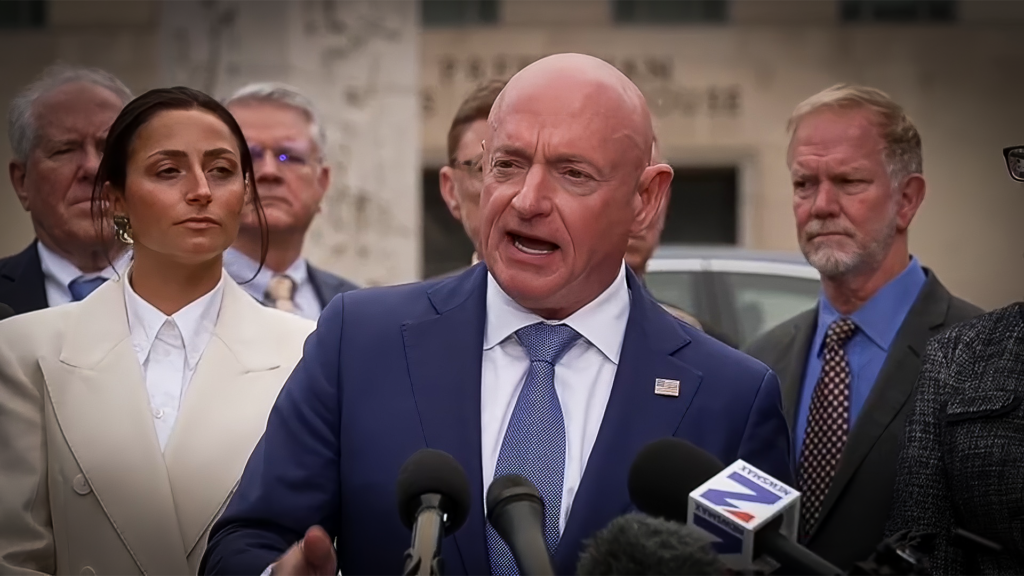
Defense Secretary Pete Hegseth is seeking to overturn a preliminary injunction that bars him from disciplining Sen. Mark Kelly, a retired Navy captain, for public statements on military obedience to lawful orders. During oral arguments, two of three D.C. Circuit judges expressed skepticism that a 1974 Supreme Court precedent governing active-duty personnel applies to retirees.
Substrate placeholder — needs reviewDefense Secretary Pete Hegseth maintains that he has authority to punish Sen. Mark Kelly, a retired Navy captain, for speech deemed prejudicial to good order and discipline in the military. That claim is at the center of Kelly's First Amendment lawsuit.
During oral arguments Thursday at the U.S. Court of Appeals for the D.C. Circuit, two of the three judges appeared disinclined to accept the government's position. Hegseth is asking the appeals court to overturn a preliminary injunction issued February 12 by a U.S. District Judge.
The order prevents disciplinary action against Kelly, including possible reduction in retirement rank and pay. The action stems primarily from a November 18 video in which Kelly and other Democratic legislators reminded military personnel of their duty to resist unlawful orders.
Kelly's lawyer argued that the punishments imposed on the senator amount to textbook retaliation against disfavored speech. The letter of censure sent January 5 explicitly targets Kelly for his public statements. Those include criticism of military leaders for firing admirals and generals and for surrounding themselves with yes men, as well as statements defending the Constitution.
His lawyer told the court that Kelly's status as a decorated war veteran who receives a military pension does not permit retaliation against protected political expression. Hegseth's argument relies on the Supreme Court's 1974 decision in Parker v. Levy.
That ruling upheld a court-martial sentence for an active-duty officer who urged soldiers to disobey deployment orders during the Vietnam War. The government contends the logic extends to retired officers like Kelly.
Levy governs the speech of retired service members. One judge noted that Kelly, unlike the active-duty officer in that case, never urged service members to disobey lawful orders. The video instead addressed the duty to refuse illegal orders, a concept taught at military academies.
The judge observed that the video faulted the administration for pitting uniformed military and intelligence professionals against American citizens but provided no specific examples of illegal orders. Hegseth's censure letter similarly does not identify particular orders that Kelly supposedly encouraged troops to disobey.
A second judge highlighted the broader implications of the government's stance. Retired officers would have to surrender their rank, pay and retired status to speak publicly about obeying or disobeying illegal orders. The judge described such speech as a textbook example taught at West Point and the Naval Academy.
The third judge on the panel appeared more receptive to the government's position. The judge noted Kelly's role as a senator with a prominent platform and suggested his criticism of certain military deployments could be interpreted as urging troops to stop them.
The judge also pointed out that retired officers remain subject to court-martial.
A brief supporting Kelly was filed by 73 former admirals, generals and service secretaries who served under presidents of both parties. It emphasizes the speech-chilling impact if the defense secretary can police statements by retirees. Kelly's lawyer told the court that veterans are now afraid to speak on public policy or post on social media for fear of losing their pensions.
The government maintains that retired officers must give up their pensions if they do not want the defense secretary to regulate their speech. Kelly's lawyer described that position as an insult both to veterans' service and to the First Amendment. The district judge who issued the injunction emphasized that no cases directly address the speech rights of retired service members.
The government had argued Kelly's speech was unprotected under Parker v. Levy. The appeals court panel noted that the earlier case involved an active-duty officer urging refusal of orders to fight in Vietnam, while Kelly stated the accepted principle that illegal orders should not be followed.
The question before the D.C. Circuit is whether the Parker precedent governs this situation. If it does not, the injunction would likely stand. The panel observed that the district judge simply rejected the government's sole argument rather than adopting a new standard for retirees.
" — Benjamin Mizer, Kelly's lawyer (Reason) It remains possible that courts could eventually recognize an intermediate standard for military retirees that grants more leeway than active-duty personnel but less than ordinary civilians. That standard was not developed in this case because the government argued only that retirees should be treated the same as those on active duty.
If the government's position were accepted, Hegseth would have power to regulate the speech of approximately 2 million retired officers. The case could determine the extent to which veterans retain First Amendment protections when commenting on military and national security matters in their roles as private citizens or elected officials.
Key Facts
Story Timeline
4 events- Feb 12, 2026
U.S. District Judge issues preliminary injunction blocking disciplinary action against Kelly.
1 sourceReason - Jan 5, 2026
Defense Secretary Pete Hegseth sends letter of censure to Sen. Mark Kelly.
1 sourceReason - Nov 18, 2025
Kelly and other legislators release video reminding troops of duty to refuse illegal orders.
1 sourceReason - May 8, 2026
D.C. Circuit hears oral arguments in Kelly v. Hegseth with skeptical questioning from two judges.
2 sourcesReason · The New York Times
Potential Impact
- 01
The D.C. Circuit ruling could set precedent on speech rights for all military retirees.
- 02
Retired officers may face continued uncertainty about First Amendment protections when speaking publicly.
- 03
Veterans may self-censor criticism of military policy to protect pensions and rank.
- 04
Congressional oversight of the military by retired officers serving in Congress could be affected.
- 05
The case may return to the district court for further proceedings if Parker precedent is rejected.
Transparency Panel
Related Stories
Washington Examiner**Iranian Economic Damage From Conflict Estimated at Up to $150 Billion**
A new analysis estimates explicit economic damage to Iran at $144 billion from the ongoing war and U.S. blockade, with the true total believed significantly higher. A CIA assessment reported by Reuters indicates Iran would not face severe economic pressure from a port blockade fo…
New ScientistThree Dead in Hantavirus Outbreak on MV Hondius en Route to Tenerife
Three passengers have died from Andes hantavirus aboard the MV Hondius cruise ship, which departed from Argentina in April. More than 140 people remain aboard as the vessel approaches Spain's Canary Islands for coordinated evacuations and monitoring. Health officials across multi…
Substrate placeholder — needs review61st Venice Biennale Opens with 24 National Pavilions
The 61st Venice Biennale began its press preview on May 8 2026 as demonstrators from the Pussy Riot group protested the previous day. A mass resignation of the Biennale jury over Israel's and Russia's participation led to further protests, country withdrawals and postponed ceremo…