science
Archaeologists Find Human Remains in Large Stone Jar in Laos
Researchers uncovered bones from at least 37 people inside a stone vessel more than two meters across. The discovery supports the view that thousands of similar jars across northern Laos served as burial sites.
May 18, 7:01 PM·2m read1 source
 Science News
Audio version
Tap play to generate a narrated version.
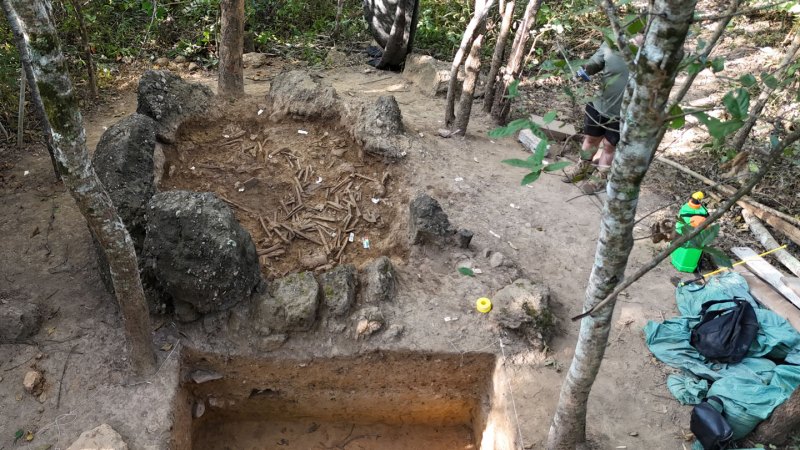
Archaeologists have discovered the remains of at least 37 people in a large stone jar in northern Laos. The oldest remains are thought to date from more than 1,000 years ago. Researchers report that the jar, a stone vessel more than two meters across, was used as a multigenerational burial site.
The finding suggests that thousands of stone jars throughout northern Laos had a similar purpose. It reinforces the idea that the Plain of Jars around the remote Lao town of Phonsavan was a vast ancient burial complex. The newfound jar is located in a forest about 70 kilometers northeast of Phonsavan on the Xieng Khouang Plateau.
Ancient stone jars have been found at sites across a swath of Laos. The new jar is at Jar site 75, about 70 kilometers northeast of Phonsavan. Researchers also found seven smaller jars at a nearby Group 2 location. Before this discovery, only a few jars had been found to contain bones or ashes.
Their original purpose remained unclear. The disarticulation of many bones inside the large jar suggests they were placed there after partial decomposition elsewhere. Archaeologist Nicholas Skopal of the Australian National University in Canberra said the large jar is unique.
He noted that the smaller jars nearby may have been used to remove flesh from bodies before the bones were transferred to the larger vessel. The process resembles a secondary burial practice.
French archaeologist Madeleine Colani investigated the stone jars near Phonsavan in the 1930s. She rejected the idea that the jars stored food or water and instead proposed a funerary role. Most jars are a little more than a meter high, though some reach three meters and weigh several tons.
Modern expeditions have been limited by unexploded munitions from the Vietnam War. Lao authorities have cleared many of those explosives. Radiocarbon dating indicates the jars were used for burials from the 9th to the 13th centuries A.D. Some jars contained ashes and burned bone fragments from cremations, a later Buddhist tradition.