science
Artemis II Astronauts Use Flywheel Device to Counter Space-Related Muscle and Bone Loss
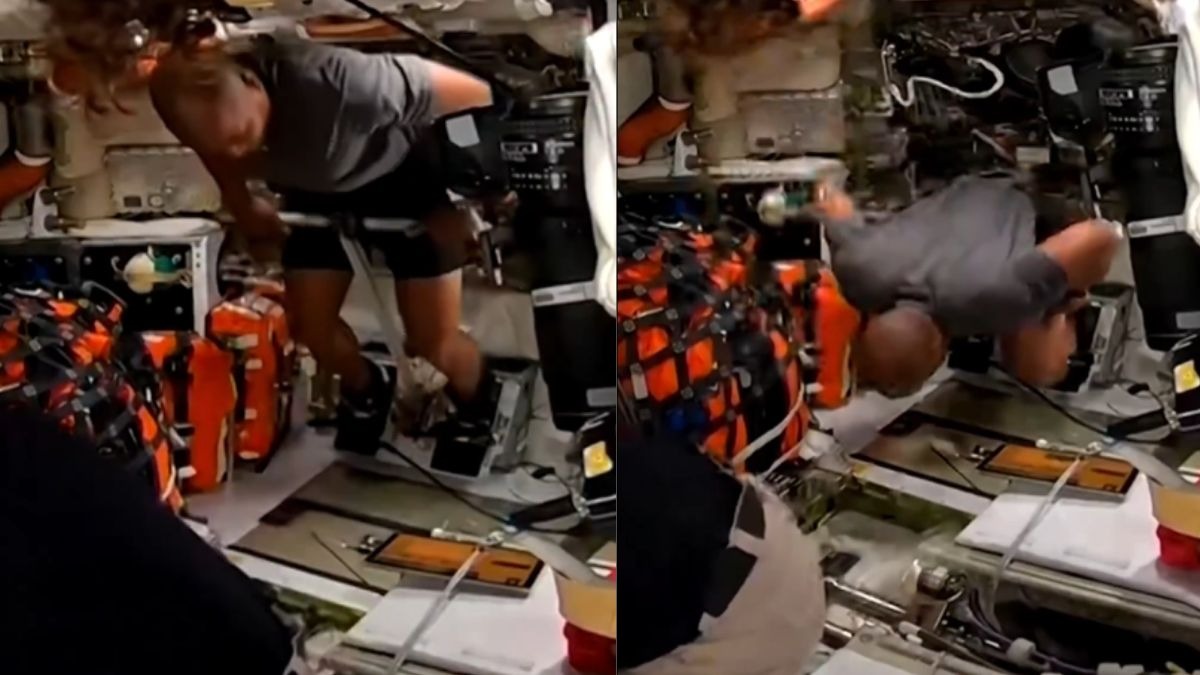
Astronauts on NASA's Artemis II mission employ a compact flywheel device for strength and cardiovascular exercises in the confined space of the Orion spacecraft. The device provides resistance up to 400 pounds and helps prevent physical decline during the 10-day mission.
 indiatoday.intoday.in
Audio version
Tap play to generate a narrated version.
NASA's Artemis II mission features four astronauts aboard the Orion spacecraft, including Canadian astronaut Jeremy Hansen. The mission involves a 10-day journey orbiting the moon. To address the effects of microgravity on the human body, the crew uses a flywheel device for exercise.
Even short durations in space can lead to muscle and bone atrophy due to the absence of gravity. The flywheel, a compact device comparable in size to a large shoebox, fits within Orion's 316 cubic feet of interior space. Astronauts secure their feet on a platform and pull a handle connected to a cable, which spins the flywheel to generate resistance proportional to the effort applied.
described the flywheel in a pre-launch video blog, comparing it to a rowing machine used at lower resistance and faster pace for cardiovascular benefits.
The device supports exercises such as squats, deadlifts, and curls, providing up to 400 pounds of resistance. Engineers designed it for efficiency in tight quarters to enable both cardio and strength training. The flywheel's development drew from earlier research on preventing atrophy.
Jessica Scott, an exercise physiologist at Memorial Sloan Kettering Cancer Center, contributed to prototypes for NASA. She noted that 10 days in space equate to 10 days of bed rest in terms of physical impact, with rapid muscle size loss and weakness, particularly affecting the heart.
team recruited 30 participants for a 70-day bed rest study, receiving over 10,000 applications.
Participants, referred to as 'pillownauts,' were divided into groups: some remained in bed continuously, others used traditional exercise equipment, and some used the flywheel. The objective was to prevent declines in fitness rather than enhance it. " — Jessica Scott (NPR) The flywheel proved effective in countering muscle and bone loss to the same degree as full gym equipment.