technology
Artemis II Mission Regains Communication After Lunar Far Side Pass; Crew Names Moon Feature
The Artemis II crew re-established contact with mission control after orbiting the moon's far side. Brother of astronaut Reid Wiseman shared a reaction during a CNN interview. The crew named a newly discovered bright spot on the moon 'Carroll' in honor of Wiseman's late wife.
DI
 satellitetoday.com
Audio version
Tap play to generate a narrated version.
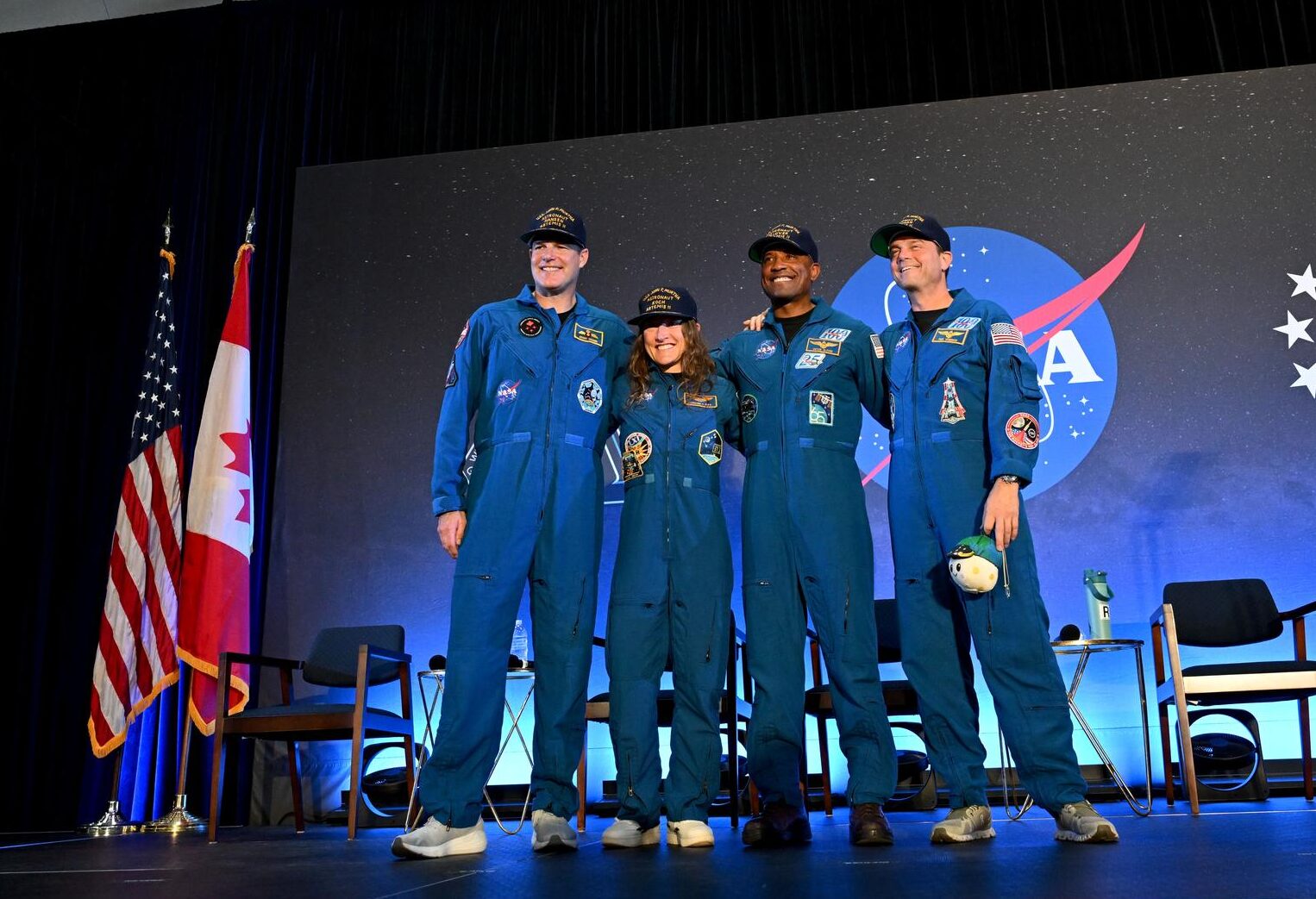
The Artemis II mission successfully regained communication with NASA mission control after the spacecraft passed around the far side of the moon. This milestone occurred during the crewed test flight, marking the first human lunar orbit since Apollo 17 in 1972. The mission involves four astronauts: Reid Wiseman, Victor Glover, Christina Koch, and Jeremy Hansen.
Bill Wiseman, brother of mission commander Reid Wiseman, provided a reaction shortly after the communication blackout ended. He spoke with CNN anchor Erin Burnett about the event. The interview highlighted family perspectives on the mission's progress.
The Artemis II crew identified and named a newly discovered bright spot on the moon's surface as 'Carroll.
' This feature was observed during the mission's orbital path. The name honors Carroll Wiseman, the late wife of astronaut Reid Wiseman. No additional details on the bright spot's location or scientific significance were reported in available sources.
The naming occurred as part of the crew's activities while in lunar orbit. NASA has not yet confirmed further analysis of the feature.
Context Artemis II launched on September 29, 2024, from Kennedy Space Center in Florida aboard the Space Launch System rocket and Orion spacecraft.
The 10-day mission tests systems for future lunar landings under NASA's Artemis program. The crew is scheduled to return to Earth on October 9, 2024. Communication blackouts are standard during far-side passes due to the moon blocking direct signals to Earth.
This event lasted approximately one hour. The successful reconnection confirms the spacecraft's communication systems function as designed.
