world
Astronomers Detect Four-Carbon Sugar in Giant Molecular Cloud Near Milky Way Center
Researchers identified the four-carbon sugar erythrulose in molecular cloud G+0.693-0.027 using radio telescopes in Spain. The finding, published in Nature Astronomy, places the molecule among the most complex sugars observed in interstellar space.
Jul 13, 3:47 PM·1m read9 sources

 +5
+5
Molecules detectNo life link
 io9.gizmodo.com
Audio version
Tap play to generate a narrated version.
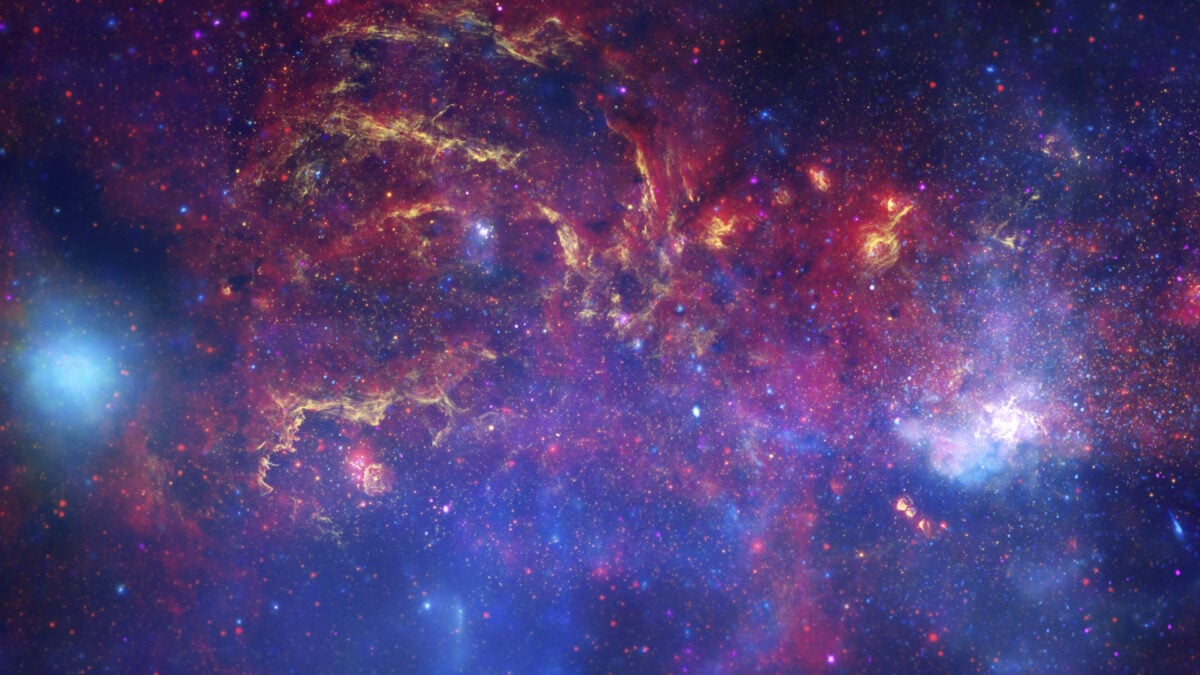
Astronomers detected the sugar erythrulose in the giant molecular cloud G+0.693-0.027 near the center of the Milky Way. The molecule, with chemical formula C4H8O4, was identified through signals collected by the Yebes 40-meter and IRAM 30-meter radio telescopes in Spain. Researchers confirmed its presence by matching the telescope data to laboratory spectroscopy samples.
The cloud lies approximately 26,745 light-years from Earth. Glycolaldehyde, a two-carbon sugar, appeared in the same region at comparable levels. Erythrulose ranks among the most complex sugars observed in interstellar space to date.
Erythrulose occurs on Earth in raspberries and is used in self-tanning lotions. It is not essential for life but can convert to a form considered important for the origin of life. A related sugar was detected in the same galactic region about 25 years ago.
Izaskun Jiménez-Serra, an astrophysicist at the Center for Astrobiology in Spain, said the cloud serves as an excellent laboratory for new molecular species. She added that the key ingredients for the origin of life could be present in other regions across the galaxy.
Erika Hamden of the University of Arizona, who was not involved in the study, described the finding as a pristine example of material floating in the galaxy.
NASA's OSIRIS-REx mission retrieved sugars from asteroid Bennu.
