science
Astronomers Report Possible Most Massive Pair of Black Holes
Observations of a galaxy 4.4 billion light-years away suggest the presence of two ultramassive black holes with a combined mass 60 billion times that of the sun. The pair, located in a 3,200 light-year star-free void, appears to be spiraling toward a merger.
May 11, 1:30 PM·1m read2 sources

 uctoday.com
Audio version
Tap play to generate a narrated version.
Developing·Limited corroboration so far. This page will refresh as more sources emerge.
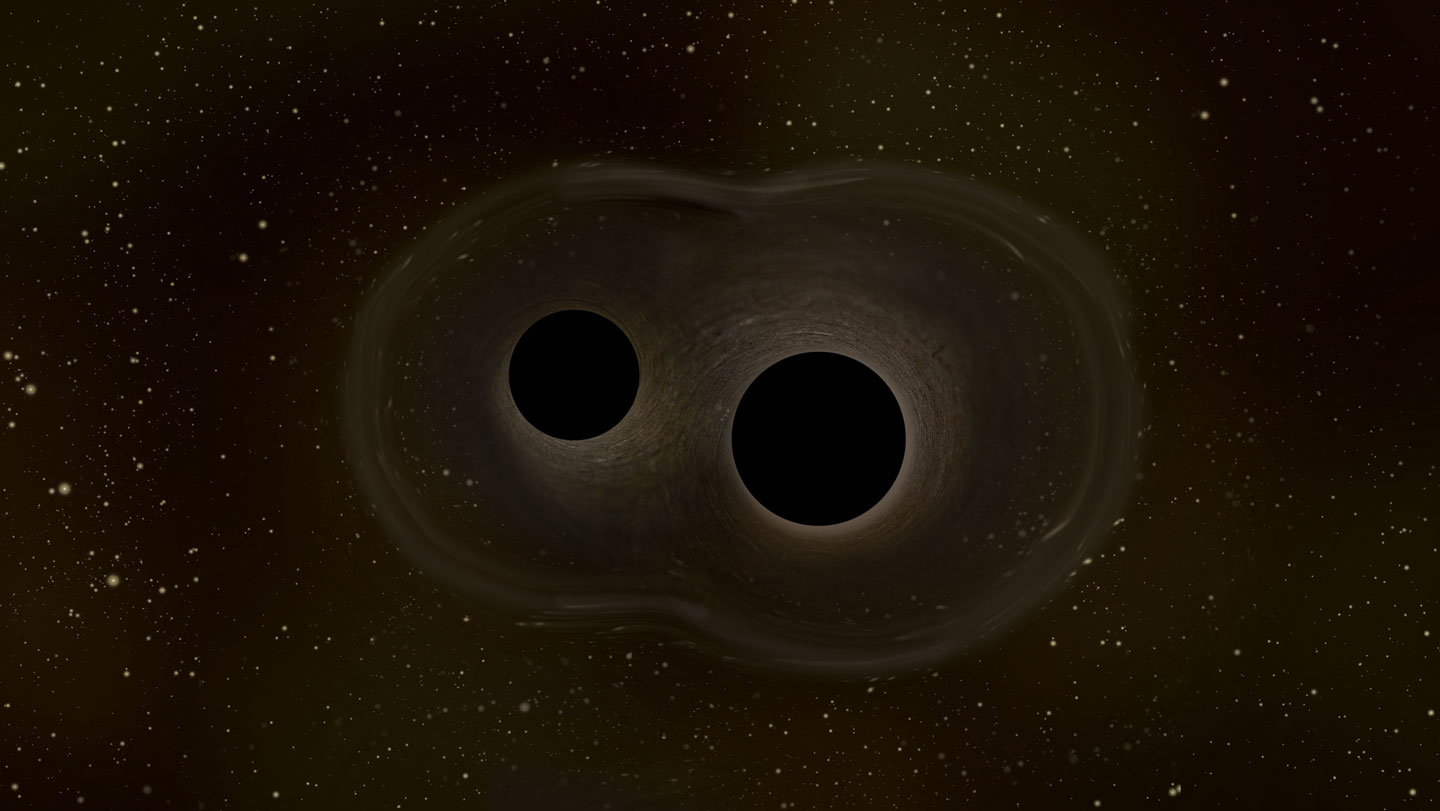
Astronomers have identified what may be the most massive pair of black holes observed to date, with a combined mass estimated at 60 billion times that of the sun. The potential pair sits within a galaxy 4.4 billion light-years from Earth known as Abell 402-BCG.
This mass is at least double that of the next most massive black hole duo previously reported. The black holes are thought to occupy a dark, starless region measuring 3,200 light-years across at the galaxy's center. In 2018, researchers noted the unusual void and initially attributed it to a dust cloud obscuring starlight.
New observations from the James Webb Space Telescope and the Very Large Telescope of the European Southern Observatory have since determined the area contains no stars. Instead, the data indicate the void is occupied by two ultramassive black holes that are spiraling toward each other.
When galaxies merge, their central black holes are drawn together by gravity. The process can eject nearby stars, creating the observed star-free zone.
The galaxy Abell 402-BCG is believed to have collided with another galaxy in the past. The black hole pair is estimated to have been interacting for only a few tens of millions of years. This timeframe qualifies as a relatively recent development in astronomical terms.
The pair is expected to merge eventually. Such a merger would likely produce one of the largest known black holes in the universe. Individual black holes exceeding 60 billion solar masses have been detected only a few times previously.
Both the combined masses of the black holes and their current stage of interaction make the observation uncommon. The findings were published April 23 in the Astrophysical Journal Letters. Researchers plan to use the results to examine the frequency of supermassive black hole mergers and their effects on surrounding galaxies.