world
Australian rocks yield 1.7-billion-year-old complex life fossils
A University of Sydney geobiologist examined ancient mudstone from the Northern Territory and identified microscopic fossils of early complex organisms. The study, published in Nature, shows these eukaryotes lived only in shallow oxygenated waters.
May 20, 11:00 AM·1m read1 source
 The Sydney Morning Herald
Audio version
Tap play to generate a narrated version.
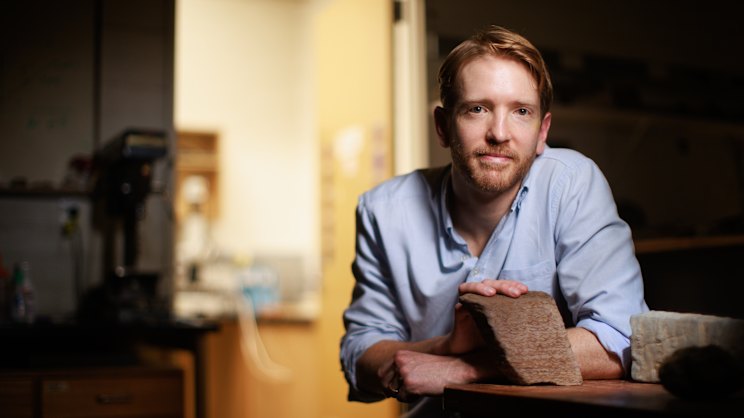
A University of Sydney geobiologist examined slabs of mudstone from the McArthur and Birrindudu basins and identified 12,000 microscopic fossils of early complex organisms. The fossils, dated to 1.7 billion years ago, include simple spheres as well as forms with appendages and creased surfaces.
These structures match the earliest known eukaryotes, the cell type that later produced plants, animals and fungi.
Oxygen levels and habitat Chemical analysis of the rocks showed iron reactions that indicate oxygen was present only in shallow coastal waters at the time. Eukaryotes appeared exclusively in those oxygenated zones, while deeper waters contained only simpler bacteria.
Oxygen concentrations were about one percent of modern levels, produced by cyanobacteria before the rise of plants. The study concludes that eukaryotes remained limited to these shallow pockets for roughly one billion years.
Mitochondrial timing and astrobiology The findings set a minimum date for the acquisition of mitochondria before 1.7 billion years ago. The presence of these energy-producing structures inside eukaryotic cells is viewed as a key step toward multicellular life.
The same research suggests that understanding early oxygen use on Earth can guide the search for life on other planets. A University of New South Wales associate professor noted that the fossils alone do not reveal whether the organisms required oxygen or merely tolerated it.