Axiom Math and Harmonic Raise Hundreds of Millions for Verifiable Math AI Amid Warnings of Unsustainable Funding
Axiom Math and Harmonic, both based in Palo Alto, have secured hundreds of millions in funding to develop AI systems that generate and verify mathematical proofs. The companies aim to apply verification technology to software code as their primary revenue source.
 flipboard.com
Axiom Math and Harmonic, two Silicon Valley start-ups, have each raised hundreds of millions of dollars to develop AI systems that produce mathematical proofs that can be independently verified. Axiom Math’s offices sit in Palo Alto, California, a few doors from Harmonic, and both firms occupy nondescript buildings whose meeting rooms are named after mathematicians such as Carl Friedrich Gauss and Ada Lovelace.
Ken Ono, who took leave in 2025 from his professorship at the University of Virginia, joined Axiom Math after Epoch AI asked him to create difficult mathematics problems to test AI systems.
Ono said large language models still require human review for correctness. ” he said. Axiom Math was founded by Carina Hong, a former student of Ono who previously studied at Stanford University. Five papers containing autonomously produced proofs generated by the company’s AI tools have been accepted in mathematical journals.
Ono said the firm aims to have dozens of such papers published by next year. Harmonic chief executive Tudor Achim said verification is becoming more valuable as AI writes increasing amounts of code. “As AI starts writing more and more code, the complementary value of verification increases, because humans then become the bottleneck,” Achim said.
Both companies plan to sell verification services for software while continuing to advance research-level mathematics. OpenAI chief scientist Jakub Pachocki said mathematics remains useful for measuring AI progress. “Mathematics is wonderful for developing AI because it’s very measurable,” Pachocki said.
Sébastien Bubeck, also at OpenAI, noted recent gains: “The weaknesses that we saw six months ago were extremely apparent. There were fields of mathematics where the model was only saying nonsense. ” Bubeck added that OpenAI is pursuing general intelligence rather than mathematics-specific optimisation.
Stanford University mathematician Ravi Vakil said the current level of funding may not last. “Right now, there’s a lot of money being put into this, and we’re going to miss it when it’s gone,” Vakil said. ” Axiom Math employee Shubho Sengupta said some mathematical modelling is already treated as proprietary.
“Large hedge funds do a lot of mathematical modelling. ” Sengupta added that advancing the frontiers of mathematical knowledge should remain free.
Achim said Harmonic intends to charge for useful tools while continuing to support mathematicians. The reporter visited both companies in Silicon Valley in April. The article was amended on 3 June 2026 to correct the role of Axiom Math’s AI tools in its recent journal papers.
Transparency
Reported by a single outlet. This score reflects source tier and factual specificity — corroboration is limited with one source.
Story details
Related Stories
 nbcnews.com
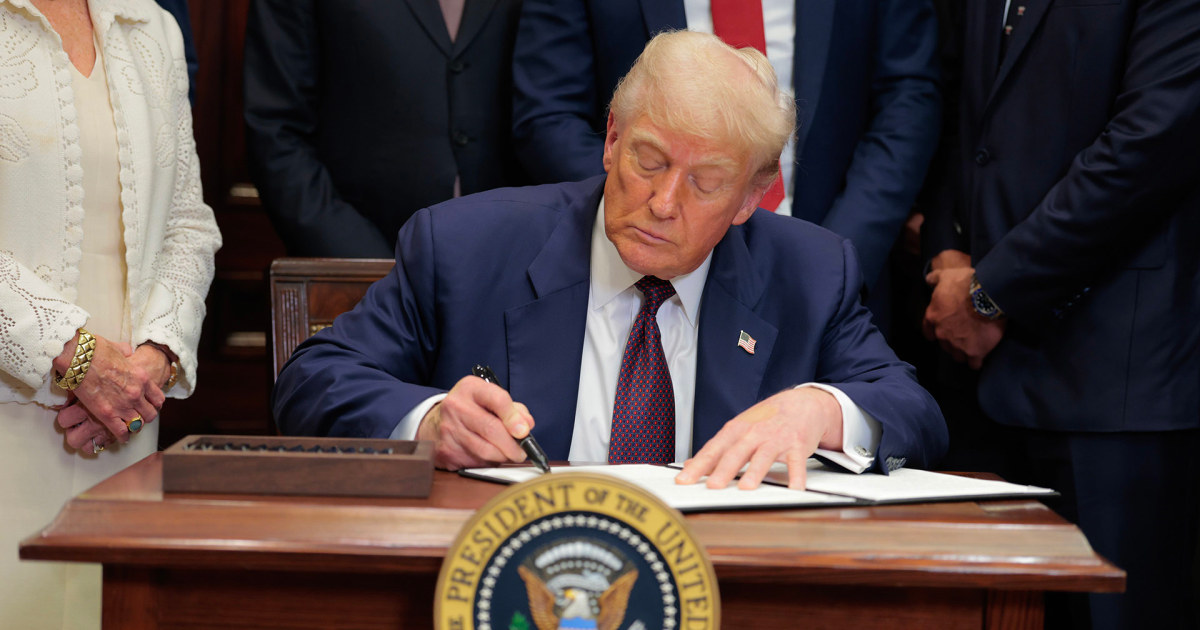
Trump Signs Executive Order for Voluntary AI Model Testing
President Trump signed an executive order creating a voluntary 30-day government testing process for AI models. OpenAI CEO Sam Altman will meet with White House officials and congressional leaders on Wednesday to discuss the policy.
 Cnbc
CnbcOpenAI CEO to Join G7 Leaders Summit on AI Safety
OpenAI chief executive Sam Altman will attend the G7 conference in France from June 15-17 after an invitation from President Emmanuel Macron. Discussions are expected to focus on youth safety and frontier AI risks.
 nbcnews.com
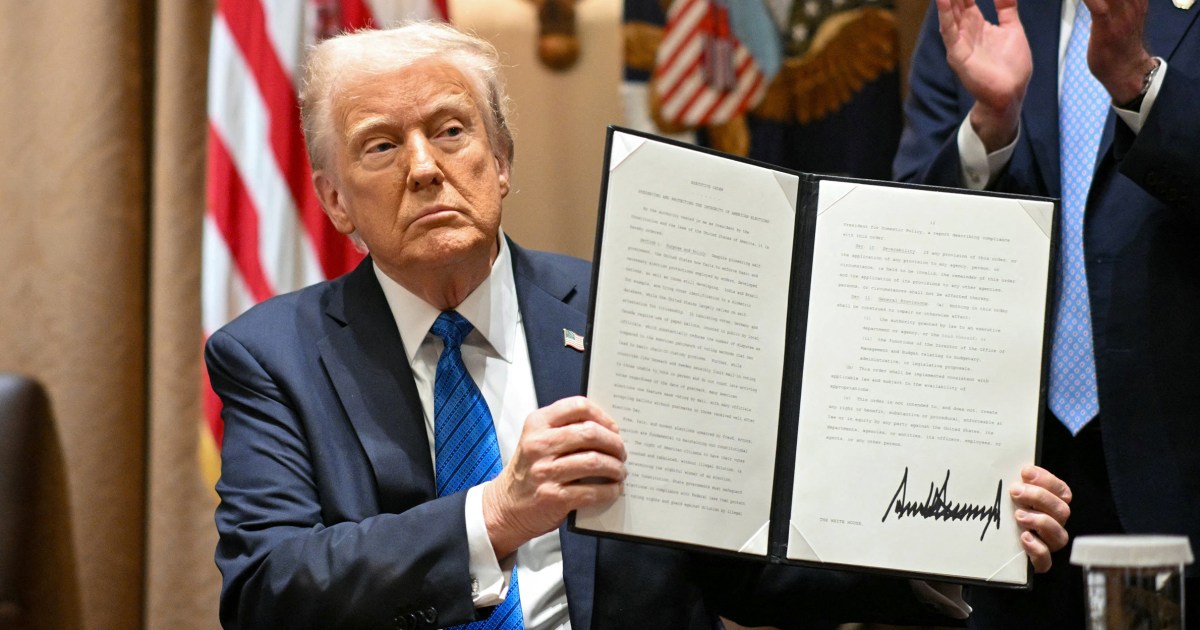
Trump Requires 30-Day Government Review of Advanced AI Models Before Public Release
President Trump signed an executive order on June 3, 2026, requiring companies to submit their most advanced AI models for government review 30 days before public release. The order is the first major AI regulation directive of his second term.