Badenoch Calls for Repeal of Public Sector Equality Duty, Sparking Debate Over Discrimination Protections
Conservative leader Kemi Badenoch said the duty has led public bodies to become institutionally incompetent and should be removed. Science Secretary Liz Kendall said the proposal would turn the clock back on protections for pregnant women, disabled people and older workers.
 BBC News
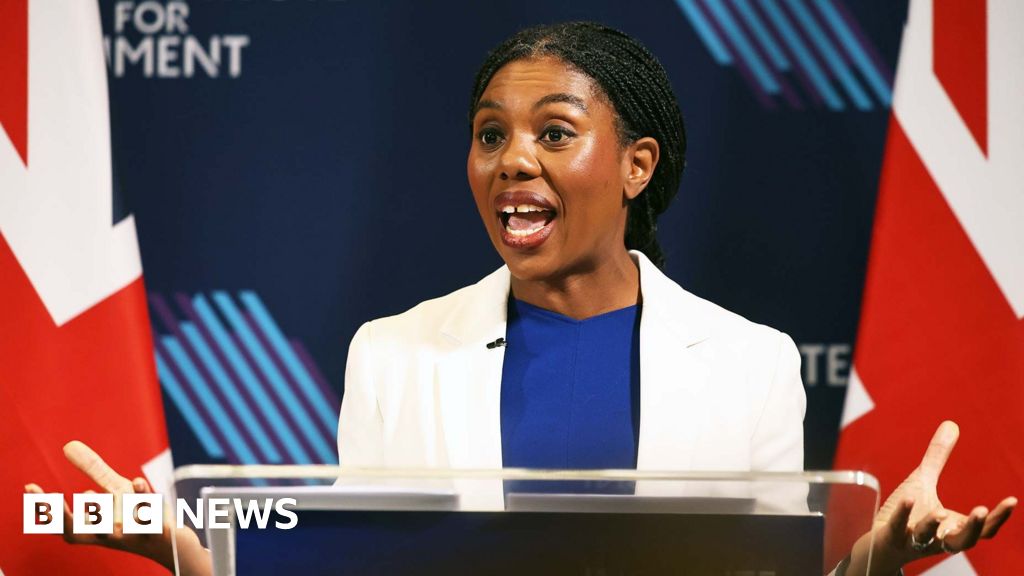
Kemi Badenoch called for the repeal of the Public Sector Equality Duty after the murder of Henry Nowak and the police response to it raised questions about equality policies. The Conservative leader said public bodies have spent so long worrying about institutional racism that they have become institutionally incompetent.
She described the repeal as the first step in a programme to restore common sense.
Badenoch said the duty has resulted in some groups being preferred over others. She added that equality law properly designed should protect people in the same way and should be a shield, not a sword. She said modern Britain is the least racist country on Earth and that rules introduced because people care about equality have overcorrected and become discriminatory.
The Conservative leader said she did not ask for the duty to be removed while serving as equalities minister. She said she kept trying to explain how to comply with the Equality Act but her letters were ignored. She said the best approach now is to remove the duty rather than replace it.
The Public Sector Equality Duty applies in England, Scotland and Wales. It requires public bodies to have due regard to eliminating unlawful discrimination and advancing equality of opportunity between people who share and people who do not share a relevant protected characteristic. Protected characteristics include age, disability, race, pregnancy, sex and sexual orientation.
The duty was introduced in 2010 as part of the Equality Act, which merged previous laws such as the Equal Pay Act and the Disability Discrimination Act. Government guidance states the duty should always be applied in a proportionate way and that organisations should avoid an overly bureaucratic approach.
In 2011 the High Court ruled that Somerset and Gloucestershire County Councils had not complied with the duty when they sought to withdraw funding for more than 20 libraries.
In 2020 the Equalities and Human Rights Commission concluded that the Home Office had not complied with the duty in relation to how its hostile environment policies would affect members of the Windrush generation. Badenoch said the Conservatives are not proposing to replace the duty. She said people should simply be told to do their jobs.
The Conservatives argued the duty had led the Bank of England to take Winston Churchill off bank notes. The Bank of England said a key driver of its plan to replace historical figures with animals was to increase counterfeit resilience. Science Secretary Liz Kendall said the plans would turn the clock back.
She said Badenoch wanted to repeal a duty which stops pregnant women being sacked, women on maternity leave being sacked, which prevents discrimination against disabled people and which prevents discrimination on age grounds. She said there are still women who worry that pregnancy or maternity leave will cost them their job.
A spokesman for the Equality and Human Rights Commission said the purpose of the duty is to make sure public authorities think about how they promote equality throughout their day-to-day business.
Disability Rights said it disagrees profoundly with the calls to repeal the duty because systemic discrimination remains embedded in society and institutional policies. Reform UK said the suggestion was classic Conservative politics: too little, too late, and nowhere near enough.
Liberal Democrat Women and Equalities Spokesperson Marie Goldman said the speech was a desperate attempt to fan the flames of culture war politics from a party out of ideas.
The Labour government has promised a new strategy with a primary focus on getting working-class people joining and progressing in the civil service. The strategy will place a major, explicit emphasis on socio-economic background as a primary driver of unequal opportunity and will aim to address an over-representation of people from more well-off backgrounds.