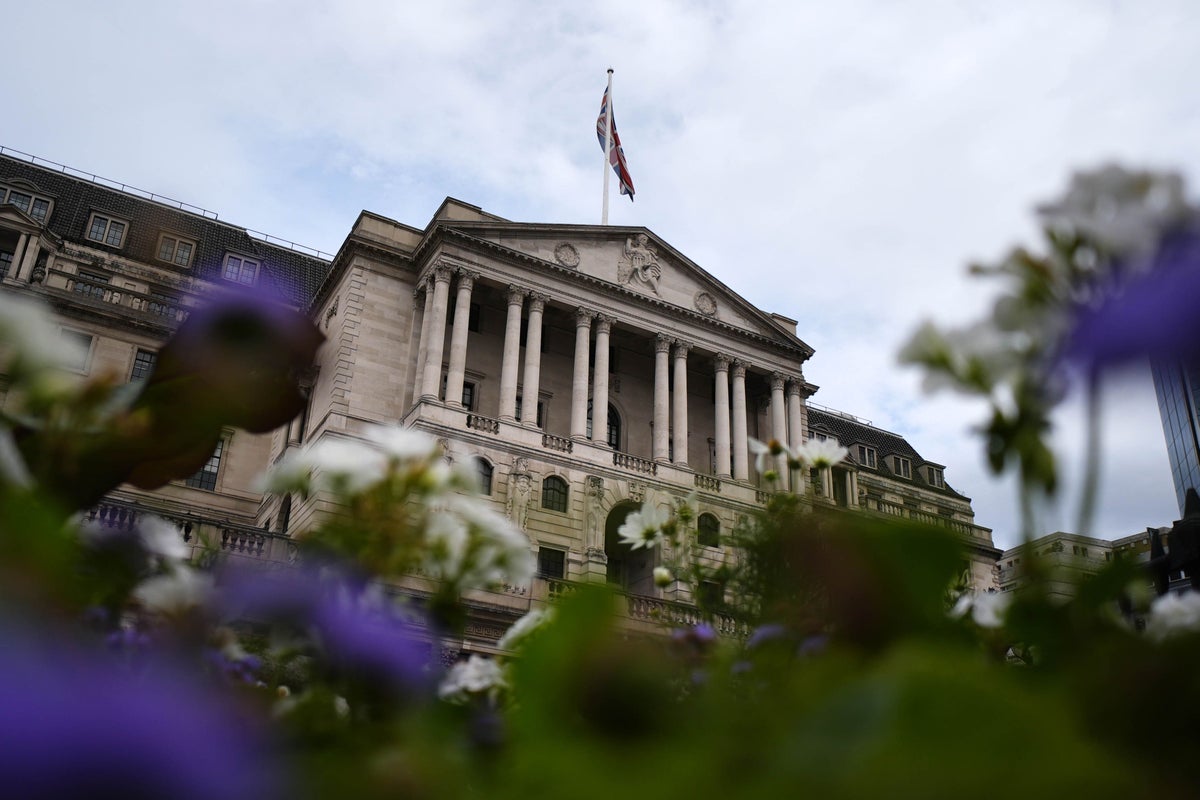
Bank of England Holds Interest Rates at 3.75% Amid Middle East Conflict and Rising Inflation
The Bank of England kept its base interest rate unchanged at 3.75% despite inflation climbing to 3.3% last month, citing uncertainty from the Middle East war disrupting oil supplies. Policymakers warned of potential inflation spikes up to 6.2% in extreme scenarios and signaled possible future rate hikes.
stock-ai.com / Wikimedia (CC BY-SA 4.0)The Bank of England maintained its base interest rate at 3.75% following the Monetary Policy Committee meeting on Thursday. Eight members voted to hold rates, while one member voted for an increase to 4%. This marks the third consecutive meeting with no change, after reductions from 5.25% since 2024.
Inflation rose to a three-month high of 3.3% last month, driven by higher petrol and diesel costs. The bank aims to keep inflation at a 2% target set by the government. Raising rates is the primary tool to curb inflation, and policymakers noted that deviations from the target increase the likelihood of rate hikes.
The ongoing war in the Middle East has disrupted global oil and gas supplies, blocking the Strait of Hormuz shipping route and involving attacks on facilities in Qatar. This has pushed up wholesale energy prices, affecting UK fuel costs and contributing to inflation.
The bank highlighted secondary effects on energy-intensive industries, including the food sector, where inflation could reach up to 7% due to higher fertiliser costs. The New York Times reported that both the Bank of England and the European Central Bank held rates steady, as officials assess potential long-term damage from a prolonged energy shock.
“The MPC should not wait for impacts from second-round inflation before tightening monetary policy.”
The bank outlined three scenarios for the economy, all projecting higher-than-expected inflation. In the most benign case, with a swift conflict resolution, inflation could peak at 3.6%. An extreme scenario with sustained high oil and gas prices could see inflation rise to 6.2%, not returning to 2% within the forecast period.
All forecasts indicate GDP growth slowing to 0.7% or 0.8% this year, with a smaller recovery in 2027. Unemployment is projected to peak at 5.5% or 5.6% in various scenarios.
Financial markets anticipate at least one rate increase in coming months. The bank's chief economist was the sole voter for a hike, emphasizing uncertainty from the conflict. Amid these pressures, investment analysts advise against fear-based decisions. MarketWatch highlighted that a traditional 60/40 portfolio has performed well despite market chaos and inflation fears.
Higher interest rates influence borrowing costs for mortgages and loans, with lenders adjusting rates following the Middle East conflict outbreak. Savings rates are also likely to rise. In the U.S., credit card debt exceeds $1.23 trillion at record highs, with elevated rates persisting despite Federal Reserve cuts last year.
CBS News outlined strategies to pay off $15,000 in debt by year's end, including balance transfers to 0% APR cards, debt consolidation loans at lower fixed rates, or debt relief options like management plans or settlements reducing balances by 30% to 50%.
Such approaches require calculating real payoff amounts and automating payments to ensure consistency.
“Paying off $15,000 in debt by the end of 2026 is an ambitious but achievable goal.”
Key Facts
Story Timeline
4 events- Thursday
Bank of England held interest rates at 3.75% with eight members voting to hold and one for an increase.
3 sourcesThe Independent · The New York Times · @MarketWatch - Last month
UK CPI inflation rose to 3.3%, driven by higher fuel costs.
1 sourceThe Independent - Recent weeks
Middle East conflict disrupted oil supplies, blocking Strait of Hormuz and attacking Qatar facilities.
2 sourcesThe Independent · @SeekingAlpha - Since 2024
Bank of England reduced rates from 5.25% to current 3.75% over multiple meetings.
1 sourceThe Independent
Potential Impact
- 01
Higher borrowing costs will raise mortgage and loan rates for UK consumers.
- 02
UK inflation could rise to 6.2% if Middle East conflict prolongs high energy prices.
- 03
Food sector inflation may hit 7% due to energy and fertiliser cost pressures.
- 04
Interest rates may increase to 5% to combat persistent inflation.
- 05
Unemployment in UK could peak at 5.6% under worst economic scenarios.
- 06
Investors may see opportunities to buy undervalued stocks amid market pullbacks.
Transparency Panel
Related Stories
Oil Prices Drop After Reports of U.S.-Iran Talks on Ending War and Reopening Strait of Hormuz
Oil prices dropped significantly following reports that the U.S. and Iran are close to a memorandum of understanding to halt fighting and begin nuclear talks. President Trump announced a pause in the U.S. naval escort operation in the Strait of Hormuz. Iran is expected to respond…
insidermonkey.comCrypto Firm World Liberty Financial Sues Investor Justin Sun Over Alleged Smear Campaign
World Liberty Financial, a cryptocurrency company founded by the Trump and Witkoff families, has filed a lawsuit accusing investor Justin Sun of conducting a smear campaign to harm its token's value. The suit claims Sun shorted the token in violation of agreements and used social…
FDA Withdraws Studies Supporting Safety of COVID and Shingles Vaccines
The U.S. Food and Drug Administration blocked the publication of research finding rare side effects from COVID and shingles vaccines. The studies were withdrawn due to broad conclusions not supported by data, amid broader efforts by the Trump administration to challenge vaccine r…