Brazilian Researcher Arrested for Allegedly Removing Virus Samples from Biosafety Lab
Brazil's federal police arrested a virologist at the State University of Campinas for allegedly taking virus samples from a high-security lab. The samples, including chikungunya and dengue, were recovered and deemed safe by authorities. The incident has raised questions in the virology community about lab security protocols.
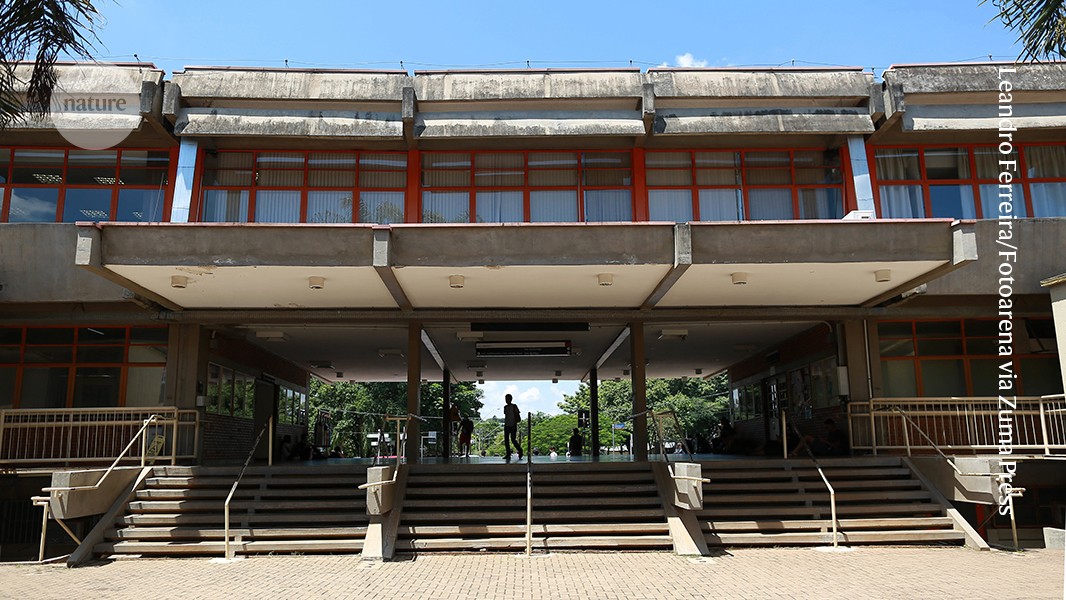
app.buzzsumo.comBrazil's federal police arrested Soledad Palameta Miller, a virologist at the State University of Campinas (Unicamp), late last month for allegedly taking samples of viruses from a biosafety-level-3 (BSL-3) laboratory at the university. Police recovered the missing samples, which included viruses such as chikungunya, dengue, and Epstein-Barr, from other locations on Unicamp's campus, according to reports from the Brazilian news program Fantástico.
Recovery and Safety Assessment Brazil's
National Health Regulatory Agency (Anvisa) stated earlier this month that it evaluated the recovered samples and determined they did not pose a risk to public health.
The incident occurred at Unicamp's Laboratory of Virology and Applied Biotechnology, a BSL-3 facility equipped with air filters and containment systems for studying potentially lethal pathogens. Access to such facilities is tightly controlled, and samples cannot be removed without authorization, according to Paulo Sanches, a virologist at São Paulo State University in Araraquara.
Investigation Details
The samples were noticed missing in February, prompting concerns from lab researchers who notified university officials and federal police.
Security-camera footage showed Michael Edward Miller, a PhD student in the lab and husband of Soledad Palameta Miller, leaving the facility at unusual times while carrying items, as reported by Fantástico.
Michael Edward Miller has not been arrested or charged. André Ribeiro, head of the federal police in Campinas, stated that responsibility rests with Soledad Palameta Miller as the materials were stored in her workspace, and the investigation will determine if others assisted.
Community Response and Context
The Brazilian virology community expressed perplexity over the lapse at a BSL-3 lab.
The Brazilian Society for Virology stated it is monitoring the situation and noted that biosafety systems proved effective, with samples quickly recovered and contained. Unicamp stated it is cooperating fully with police and conducting an internal investigation. The incident comes as Brazil builds support for its first biosafety-level-4 (BSL-4) lab near Unicamp.
Clarice Weis Arns, head of the affected lab, declined to comment, citing university advice. S. program since 2015.
“No sample can be removed from a lab with this biosafety level without authorization.”
Key Facts
Story Timeline
4 events- March 24, 2026
Soledad Palameta Miller was released on bail after her arrest for allegedly taking virus samples.
1 source@Nature - March 23, 2026
Federal police arrested Soledad Palameta Miller after determining she attempted to dispose of evidence.
1 source@Nature - March 21, 2026
Police conducted searches at Unicamp and recovered the missing virus samples.
1 source@Nature - February 2026
A researcher at the Unicamp lab noticed several virus samples were missing.
1 source@Nature
Potential Impact
- 01
The incident may lead to stricter access controls in Brazilian BSL-3 labs.
- 02
It could delay or affect support for Brazil's planned BSL-4 lab construction.
- 03
Unicamp may implement new internal security protocols following its investigation.
- 04
The virology community might advocate for national tracking of biosafety incidents.
Transparency Panel
Related Stories
Nbc NewsArtemis II Astronauts Share Experiences from Historic Lunar Flyby Mission
The four Artemis II astronauts held a press conference to discuss their 10-day mission around the moon, highlighting views of the lunar far side and a solar eclipse. They described emotional moments and the spacecraft's performance during reentry. The mission tested NASA's Orion…
zerohedge.comAstronomers Report Evidence of Early Universe Stars in Galaxy Hebe
Researchers using the James Webb Space Telescope have observed galaxy Hebe, which existed 400 million years after the big bang. The galaxy shows signs of containing stars made almost entirely of hydrogen and helium, consistent with Population III stars. Further observations confi…
The War ZoneU.S. Military Outlines Blockade Efforts Against Iranian-Linked Ships Amid Cease-Fire
U.S. military officials detailed ongoing naval blockade operations targeting Iranian-linked vessels globally, emphasizing warship capabilities and allied partnerships. Statements highlighted the degraded state of Iranian command and control, with warnings against cease-fire viola…