Substrate
politics

British Museum Replaces 'Palestine' With 'Gaza' and 'West Bank' in Ancient Levant Displays

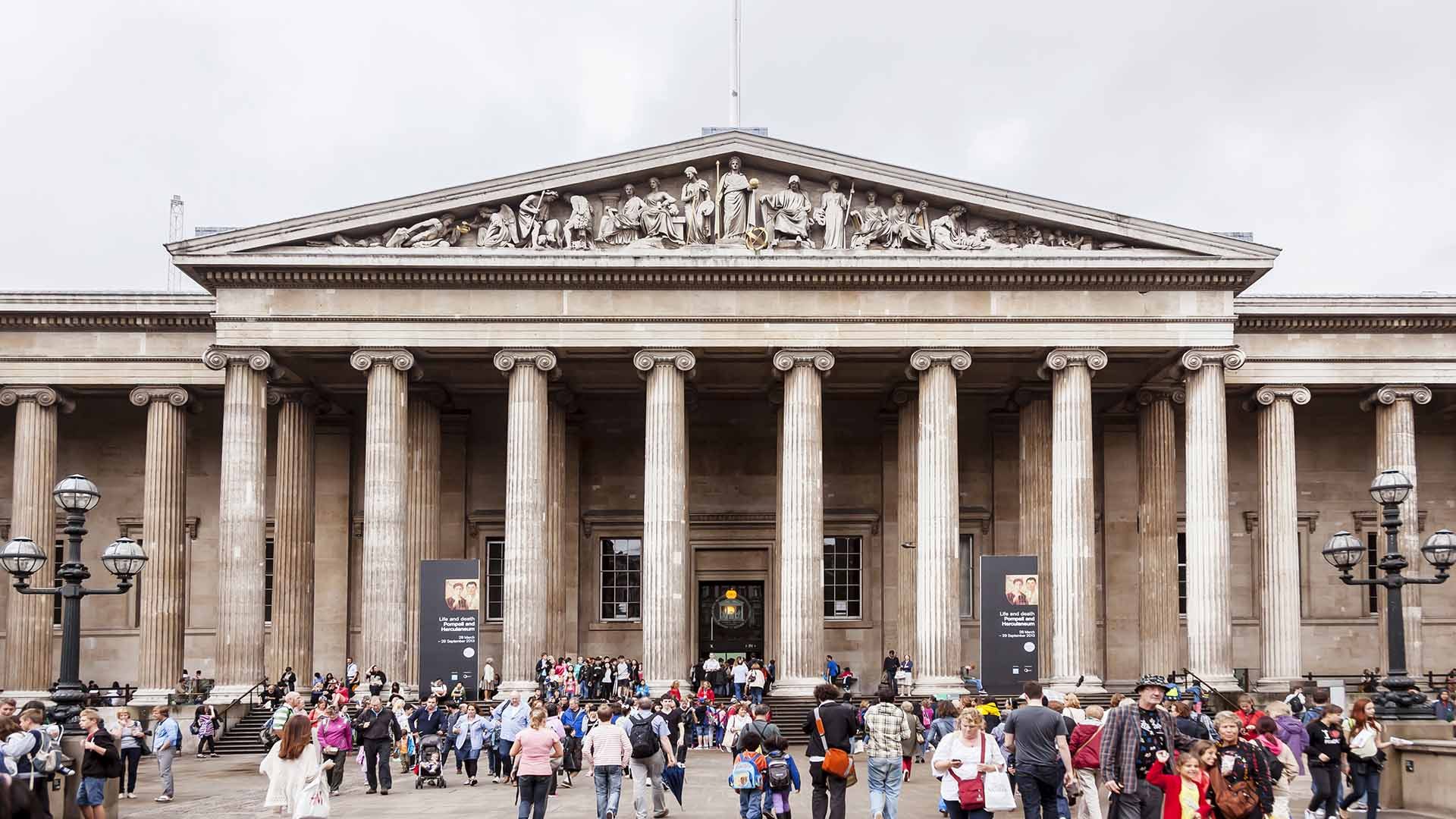
Husam Zomlot called the removal of the term an 'erasure' and met museum director Nicholas Cullinan in March without securing any commitment to restore it. The changes coincided with Britain's formal recognition of the state of Palestine in September 2025. The British Museum said it continues to use the word elsewhere and cited audience testing on historical terminology.
GB News
1 source·May 7, 9:39 AM(17 hrs ago)·2m read
British Museum Replaces 'Palestine' With 'Gaza' and 'West Bank' in Ancient Levant Displayschannel4.com
Audio version
Tap play to generate a narrated version.
Developing·Limited corroboration so far. This page will refresh as more sources emerge.

Husam Zomlot, the Palestinian ambassador to the UK, demanded that the Foreign Office intervene after the British Museum removed references to Palestine from exhibits covering the Middle East. The changes, made in 2025, coincided with the same year Britain formally recognised the state of Palestine in September.

Zomlot has called for the word "Palestine" to be reinstated and wrote to British Museum director Nicholas Cullinan and to ministers requesting reversal of the alterations.

The museum removed "Palestine" from a panel listing present-day countries within the ancient Levant region. "Gaza" and "the West Bank" replaced "Palestine" and "Palestinian" on explanatory panels in the ancient Levant and Egyptian rooms. Among the specific changes, the word "Palestinian" was replaced with "Canaanite" in a panel about the Hyksos rulers of Egypt from roughly 1700 to 1500 BC.

References to Palestine and the Philistines were also removed from a text about the Phoenicians. " He said: "For me, this is not only a political issue. This is not even just a historical issue.

This is an existential issue. " The changes were first reported by The Telegraph in February. Zomlot was invited to meet Nicholas Cullinan and curators in March. He left the meeting without any commitment that the changes would be reversed and was offered a tour of the museum which he declined.

In a subsequent letter to Nicholas Cullinan, Zomlot said it would not have been appropriate to engage further in a way that could be interpreted as endorsing the museum's current presentation. He said he remained willing to continue discussions once the changes had been addressed. Zomlot was still awaiting a response from the Foreign Office.

The British Museum insisted it has not removed the term "Palestine" from its displays entirely. It said the word "Palestine" continues to appear across galleries and on its website. " UK Lawyers for Israel sent a letter to the British Museum arguing that applying the name "Palestine" retrospectively created a false impression of historical continuity and risked obscuring the origins of Jewish people.

The museum made the alterations following audience research and after receiving that letter. " Marchella Ward, a lecturer in classical studies at the Open University, said the decision had nothing to do with historical accuracy. Josephine Quinn, professor of ancient history at Cambridge University, said the more troubling issue was the suggestion ancient place names had any direct relevance to contemporary politics.

The British Museum is publicly funded but governed by an independent board of trustees chaired by former Conservative chancellor George Osborne. GB News reported that a Government spokesman confirmed museums and galleries in the UK operate independently, with decisions about collections a matter for their trustees rather than ministers.

Key Facts

British Museum replaced 'Palestine' and 'Palestinian' with '
Changes affected panels in ancient Levant and Egyptian rooms as well as text about Hyksos rulers (1700-1500 BC) and Phoenicians
Husam Zomlot called removals a historical 'erasure' and an '
Palestinian ambassador to the UK met museum director in March, declined tour, and said further engagement could be seen as endorsement
Museum cited audience testing and letter from UK Lawyers for
Testing found historic 'Palestine' term 'in some circumstances no longer meaningful'; museum uses 'Canaan' for ancient maps and UN terminology for modern bounda

Story Timeline

4 events
  1. 2025

    British Museum made alterations to exhibits removing references to Palestine; Britain formally recognised the state of Palestine in September

    4 sourcesGB News
  2. February 2026

    Changes first reported by The Telegraph

    1 sourceThe Telegraph via GB News
  3. March 2026

    Husam Zomlot met Nicholas Cullinan and curators but left without commitment to reverse changes

    2 sourcesGB News
  4. 2026-05-07

    Zomlot still awaiting response from Foreign Office after writing to museum director and ministers

    1 sourceGB News

Potential Impact

  1. 01

    Continued independence of British Museum trustees from direct government control affirmed

  2. 02

    Public debate among academics on use of ancient place names in museum displays

  3. 03

    Diplomatic tension between Palestinian representation and UK cultural institution despite Britain's recognition of Palestine

Transparency Panel

Sources cross-referenced1
Confidence score65%
Synthesized bySubstrate AI
Word count448 words
PublishedMay 7, 2026, 9:39 AM
Bias signals removed2 across 1 outlet
Signal Breakdown
Loaded 1Framing 1

Related Stories

Lula Says Trump Told Him U.S. Has No Plans to Invade Cuba After White House MeetingSubstrate placeholder — needs review
politics1 hr agoFraming65Framing risk65/100Lede and title foreground Lula's claims and meeting process over substantive Cuba policy; heavy inherited consensus framing from sources on invasion speculation and blockade language.Click to jump to full framing analysis

Lula Says Trump Told Him U.S. Has No Plans to Invade Cuba After White House Meeting

Brazilian President Luiz Inacio Lula da Silva met with President Trump at the White House on May 7, 2026, for three hours. Lula later quoted Trump as saying the U.S. will not invade Cuba, calling the statement a great sign. The comments follow Trump's recent statements and an exe…

washingtontimes.com
Wall Street Journal
AF
3 sources
White House Border Czar Says Amnesty Is Off The TableSubstrate placeholder — needs review
politics1 hr agoFraming55Framing risk55/100Rewrite largely strips loaded language but retains lede_misdirection by centering Homan's statements and process over the substantive policy shift on amnesty and deportations.Click to jump to full framing analysis

White House Border Czar Says Amnesty Is Off The Table

Tom Homan stated Thursday that the Trump administration is not considering amnesty for any illegal immigrants, including those under the DACA program. He said mass deportations will resume after a recent dip in activity caused by a government shutdown. Homan also addressed discus…

dailycaller.com
Cbs News
2 sources
National Capital Planning Commission Requests Additional Information on Proposal to Paint Eisenhower Executive Office Building Whitefastcompany.com
politics1 hr agoFraming65Framing risk65/100Rewrite inherits strong consensus framing that centers process objections and historic-preservation alarm over the substantive proposal, with lede misdirection and selective negative sourcing.Click to jump to full framing analysis

National Capital Planning Commission Requests Additional Information on Proposal to Paint Eisenhower Executive Office Building White

The commission declined to approve the project Thursday and directed the White House to return with additional information on paint testing and alternatives. The proposal, estimated to cost at least $7.5 million, is part of President Trump's broader plan to beautify Washington th…

Associated Press
The New York Times
fastcompany.com
joemygod.com
abcnews.go.com
5 sources