world
Bumblebees Roll Ball to Reach Treat, but Researchers Question If It Shows Understanding
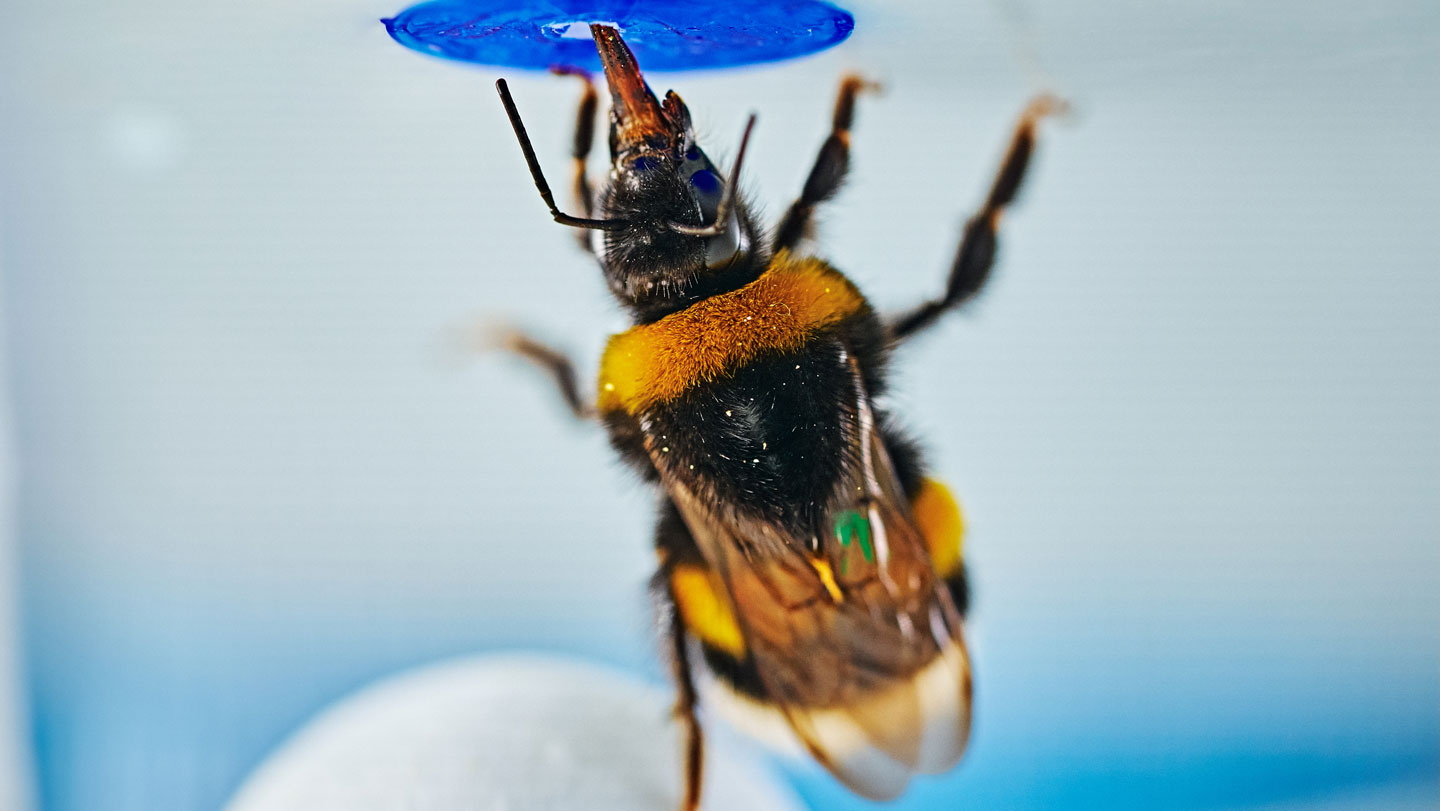
Untrained bumblebees moved a Styrofoam ball beneath a blue circle to climb and reach a reward in experiments published June 7, 2026. The study appears in the journal Science.
 uctoday.com
Audio version
Tap play to generate a narrated version.
Developing·Limited corroboration so far. This page will refresh as more sources emerge.
Untrained bumblebees rolled a small Styrofoam ball beneath a blue circle on the ceiling of an arena and climbed atop it to reach a reward, according to a study published June 7, 2026, in the journal Science. Olli Loukola, a behavioral ecologist at the University of Turku in Finland who conducted the work while at the University of Oulu, first trained the bees to associate the blue circle with a sweet treat.
He then placed the circle alone on the ceiling of a hollow puck-shaped container about an inch high, a height too great for the insects to stand and reach yet too low for flight.
In the first experiment, almost three-quarters of the bees moved the ball under the blue dot. Loukola said he was not expecting that high success rate. A second experiment added barriers that blocked the blue circle from view and placed the ball in a different part of the enclosure.
Some 80 percent of a new group of bees rolled the ball beneath the circle. Loukola said the results show that very tiny brains can solve super complex problems. Bumblebees have a brain the size of a sesame seed.
The arena design and video recordings allowed observers to track each bee's movements. Loukola noted that bumblebees love rolling balls, though some required more time and made more errors before succeeding. The work follows a classic experiment by German psychologist Wolfgang Köhler more than a century ago, in which a chimpanzee stacked boxes to reach a suspended banana.
Similar tasks have been solved by birds and elephants. Loukola said he planned the experiment to be challenging so the bees would need to understand the task. He also raised the possibility that the behavior might be play or chance rather than goal-directed action.