US Military Focus on Middle East Conflict Affects Asia-Pacific Strategy 15 Years After 2011 Pivot
In 2011, President Barack Obama announced a pivot to Asia to address China's rise after wars in Iraq and Afghanistan. Fifteen years later, the US remains engaged in a Middle East conflict with Iran, leading to the redeployment of military assets from the Asia-Pacific region. This shift has raised concerns among US officials and allies about impacts on regional deterrence and economic relations wit
 Fortune
In 2011, President Barack Obama announced a strategic pivot to Asia, aiming to shift US focus from wars in Iraq and Afghanistan to counter China's growing influence in the region. The policy sought to rebalance American resources toward the Asia-Pacific.
Fifteen years later, as of 2026, the US is involved in a conflict with Iran in the Middle East, which has required pulling military assets from Asia-Pacific locations.
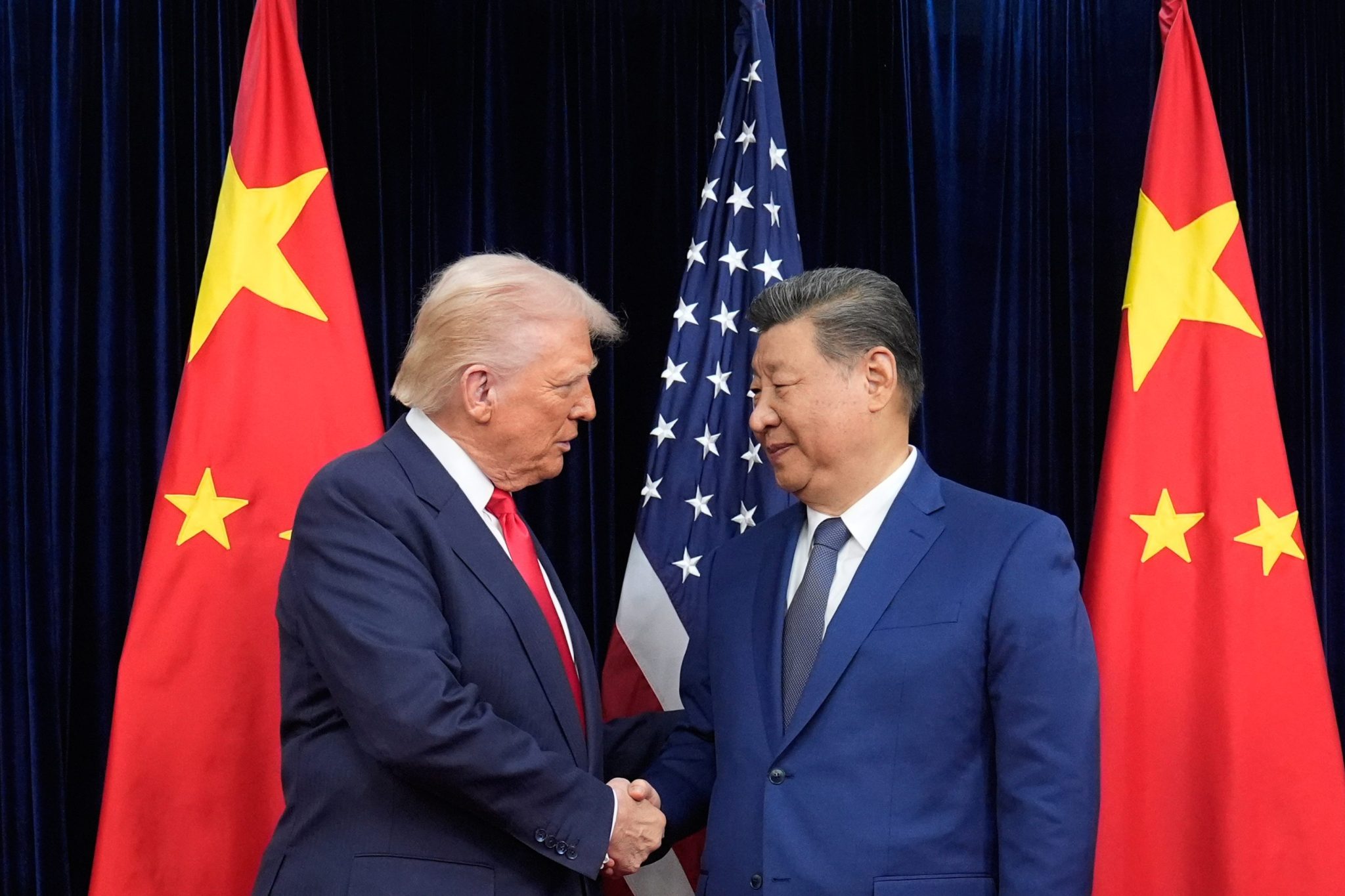
The current Middle East engagement includes efforts to address Iran's nuclear and missile programs. This has led to the redeployment of resources, such as missile defense systems from South Korea and a rapid-response Marine unit from Japan. President Donald Trump delayed a planned trip to China by several weeks due to these demands, affecting preparations for a summit with Chinese leader Xi Jinping scheduled for the following month.
US officials have expressed concerns about the implications for Asia. Sen. Jeanne Shaheen, the top Democrat on the Senate Foreign Relations Committee, led a bipartisan group of senators to Taiwan, Japan, and South Korea.
During the visit, they heard reports of worries over rising energy costs and the removal of US military assets. Shaheen stated that the US remains committed to deterring conflicts in Asia and maintaining regional stability. She noted that China has indicated intentions to take Taiwan by force if necessary and is on an expedited timeline.
Shaheen added that events in Europe, including the war in Ukraine, and the Middle East conflict are influencing these dynamics. >"Failure is not an option," Shaheen told The Associated Press after returning from Asia. "We know China has already said they intend to take Taiwan by force if they need to, and they’re on an expedited time schedule.
" Other officials have highlighted potential long-term effects. Kurt Campbell, who served as deputy secretary of state in the Biden administration, stated concerns that US military capabilities built up in the Indo-Pacific may not fully return after the Iran conflict ends.
Zack Cooper, a senior fellow at the American Enterprise Institute, noted that the prolonged conflict pulls resources and focus from Asia, potentially affecting future arms sales to the region.
Cooper added that the US has used substantial munitions in the Middle East and must maintain an increased force presence there, with some assets redirected from Asia. Meanwhile, reports indicate that China is preparing its economy with stockpiling and alternative energy sources.
NATO Secretary General Mark Rutte stated that conflicts may involve multiple theaters, with China potentially using partners to divert US attention in a Taiwan scenario.
The situation underscores ongoing tensions in US foreign policy priorities. Allies in Asia have raised issues about energy security and deterrence. The US continues to address threats in multiple regions while managing relations with China.
Story Timeline
5 events- 2026
US remains engaged in Middle East conflict with Iran, redeploying assets from Asia-Pacific.
1 sourceFortune - Recent weeks
President Donald Trump delays trip to China due to Middle East demands.
1 sourceFortune - Recent
Sen. Jeanne Shaheen leads bipartisan senators to Taiwan, Japan, and South Korea to address concerns.
1 sourceFortune - Thursday (recent)
NATO Secretary General Mark Rutte speaks on multi-theater conflicts at Ronald Reagan Institute.
1 sourceFortune - 2011
President Barack Obama announces pivot to Asia to counter China's rise.
1 sourceFortune
Potential Impact
- 01
US military assets remain reduced in Asia-Pacific after Iran conflict.
- 02
Energy costs rise in Asia due to Middle East war disruptions.
- 03
Future US arms sales to Asia face delays from resource redirection.
- 04
Regional allies express concerns over weakened deterrence against China.
- 05
US-China summit preparations are affected by delayed leadership trip.
Transparency Panel
Related Stories
 Semafor
US Energy Secretary Sees Aggressive Timeline for Oil Prices to Decline by Summer
US Energy Secretary Chris Wright stated that a decline in oil and gas prices by this summer represents an aggressive timeframe. His comments followed President Donald Trump's remark that gas prices could rise before midterm elections. Separately, Chinese industrial profits rose 1…
 Washington Examiner
Qantas Airways Cuts Domestic Capacity Amid Surging Fuel Costs from Iran War
Qantas Airways has reduced its domestic flight capacity due to sharply increased fuel costs linked to the war in Iran. German officials announced a temporary cut in gasoline and diesel duties to ease consumer impacts. Protests over high fuel prices have erupted in Ireland, blocki…
 Ballota / Wikimedia (CC BY-SA 4.0)
USS George H.W. Bush Carrier Strike Group Sails Around Africa to Avoid Houthi-Controlled Waters
The USS George H.W. Bush and its escorts are taking an extended route around the southern tip of Africa to reach the Persian Gulf. This path bypasses the Strait of Gibraltar, the Mediterranean Sea, and the Red Sea, including the Bab el-Mandeb Strait. The decision avoids areas con…