Unbiased AI-powered news
Industry experts and policy leaders testified before a Canadian parliamentary committee on the economic and security risks posed by a new trade agreement permitting low-tariff imports of Chinese electric vehicles. The deal, signed in January 2026, reduces tariffs and sets import quotas amid reciprocal concessions on Canadian agricultural exports.
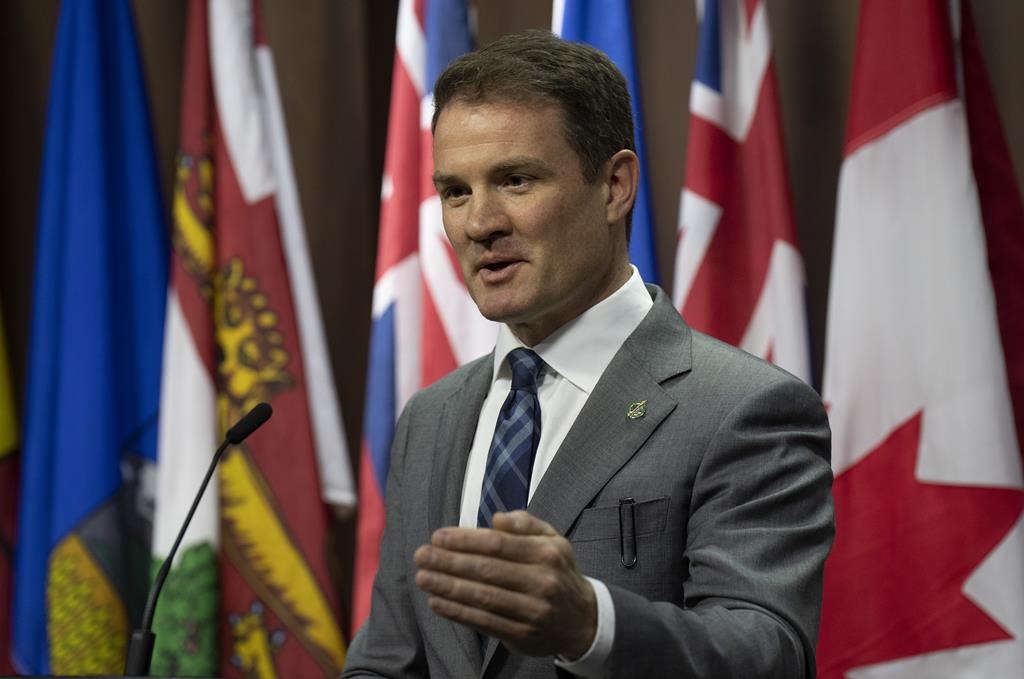
680news.comIndustry leaders and policy experts testified before Canada's House Committee on Industry and Technology on May 4, 2026, highlighting economic and security risks from a new agreement allowing imports of Chinese-made electric vehicles at reduced tariffs.
Michael Kovrig, head of the Global Network for Strategic Effects, described the policy as creating a 'trifecta of risks' including structural dependence on China, unfair competition that erodes industrial capacity, and systemic pressure on government policy.
Brian Kingston, president and CEO of the Canadian Vehicle Manufacturers’ Association, told lawmakers there are no guardrails in the agreement to ensure a level-playing field for manufacturers that have invested in Canada or to protect Canadians from cybersecurity risks.
Kovrig said, 'Let’s be clear, this is not the approach Canada wanted,' during his testimony. Kovrig also said Beijing tends to use a quota as a ratchet to force more market access, and that concentrated sectoral economic dependence constricts federal policy-making autonomy.
Kingston echoed those concerns, stating that import of Chinese-made EVs will undermine the auto sector and presents risks to the North American auto supply chain.
He said demand for EVs declined when the previous federal government rebate went away. The moment they want more access, they will restrict our exports of canola. They’ll come up with other reasons to leverage more access into the market.
This is the Chinese trade playbook. 1 percent, down from 100 percent. Ottawa indicated the quota for Chinese-made EVs could rise to approximately 70,000 vehicles per year over the next five years.
As part of the deal, Beijing cut tariffs on Canadian agricultural exports from 84–100 percent to 15 percent on Canadian canola products and relaxed restrictions on other products including seafood and peas. Ottawa expects China to invest in the Canadian auto sector and possibly set up auto manufacturing inside Canada as part of the agreement. 1 percent tariff rate.
Permits for Chinese-made EVs are issued by Global Affairs Canada and last 60 days before expiry, with importers required to be Canada-based automakers or agents of them, and vehicles must comply with Canadian safety standards. Ottawa plans to review and potentially change the import system for Chinese-made EVs after the first six months.
Canada’s auto sector directly employs roughly 125,000 workers, the majority of whom are employed in Ontario.
More than 90 percent of Canadian-made vehicles are exported to the United States. U.S. Trade Representative Jamieson Greer said Canada’s deal with China was problematic in mid-January 2026. U.S. President Donald Trump threatened to put 100 percent tariffs on Canadian goods in response to the deal on January 24, 2026.
Kingston said that if China builds a plant in Canada, it would bring in labour from China, and referred to a Chinese-operated factory in Hungary where conditions have been characterized as slave-like. Kovrig cited evidence from Sheffield Hallam University linking forced labour of China’s ethnic Uyghur population to key battery and EV production stages.
A latest EV car from Chinese automaker BYD was showcased at the Auto China 2026 in Beijing on April 25, 2026, where models stood next to the vehicle in photos captured by Andy Wong of AP Photo.
Several industry leaders testified that EVs would be a net positive for Canada. Jeff Turner, director of Mobility at Dunsky Energy and Climate Advisors, said EVs would bring almost $2,000 per year in fuel savings per household and reductions of GHG emissions and other emissions that have significant health impacts for Canadians.
Cherith Sinasac of the Electro-Canada Foundation said Canada needs a strong long-term EV charging infrastructure strategy, adding that EVs and their battery storage have the potential to be a national energy asset for the grid.
Kovrig said China’s 2017 National Intelligence law compels any Chinese firm, including from overseas operations, to share data with Beijing on demand, describing Chinese-made EVs as a rolling computer with cameras that are state-linked data platforms.
This echoed concerns from Conservative Leader Pierre Poilievre, who stated his opposition to allowing Chinese-made EVs into Canada in January 2026, writing on X that such vehicles function like roving surveillance systems on streets, collecting data, tracking Canadians and exposing them to a foreign regime.
Officials are preparing for heightened security as World Cup matches approach in major cities including Seattle and Los Angeles on May 5, 2026.
Canada and Mexico.
nypost.comThe Yankees outfielder entered Sunday with the highest WAR among six position players who signed nine-figure contracts this offseason. He reached base twice and stole two bases in a 4-1 loss to the Reds.
Al JazeeraAhmed Wishah, who documented daily life in Gaza, was killed by an Israeli attack, Al Jazeera reported on 21 June 2026.
middleeasteye.netIran fired missiles at Israel for the first time since the April ceasefire, hours after Israel struck Beirut’s Dahiyeh district. Alerts sounded across Tel Aviv as residents moved to shelters.