Substrate
world

CENTCOM Commander: Iran Retains 10 Percent of Drone and Missile Capability

Admiral Brad Cooper told Congress that U.S. strikes have left Iran with roughly 10 percent of its prior drone and missile capability and destroyed more than 90 percent of its naval mines. Cooper directly disputed media reports citing U.S. intelligence assessments that Iran retains about 70 percent of its missile stockpile and most of its launchers.

TH
IN
2 sources·May 14, 8:42 PM(14 days ago)·4m read
Audio version
Tap play to generate a narrated version.
Developing·Limited corroboration so far. This page will refresh as more sources emerge.

U.S. Central Command chief Admiral Brad Cooper told lawmakers on Thursday that Iran retains roughly 10 percent of its drone and missile capability following American strikes, directly challenging recent media reports that cited intelligence assessments showing Tehran holding onto the majority of its arsenal.

" He said the numbers reported in open-source media were not accurate and emphasized that assessments must account for shattered command and control, inability to produce new missiles, and overall degraded capacity rather than raw counts alone. The New York Times reported on Wednesday that classified assessments from early this month show Iran has regained access to most of its missile sites, launchers and underground facilities.

The newspaper said Iran has restored operational access to 30 of 33 missile sites along the Strait of Hormuz, retains about 70 percent of its mobile launchers and roughly 70 percent of its prewar missile stockpile. The Washington Post offered a similar assessment last week citing about 75 percent of mobile launchers and 70 percent of missile stockpiles.

Cooper pushed back when asked about those figures. "The numbers that I've seen in open source are not accurate," he said. He added that Iran's capabilities in the Strait of Hormuz have been significantly degraded, noting that fast boat activity has dropped from the typical 20 to 40 vessels per 100 transits to just two or three recently.

CENTCOM forces recently sank about a half-dozen Iranian fast boats threatening ships in the waterway.

Forces campaign against Iran. He said more than 450 strikes hit ballistic missile storage and systems while roughly 800 strikes targeted drone-launching units and storage. Iran's air force now flies zero sorties per day compared with 30 to 100 before the operation, he stated, after U.S. forces destroyed or rendered non-mission-capable its fixed-wing airfields, hangars, fuel storage and munitions stockpiles and knocked out 82 percent of its air defense missile systems.

At sea, the United States destroyed 161 vessels across 16 classes of warships and eliminated more than 90 percent of Iran's inventory of over 8,000 naval mines through more than 700 airstrikes. "Iran's navy can no longer claim to be a maritime power, and it cannot project into the Gulf of Oman or the Indian Ocean," Cooper said.

He described Iran's remaining ability as nuisance-level harassment, low-end drone and rocket attacks, and residual proxy support. The commander also highlighted second-order effects from more than 2,000 strikes on Iranian command-and-control structures that created leadership vacuums, paralysis and internal confusion.

Reporting has shown desertions, personnel shortages and regime efforts to enforce discipline through arrest and execution. Cooper said the supply chain from Tehran to proxies including Lebanese Hezbollah, the Houthis, Hamas and Iraqi militia groups has been broken.

Evolving Drone Threat and U.S.

"The days of $35,000 drones that we saw in the last couple of years, particularly in the fight against the Houthis in Yemen, those days are behind us," he said. Iran now fields jet-powered drones with high-end sensors, electronic warfare and signals intelligence capabilities.

In response, the United States has employed low-cost one-way attack drones against Iran, forcing Tehran to expend more expensive weapons. "We have flipped the cost curve in many ways," Cooper stated. He specifically praised the Low-Cost Uncrewed Combat Attack System, or LUCAS, reverse-engineered from Iranian Shahed-136 drones, as an additional capability employed effectively against the adversary.

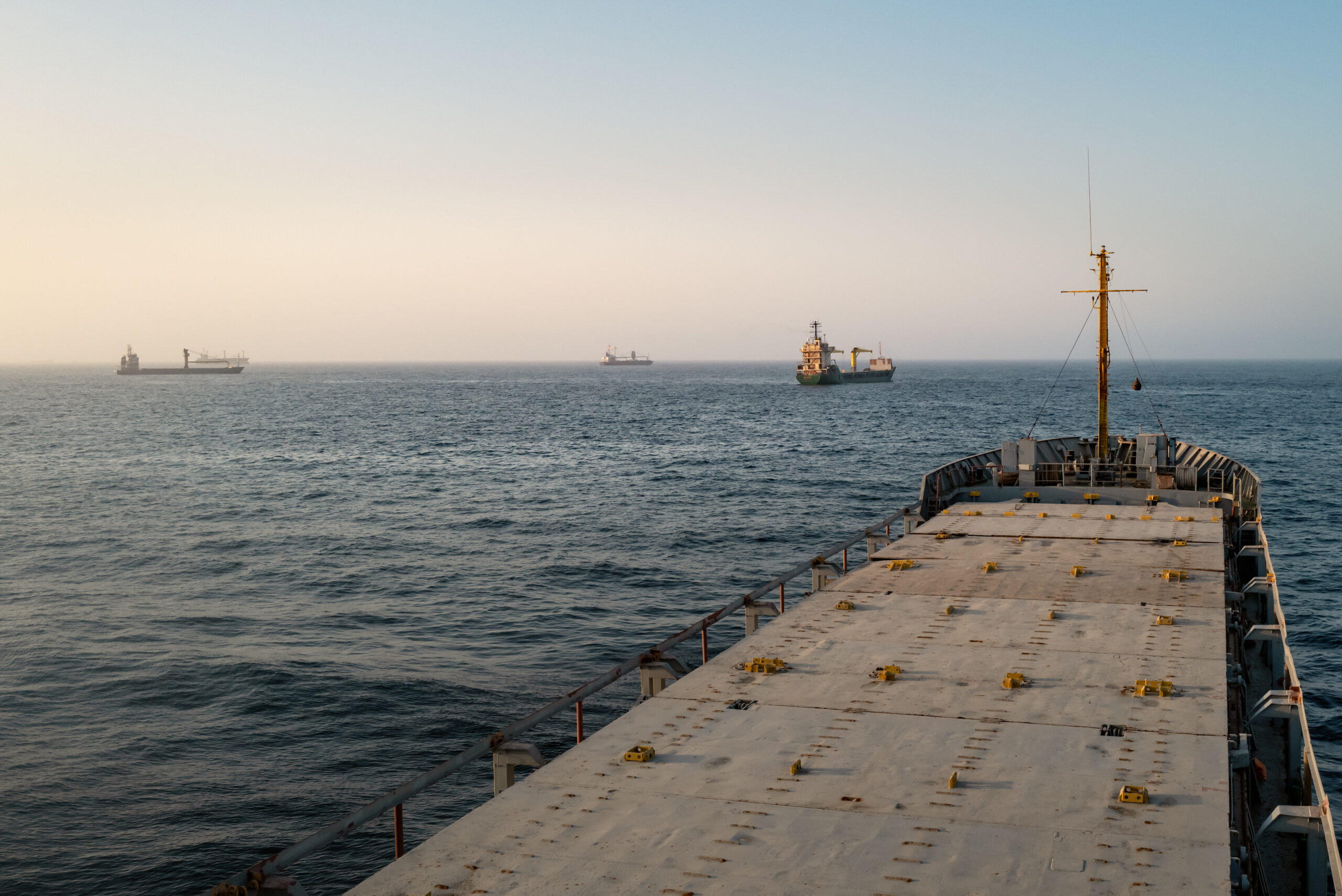
The vessel, operating as a floating armory for Chinese security firms, was taken at 05:45 UTC and is now bound for Iranian territorial waters. The seizure occurred amid Iran's closure of the Strait of Hormuz. The White House said both leaders agreed the strait must remain open for the free flow of energy.

Xi expressed opposition to militarization of the strait or efforts to charge a toll and indicated interest in purchasing more American oil to reduce reliance on the passage. U.S. Secretary of State Marco Rubio, who accompanied Trump, said China is not in favor of militarizing the Strait of Hormuz or a tolling system.

Iranian media reported that naval forces allowed a group of Chinese ships to pass through the strait after China agreed to limited charging of about $1 per barrel, though this could not be independently verified. Trump told Fox News that Xi stated China would not provide military equipment to Iran.

This followed a New York Times report citing U.S. intelligence that Chinese companies discussed arms sales with Iran, including possible transfers of shoulder-fired man-portable air defense systems, routed through third countries. The United Arab Emirates denied reports that Israeli Prime Minister Benjamin Netanyahu or heads of Mossad and Shin Bet visited the country during the conflict with Iran.

The UAE Foreign Affairs Ministry stated that relations with Israel are conducted publicly under the Abraham Accords and that claims of unannounced visits are unfounded.

Key Facts

10%
of Iran's drone and missile capability remains, per CENTCOM
90%
of Iran's naval mines destroyed by U.S. forces
161 vessels
destroyed across 16 classes of Iranian warships
450 strikes
targeted Iranian ballistic missile systems
Hui Chuan
seized by IRGC Navy near UAE on May 14

Story Timeline

5 events
  1. May 14, 2026

    Iranian forces seized the Honduras-flagged vessel Hui Chuan near Fujairah, UAE.

    3 sourcesTheWarZoneWire · Egypt's Intel Observer
  2. May 14, 2026

    President Trump and President Xi Jinping discussed the Strait of Hormuz in Beijing.

    4 sourcesTheWarZoneWire · White House
  3. May 14, 2026

    Admiral Brad Cooper testified before the Senate Armed Services Committee on Iran's degraded capabilities.

    5 sourcesTheWarZoneWire · Investingcom
  4. May 13, 2026

    The UAE denied reports of a secret visit by Israeli Prime Minister Benjamin Netanyahu.

    2 sourcesTheWarZoneWire
  5. May 12, 2026

    The New York Times reported U.S. intelligence assessments showing Iran retains most of its missile arsenal.

    3 sourcesTheWarZoneWire

Potential Impact

  1. 01

    Iran's conventional naval and air forces have been rendered largely inoperable.

  2. 02

    Iran's ability to supply advanced weapons to regional proxies has been disrupted.

  3. 03

    U.S. low-cost drone systems like LUCAS have proven effective in combat against Iran.

  4. 04

    Commercial shipping through the Strait of Hormuz faces continued harassment risks.

  5. 05

    China and the U.S. have aligned publicly against Iranian tolls or militarization of the strait.

Transparency Panel

Sources cross-referenced2
Framing risk65/100 (moderate)
Confidence score70%
Synthesized bySubstrate AI
Word count856 words
PublishedMay 14, 2026, 8:42 PM
Bias signals removed3 across 2 outlets
Signal Breakdown
Loaded 2Editorializing 1

Related Stories

WHO Chief Visits DRC as Ebola Death Rate Reaches 30-50%The Guardian
world44 min ago

WHO Chief Visits DRC as Ebola Death Rate Reaches 30-50%

World Health Organization director-general Tedros Adhanom Ghebreyesus arrived in the Democratic Republic of the Congo to support containment of a new Ebola outbreak. The agency revised the death rate to 30-50% based on confirmed cases and recorded 10 confirmed and 223 suspected d…

SK
The Guardian
2 sources
Greek National Charged in UK With Aiding Iran-Linked Intelligence Servicewesternjournal.com
world44 min ago

Greek National Charged in UK With Aiding Iran-Linked Intelligence Service

A 46-year-old Greek man living in Germany was charged under the UK National Security Act with assisting an intelligence service believed to be Iran by targeting a journalist at Iran International.

Reuters
BBC News
2 sources
Supreme Court Revives Havana Docks Lawsuit Over Confiscated Cuban Propertyupi.com
world2 hrs ago

Supreme Court Revives Havana Docks Lawsuit Over Confiscated Cuban Property

The U.S. Supreme Court sent a Helms-Burton Act case back to lower courts for further argument. The suit seeks damages from cruise lines that used docks seized by Cuba in 1959.

FO
1 source