politics
Central Command Commander Addresses Questions on Iran Operations at House Hearing
Central Command Commander Adm. Brad Cooper responded to questions from members of Congress about U.S. military operations against Iran during a House Armed Services Committee hearing. Fourteen U.S. service members have died in combat since operations began Feb. 28.
May 19, 3:06 PM·1m read1 source
 Fox News
Audio version
Tap play to generate a narrated version.
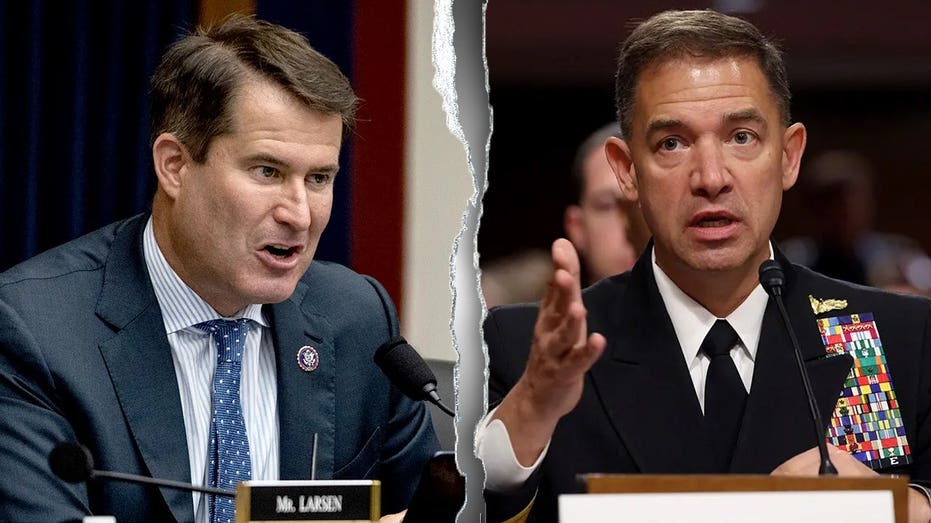
Central Command Commander Adm. Brad Cooper responded to questions from members of Congress about U.S. military operations against Iran during a House Armed Services Committee hearing Tuesday. Democratic Rep. Seth Moulton questioned how many more Americans would die because of what he described as a failed Iran strategy.
"It doesn't seem to be going well," Moulton said. " Cooper called the statement inappropriate. Moulton replied that it was a question, not a statement.
U.S. service members have died in combat since the U.S. launched operations Feb. 28. Cooper stated that U.S. forces had achieved their assigned military objectives and described reports that Iran had reconstituted key missile sites as inaccurate. Moulton also raised concerns about instability in the Strait of Hormuz, rising oil prices, and reports of Iran rebuilding parts of its missile infrastructure.
Democrats questioned whether ongoing operations complied with the War Powers Resolution. Rep. John Garamendi noted that U.S. forces had fired on Iranian tankers and exchanged fire with Iranian forces even after the administration notified Congress that hostilities had ended.
"The fact of the matter is that hostilities continue," Garamendi said. Rep. Joe Courtney argued that the blockade of Iranian ports constituted an act of war. Republicans on the panel defended the campaign. Chairman Mike Rogers said U.S. operations had rolled back 40 years of Iranian military investment and made the United States and its allies safer.
Cooper testified that Iran was significantly less capable than before the strikes and that U.S. military action had derailed Iran's strategy across its nuclear, missile, and proxy networks.