Chemist Reports Highest Energy Density Yet in Molecular Solar Thermal Storage System
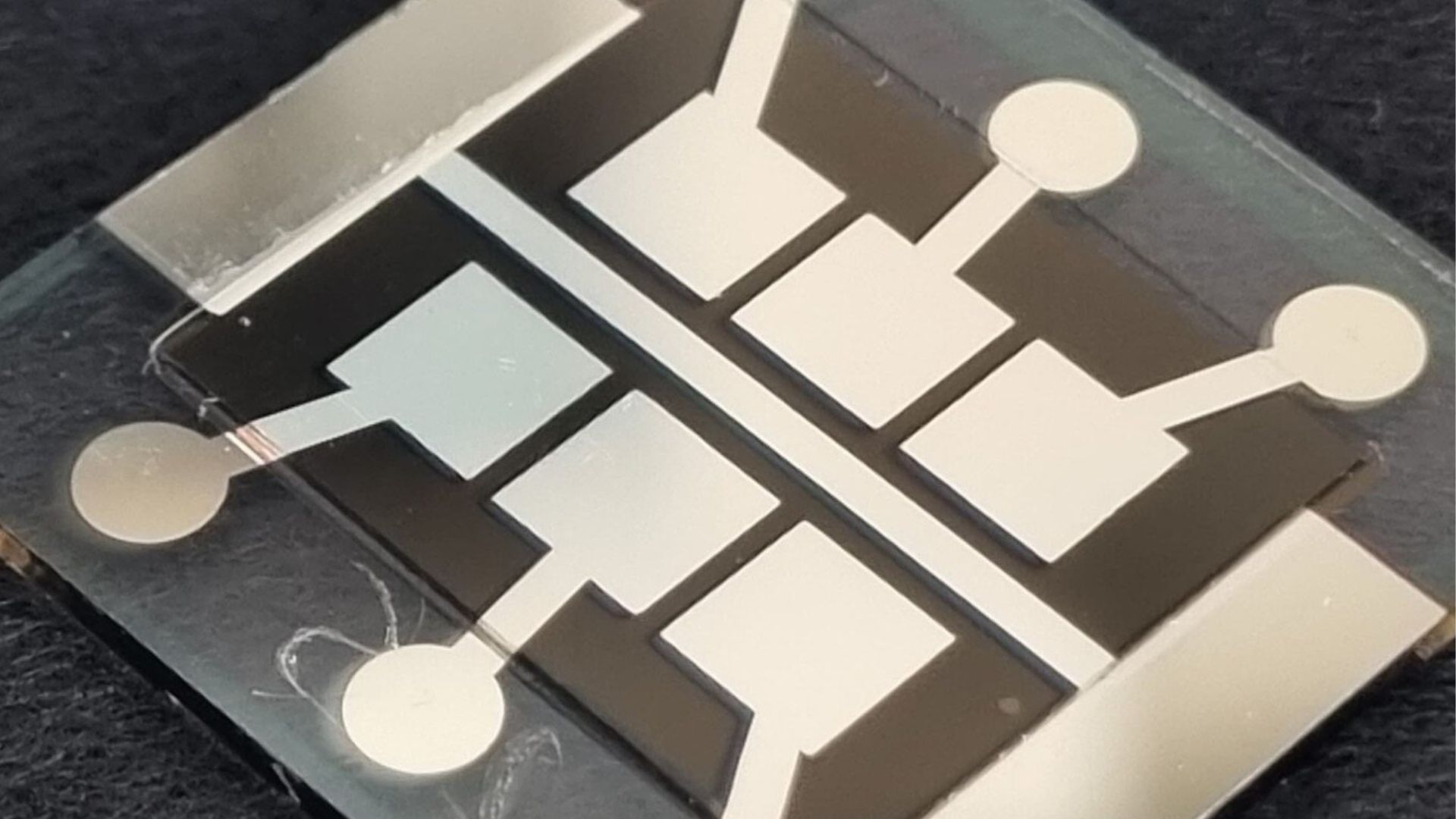
Grace Han's team at the University of California, Santa Barbara, created a molecular solar thermal system that stores 1.65 megajoules per kilogram, exceeding the energy density of lithium-ion batteries. The February paper describes using molecules inspired by DNA photochemistry that change shape under sunlight to trap energy for months or years.
interestingengineering.comA chemistry professor who moved from Boston to the University of California, Santa Barbara, last year has developed the highest-density molecular solar thermal energy storage system reported to date. Grace Han drew inspiration from reading about DNA photochemistry for leisure and noticing how California's intense sun affected her skin.
DNA molecules in skin change shape when irradiated by the sun, flexing into a strained version of their regular form.
Han and her colleagues published a paper in February describing the most promising energy storage system of this kind in terms of energy density. The system created at UCSB trapped enough energy to boil off a small amount of water in a very tiny kettle in a vial. Grace Han's students carried out the boiling experiment and showed her a video of the solution boiling rapidly.
"When I actually saw the video and saw how quickly the entire solution was boiling, that was really remarkable," Han said. She emphasised that computer analyses predicting molecular performance were made by Kendall Houk at the University of California, Los Angeles, and his team.
The work built on decades of research into molecules that twist their shape to store energy and then revert to release it on demand.
Molecular solar thermal, or Most, energy storage is a potentially cheap and emissions-free way of supplying heat. Most systems could store energy for many months or even years. Kasper Moth-Poulsen, who leads research teams at the Polytechnic University of Barcelona in Spain and other institutions, was impressed by the results.
"I think our best systems were one megajoule [of energy per kilogram]. 6, which is really amazing," Moth-Poulsen said, referring to the energy density achieved by Han and her colleagues. 65 megajoules per kilogram.
That figure is greater than the energy density of lithium-ion batteries. The Most system that Han and her colleagues developed has limitations. The wavelength of light that causes the molecules to change shape is 300 nanometres.
John Griffin at Lancaster University noted that 300 nanometres is a form of very harsh UV light that reaches Earth from the sun in very small quantities. The trigger used to release the stored energy was hydrochloric acid. Hydrochloric acid is highly corrosive and must be neutralised after use.
"Not the most ideal choice," Han admitted. Griffin is working on solid versions of molecular storage. Han is researching solid iterations of Most that could take the form of transparent window coatings.
In a really optimistic scenario, the light-sensitive molecules in a Most system could be spread 5mm thick, according to Harry Hoster at the University of Duisberg-Essen. Packaging molecules in liquid form would require pumping them around a system, adding cost and complexity. "The moment you need to pump stuff around you have more things that can get broken," Hoster said.
Solid-state versions could release heat to prevent condensation or warm rooms, though Hoster is sceptical that Most will supply all the heat required in a building. Most technology operates without burning anything and could be made available anywhere on Earth, unlike fossil fuels concentrated in specific locations.
Moth-Poulsen noted that thermal energy stored as heat might last only a few hours, days or months at best, while Most systems could store energy for multiple decades.
The ultimate goal is to decarbonise heating, which still relies largely on fossil fuels. Hoster described the work as great science. "It's beautiful that they managed to get this functionality right," he said.
Griffin attended a conference last year on Most technology with roughly 70 attendees, representing the whole global community working on it. BBC News reported these developments.
Key Facts
Story Timeline
4 events- 2025
Grace Han moved from Boston to take a job at the University of California, Santa Barbara
1 sourceBBC News - 2025
John Griffin attended a conference on Most technology with roughly 70 attendees
1 sourceBBC News - February 2026
Grace Han and colleagues published a paper describing their 1.65 megajoules per kilogram energy storage system
1 sourceBBC News - 2026-05-09
BBC News publishes report on Han's molecular solar thermal research
1 sourceBBC News
Potential Impact
- 01
Continued research into solid-state versions to reduce pumping costs and complexity
- 02
Niche global research community of roughly 70 people gains visibility for decarbonising difficult-to-electrify heating applications
- 03
Advances toward emissions-free, long-term chemical energy storage for heating without burning fuels
- 04
Potential for transparent window coatings that release heat to warm rooms or prevent condensation
Transparency Panel
Related Stories
investors.comTesla Cuts Model Y Starting Price in India by 12 Percent
Tesla introduced a new Premium rear-wheel-drive Model Y in India and removed the Long Range rear-wheel-drive version. The change lowers the entry price by about 12 percent from the original 2025 launch price.
SemaforAnthropic Raises $65 Billion at $965 Billion Valuation
Anthropic completed a $65 billion funding round at a $965 billion valuation. The round follows earlier growth that exceeded internal forecasts and a separate agreement to lease computing capacity.
thesouthafrican.comSouth African Researchers Develop Quantum and AI Tools for Cybersecurity
Scientists and startup companies in South Africa are applying quantum communication and AI-powered tools to address rising global cyber threats. The work focuses on strengthening data protection methods.