Unbiased AI-powered news
Forty years after the Chernobyl nuclear explosion on April 26, 1986, wildlife has rebounded in the exclusion zone spanning Ukraine and Belarus. Przewalski’s horses, introduced in 1998, now roam freely amid persistent radiation, while recent military activity from Russia's 2022 invasion has sparked forest fires. Scientists note adaptations in animals but no widespread die-offs.
EuronewsAn explosion at the nuclear power plant in Ukraine on April 26, 1986, sent radiation across Europe, forced the evacuation of entire towns and displaced tens of thousands of people. Four decades later, on the anniversary of the disaster, the Chernobyl exclusion zone remains too dangerous for humans, yet wildlife has returned in force.
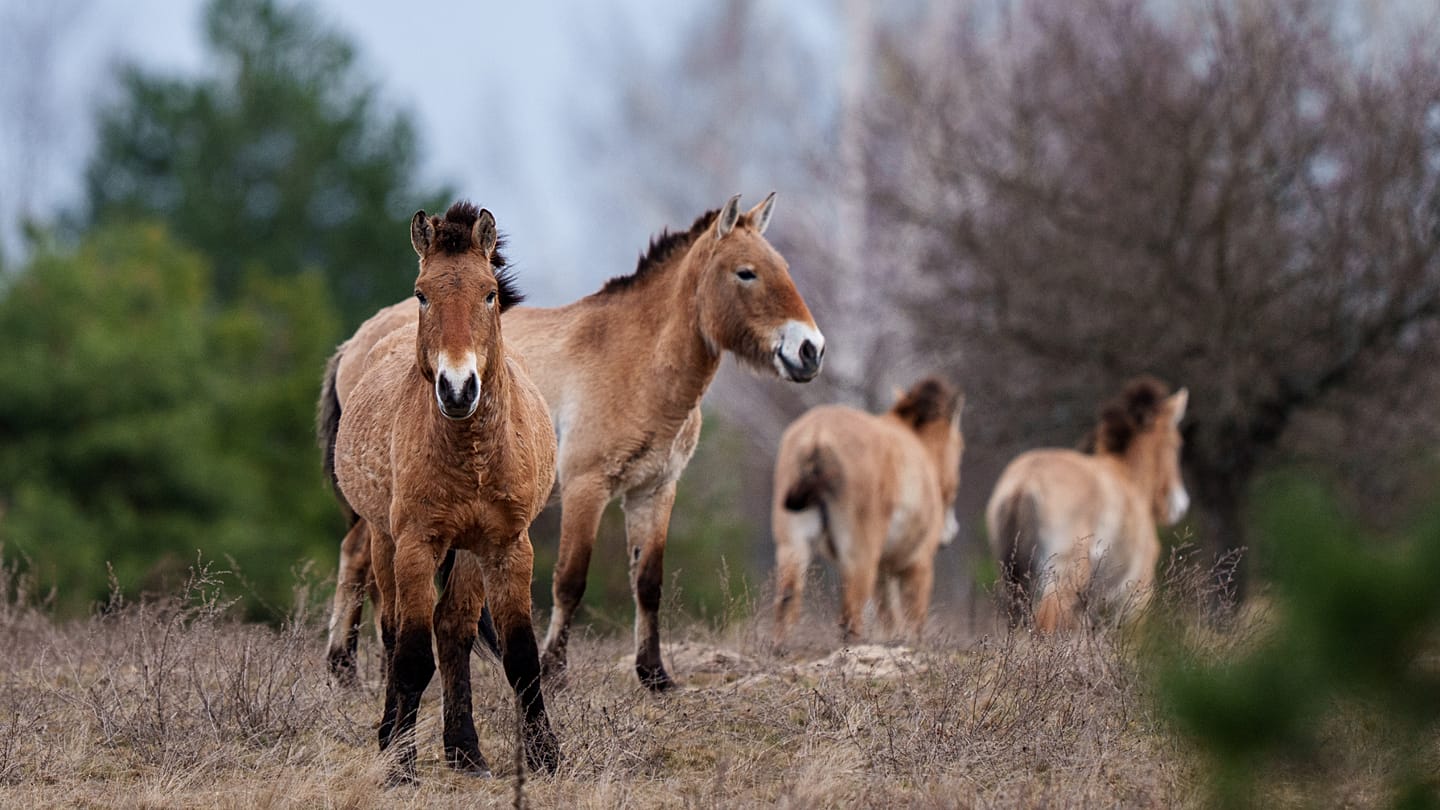
Brown bears have reappeared in the zone after more than a century, and Przewalski’s horses, introduced as an experiment in 1998, now graze freely across the contaminated landscape larger than Luxembourg.
The exclusion zone, spanning Ukraine and Belarus, has seen a rebound of species including wolves, lynx, moose, red deer and packs of dogs. Przewalski’s horses, native to Mongolia and known as 'takhi' meaning 'spirit,' differ from domestic horses with 33 pairs of chromosomes compared to 32 in domesticated breeds. The name derives from the Russian explorer who first formally identified them.
Denys Vyshnevskyi, the lead nature scientist in the Chernobyl exclusion zone, sets motion-sensitive camera traps in camouflaged casings attached to trees to track the animals. ' Vyshnevskyi added that with human pressure gone, parts of the exclusion zone now resemble European landscapes from centuries past.
Przewalski’s horses were declared extinct in the wild in 1969 but survived through captive breeding programs.
Their global population now stands at about 3,000, according to Florian Drouard, an operations manager at a program for Przewalski’s horses at Cevennes National Park in southern France. Drouard called the species a remarkable example of successful reintroduction, noting that with proper preparation, captive animals can regain social and ecological behaviors to live freely.
In the zone, the horses live in small social groups typically consisting of one stallion with several mares and their young, alongside separate bands of younger males.
They seek shelter in crumbling barns and deserted homes to escape harsh weather and insects, even bedding down inside abandoned buildings. Many died after their initial introduction, but others adapted to the partly forested environment. Despite persistent radiation, scientists have not recorded widespread die-offs of wildlife in the Chernobyl exclusion zone.
Some frogs have developed darker skin due to radiation, and birds in higher-radiation areas are more likely to develop cataracts. Vyshnevskyi, driving alone for hours to monitor the area, said nature recovers relatively quickly and effectively. Russia’s invasion of Ukraine, which began in 2022, brought fighting through the Chernobyl exclusion zone as troops advanced toward Kyiv.
Soldiers dug defenses into contaminated soil, and fires linked to military activity swept through forests. Oleksandr Polischuk, who leads a firefighting unit in the zone, said most forest fires are caused by downed drones and that teams sometimes have to travel dozens of kilometers to reach them.
These fires can send radioactive particles back into the air, adding to risks in an area already marked by concrete barriers, barbed wire and minefields.
Harsh wartime winters have taken a toll, with damage to the power grid leaving surrounding areas without resources and increases in fallen trees and dead animals from extreme conditions and fortifications. Personnel rotate in and out of the zone to limit radiation exposure.
Vyshnevskyi noted the transformation visible everywhere, with trees piercing abandoned buildings, roads dissolving into forest and weathered Soviet-era signs standing beside leaning wooden crosses in overgrown cemeteries.
He said, 'This land was once heavily used – agriculture, cities, infrastructure. ' The zone, once an accidental refuge, has become a heavily monitored military corridor, yet remains full of life and likely off-limits for generations.
Single source — no framing comparison available.
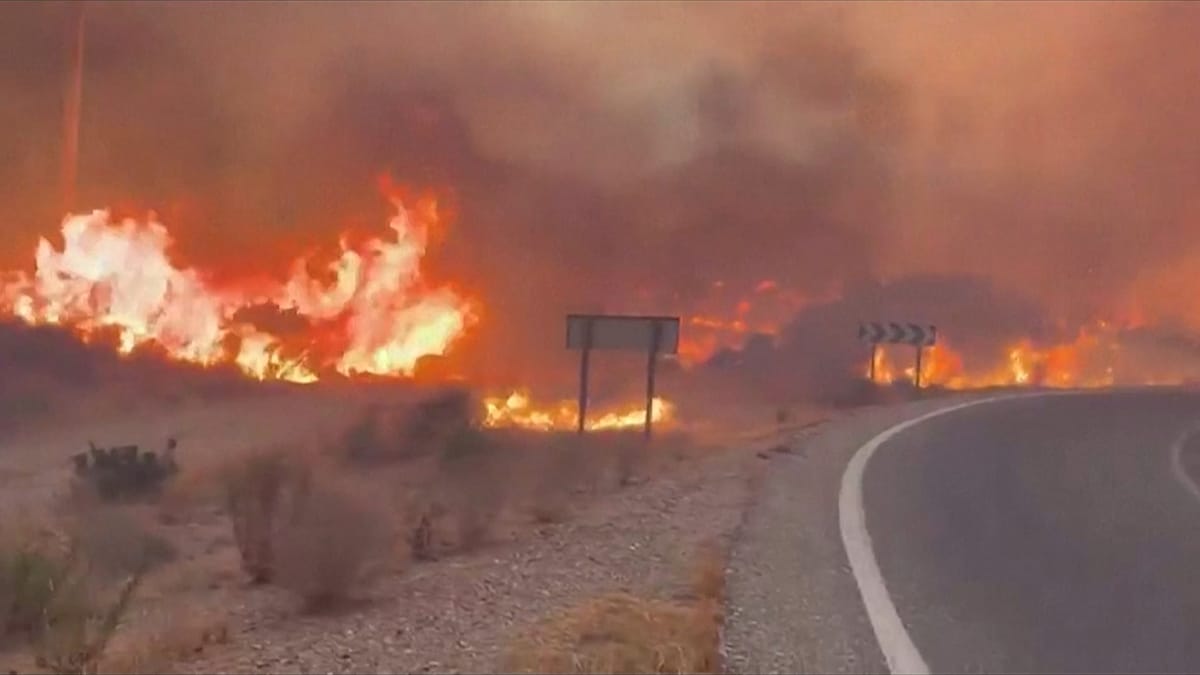
EuronewsEleven people died and eight were injured in a wildfire that began Thursday afternoon in Almería province. Authorities have closed roads, evacuated residents and deployed hundreds of emergency personnel.
The Long March 10B lifted off from Hainan on Friday and its booster stage returned to a sea platform six minutes after separation. The test marks China's first controlled recovery of an orbital-class rocket booster.
EuronewsThe 11th-century embroidery reached the British Museum early Friday after leaving Normandy the previous evening. It will remain on view from September 2026 through July 2027 under a one-year loan agreement.