science
China Lands Reusable Rocket Booster on Floating Platform
State media reported that a Long March 10B booster returned to Earth vertically and was recovered on a floating platform after a Friday launch from Hainan. The China Aerospace Science and Technology Corporation conducted the flight, which followed an earlier splashdown test in February.
Jul 10, 2:44 AM·1m read1 source
 indiatoday.intoday.in
Audio version
Tap play to generate a narrated version.
Developing·Limited corroboration so far. This page will refresh as more sources emerge.
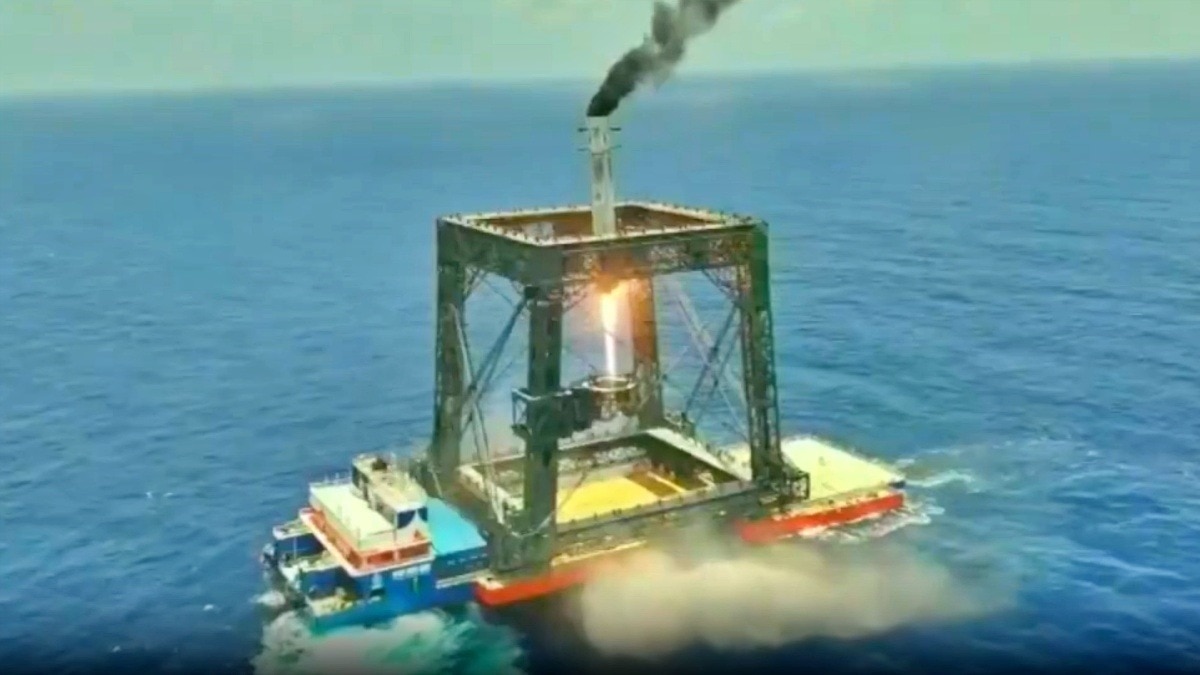
State media reported that China completed its first successful recovery of a reusable rocket booster on Friday. The Long March 10B lifted off from Hainan at 12:15 local time and its booster separated, descended vertically, and was caught by landing hooks on a floating platform roughly six minutes later.
The China Aerospace Science and Technology Corporation stated that the booster carried a payload capacity of at least 16 metric tons to low-Earth orbit. Unlike the Falcon 9, the Long March 10B uses a net system rather than an autonomous landing on a ground pad or drone ship.
The China Aerospace Science and Technology Corporation had attempted a controlled descent with a Long March 10A in February, which splashed down next to a recovery platform. Friday's flight marks the first time a Chinese booster was recovered intact after an orbital mission.
Rockets are typically considered expendable, with segments discarded during ascent. Reusing boosters, viewed as the most valuable component, can lower the cost of satellite launches and space exploration.
Chinese space firms rose after the announcement.
China Spacesat and China Satellite Communications each increased by the daily limit of 10 percent permitted under the country's financial market regulations.