world
China and Russia Conduct Joint Air Patrol Over Sea of Japan and Western Pacific
Chinese and Russian military aircraft flew over the Sea of Japan, East China Sea and western Pacific on 27 June 2026. Japan and South Korea scrambled fighter jets in response. The patrol marked the first such joint flight this year.
SC
 thehindu.com
Audio version
Tap play to generate a narrated version.
Developing·Limited corroboration so far. This page will refresh as more sources emerge.
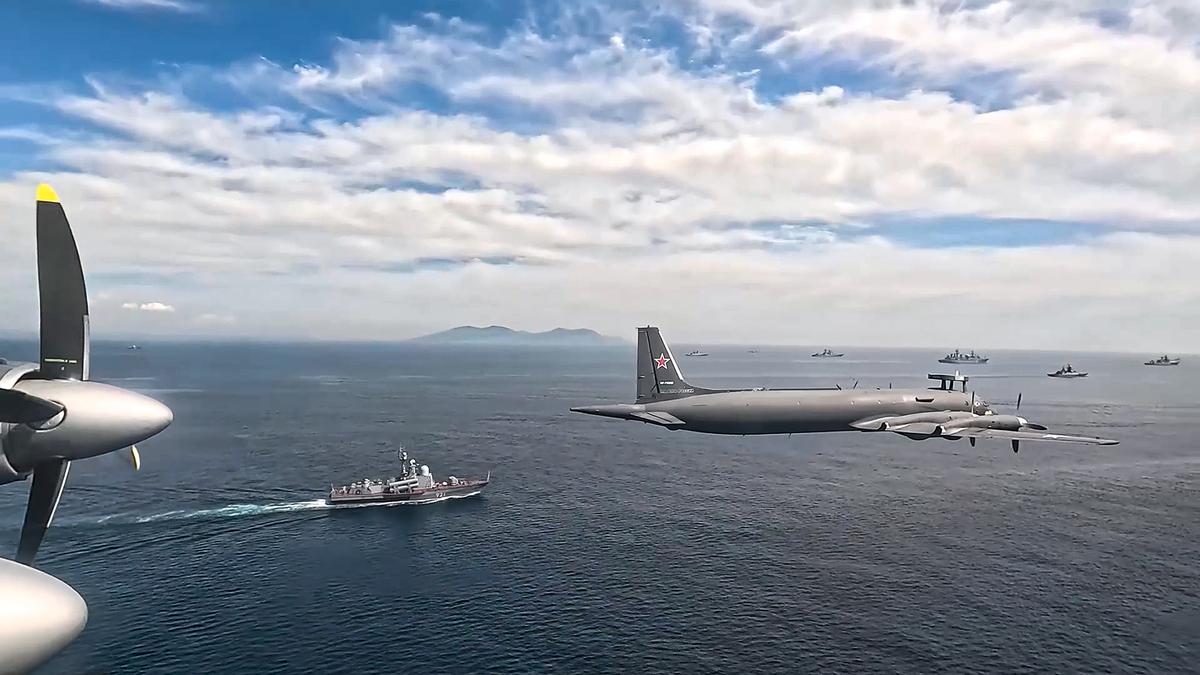
Chinese and Russian military aircraft conducted a joint strategic air patrol on 27 June 2026 over the Sea of Japan, East China Sea and western Pacific. The flight involved four Chinese H-6 bombers and two Russian Tu-95 strategic bombers, accompanied by two Russian Tu-142 maritime patrol aircraft, two Chinese J-16 fighter jets and one Russian Su-30 fighter jet.
Japan's Defense Ministry tracked the aircraft from morning through afternoon.
Some bombers passed through the Miyako Strait between Okinawa and the Miyako Islands into the western Pacific south of Shikoku before returning. Japan scrambled fighter jets in response. More than 10 Chinese and Russian military aircraft entered South Korea's air defence identification zone the same day.
South Korea also scrambled fighter jets. The aircraft did not violate South Korean airspace, according to Yonhap News Agency. China's Defense Ministry described the patrol as the 11th joint strategic air patrol since 2019 and the first in 2026.
The ministry stated the flight demonstrated the two countries' resolve and capability to jointly safeguard regional peace and stability. Japanese Defense Minister Shinjiro Koizumi said the repeated joint bomber flights represent an expansion and intensification of activities around Japan. He described them as a show of force against Japan and a serious security concern for the country.
A previous joint patrol occurred in December 2025.