China Tightens Rare Earth Regulations as U.S. Prepares 2027 Ban on Chinese-origin Materials
China's Ministry of Industry and Information Technology issued new enforcement rules this week allowing confiscations, fines and license revocations. The Pentagon has delivered a memorandum to REalloys urging urgent domestic supply of dysprosium and terbium ahead of a January 2027 defense ban on Chinese-origin rare earths.
 gamereactor.eu
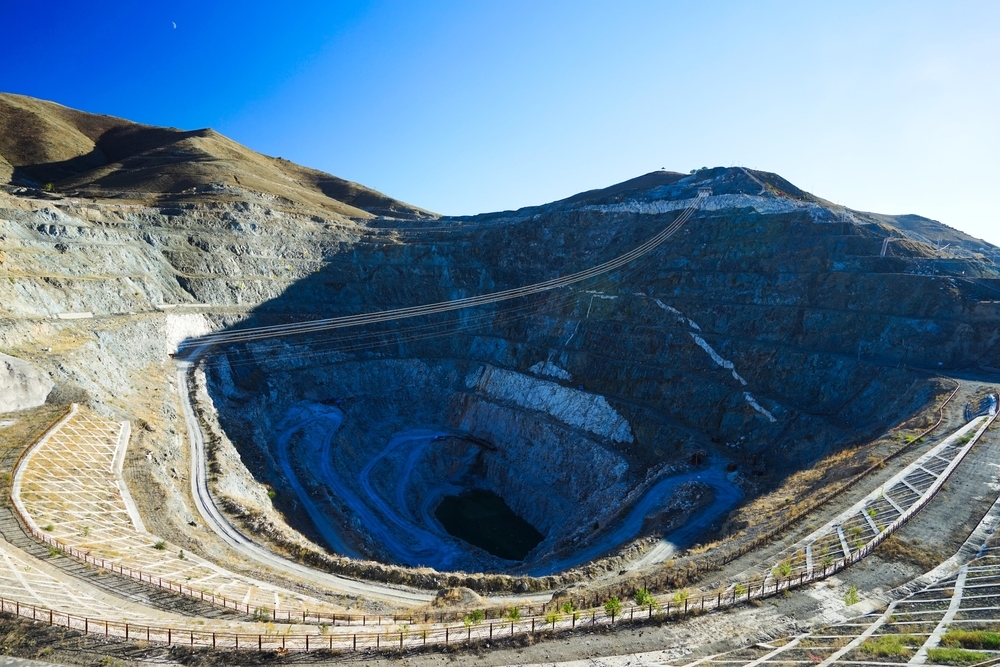
China moved this week to take tighter control of its rare earths producers. The country's Ministry of Industry and Information Technology published new enforcement rules that allow authorities to confiscate products and equipment, impose fines tied to “illegal gains,” and revoke operating licenses.
The moves come after China imposed export restrictions on seven rare earth elements and related magnet products in April 2025.
Those restrictions followed the Trump administration expanding tariffs and technology restrictions targeting Beijing prior to April 2025. Within weeks of the April 2025 restrictions, global manufacturers reported supply disruptions. Ford shut down production at its Chicago-area Explorer plant for roughly one week in May 2025 due to shortages of rare earth magnets.
Suzuki halted production of its Swift model at Japan’s Sagara plant from May 26 through June 6, 2025. An ominous Pentagon deadline now looms. The entire American defense system will be banned from using any Chinese-origin rare earths materials beginning in January 2027.
The Pentagon has delivered a memorandum to REalloys warning of the urgency of securing domestic supply of rare earths. The memorandum calls for the urgent strengthening of America’s supply of Dysprosium (Dy) and Terbium (Tb).
The Department of War memorandum highlights dysprosium and terbium as two national security priorities in the heavy rare earth element supply chain. REalloys issued a press release on Wednesday announcing the Department of War memorandum. “REalloys operates the only heavy rare earth metallization platform in North America and is scaling its market-leading platform by building the largest heavy rare earth metallization facility outside of China, purpose-engineered to produce defense-grade dysprosium and terbium metal at commercial scale with a zero-adversary-nexus supply chain,” the company said in the release.
The Euclid, Ohio company is building a commercial scale heavy rare earth metallization facility focused on converting heavy rare earth oxides into high-purity metals and alloys used in defense systems and high-performance magnets. REalloys has a long-term offtake agreement securing 80% of the output from the Saskatchewan Research Council’s commercial rare earth processing facility in Saskatoon.
The company has developed a patent-pending hydrofluoric-acid-free fluorination process designed to eliminate one of the most hazardous chemicals traditionally used in rare earth metallization.
U.S. source via a nonbinding MOU. REalloys stock trades under the ticker NASDAQ: ALOY. China currently controls most global rare earth refining, separation, and metallization capacity.
Major global mining and materials companies are repositioning. Rio Tinto has accelerated investments into critical minerals and processing capacity. Vale is expanding its strategic minerals and battery-metals footprint.
Albemarle Corporation has repeatedly warned about the strategic importance of securing critical mineral supply chains. com reported these developments in an article published on May 13, 2026 by author Michael Scott. The article details how the Pentagon deadline is colliding with China’s control of the market as the Department of War memorandum reaches REalloys with fewer than eight months remaining until the ban takes effect.
Key Facts
Story Timeline
8 events- 2026-05-13
OilPrice.com publishes article detailing China's new rules, Pentagon memorandum to REalloys, and 2027 ban deadline.
1 sourceOilPrice.com - 2026-05-12
REalloys issues press release announcing receipt of Department of War memorandum.
1 sourceREalloys - 2026-05
REalloys secures rights to up to 10% of production from a U.S. source via nonbinding MOU.
1 sourceREalloys - 2026-05
China's Ministry of Industry and Information Technology publishes new enforcement rules on rare earth producers.
1 sourceMinistry of Industry and Information Tec - 2025-05-26 to 2025-06-06
Suzuki halts production of Swift model at Sagara plant due to rare earth magnet shortages.
1 sourceTime Magazine - 2025-05
Ford shuts down Chicago-area Explorer plant for one week due to rare earth magnet shortages.
1 sourceTime Magazine - 2025-04
China imposes export restrictions on seven rare earth elements and related magnet products.
1 sourceUnattributed - 2027-01
Pentagon ban on all Chinese-origin rare earths materials in entire U.S. defense system takes effect.
1 sourcePentagon
Potential Impact
- 01
Increased global repositioning by mining firms such as Rio Tinto, Vale, and Albemarle into critical minerals
- 02
REalloys positioned to capture defense-grade contracts with its zero-adversary supply chain and commercial-scale facility
- 03
Potential further supply disruptions for automotive and defense manufacturers reliant on dysprosium and terbium
Transparency Panel
Related Stories
 Financial Times
Romania Expels Russian Consul General After Drone Strike
Romania ordered the expulsion of Russia's Consul General in Constanta and closed the consulate after a drone struck an apartment building in Galati, injuring two people. NATO and Romanian officials condemned the incident as reckless escalation.
 fortune.com
House Republicans stall on immigration enforcement funding bill
A roughly $70 billion measure to fund immigration enforcement through the end of President Donald Trump's term stalled in the House. Progress halted over White House ballroom security funding and a proposed $1.8 billion fund for government-mistreatment claims.
 techjuice.pk
Canada Seeks 50 Percent Rise in Exports to China by 2030
Foreign Minister Anita Anand stated the export target during a visit by her Chinese counterpart to Ottawa. The announcement comes amid U.S. tariffs that have altered trade patterns.