Substrate
ai

Chinese Users Line Up for AI Assistant Installations as Adoption Surges 142%

Dozens of people assembled outside a Beijing tech headquarters on a recent weekday to install the AI agent OpenClaw, with similar events in Shenzhen earlier this year. Usage of generative AI in China has surged to over 600 million people, driven by integrations from companies like Tencent and Alibaba. Government plans aim to boost AI integration in sectors including healthcare and education.
The Independent
1 source·May 6, 3:15 AM(5 hrs ago)·2m read
|
Chinese Users Line Up for AI Assistant Installations as Adoption Surges 142%A Chinese ID / Wikimedia (CC BY-SA 4.0)
Audio version
Tap play to generate a narrated version.
Developing·Limited corroboration so far. This page will refresh as more sources emerge.

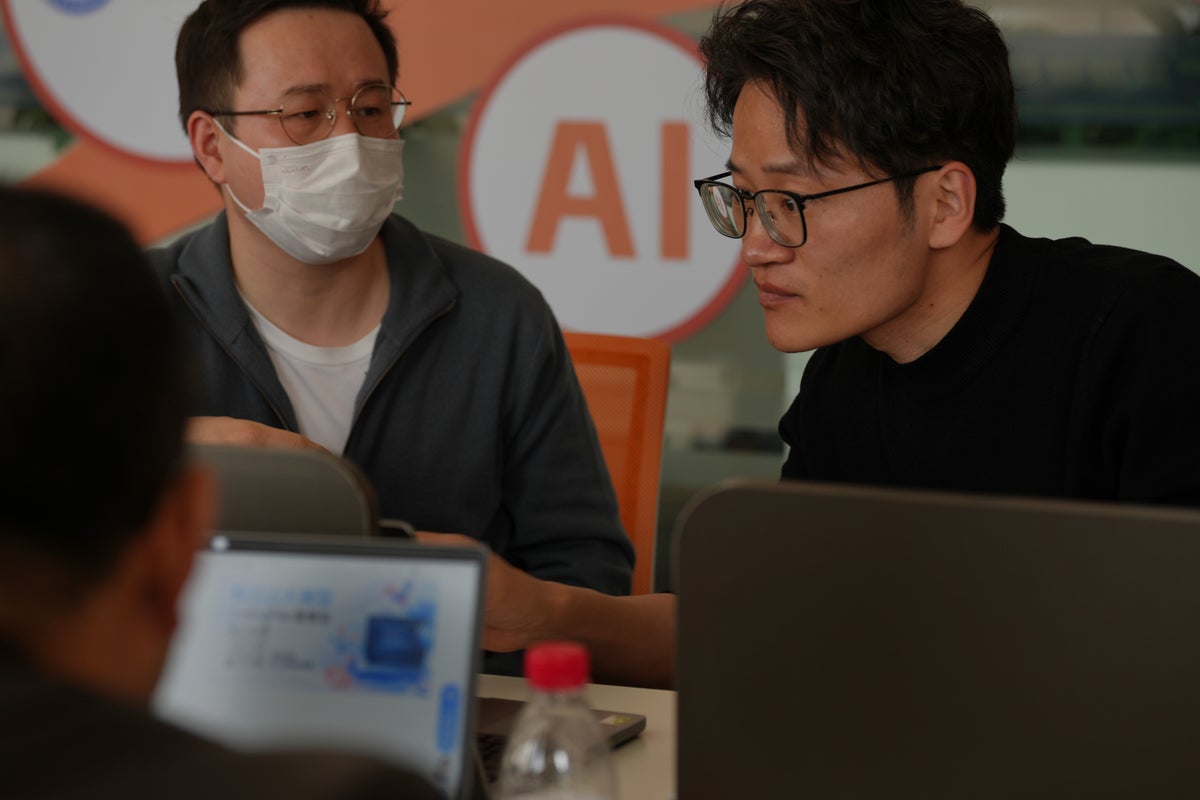
Around 50 people gathered outside the headquarters of a Chinese mobile internet company in Beijing on a recent weekday, seeking help to install an artificial intelligence assistant known as OpenClaw. These events highlight the rapid embrace of AI tools across China, with scenes repeating for days at multiple locations.

Sun Lei, a 41-year-old human resources manager, attended the Cheetah event in Beijing and said she worried about falling behind in technological developments. She hoped the OpenClaw tool would assist her in sourcing and screening resumes across various recruitment platforms.

DeepSeek, a Chinese rival to OpenAI, released an advanced AI model more than a year ago, marking a key milestone in the country's AI progress. Last month, DeepSeek released a preview of its V4 AI model, supported in part by computer chips made by Chinese tech giant Huawei. These developments underscore China's push to reduce dependence on foreign technology.

4 billion population were using generative AI as of December, according to the China Internet Network Information Center. This figure represents a 142% increase from a year earlier.

U.S. Models, as tracked by OpenRouter, an AI gateway platform. Jason Tong, a 64-year-old retiree in Shanghai and former IT engineer, has used AI chatbots such as Doubao and Kimi for everyday queries since their introduction a few years ago. In early March, he joined a blood glucose monitoring service run by a Shanghai-based company that employs an AI model to generate tailored health advice.

Tong found the service's personalized and rapid responses helpful. OpenClaw was originally created by Austrian software developer Peter Steinberger last year.

Alibaba is embedding agentic AI into its workflows, further expanding the technology's reach in business operations. Zhao Yikang, a Chinese college student in Macao, uses OpenClaw in his studies and daily life. During his internship at a real estate agency in Zhuhai, he employed the AI to automatically generate promotional videos and manage social media accounts.

Preparing for a photo services business after graduation, Yikang asked the AI to build a company website, which it generated as a fully functional site within 10 minutes for less than 5 yuan, or 70 cents. Chinese authorities issued several warnings about potential security risks with OpenClaw AI agents, such as data leaks, as installations spiked.

Despite these concerns, interest in the tool has persisted.

An AI plus national blueprint outlines steps to integrate AI into areas of life from healthcare to education. Judges in Shenzhen processed 50% more cases last year with the help of an AI tool assisting judicial processes, according to the Shenzhen court.

These initiatives reflect China's strategy to incorporate AI across various sectors for efficiency gains.

Key Facts

Surging AI Usage
More than 600 million Chinese used generative AI as of December, a 142% increase year-over-year.
Public Gatherings
Around 50 people gathered in Beijing for OpenClaw installations, with similar events in Shenzhen in March.
Government Pledge
Chinese leaders pledged at least 7% annual growth in R&D spending until 2030.
Model Releases
DeepSeek released V4 preview last month, following an advanced model over a year ago.
Efficiency Gains
Shenzhen judges processed 50% more cases last year using an AI tool.

Story Timeline

6 events
  1. 2026-04

    DeepSeek released a preview of its V4 AI model, supported by Huawei chips.

    1 sourceThe Independent
  2. 2026-03

    Gatherings in Shenzhen for OpenClaw installations; Jason Tong joined AI-based blood glucose monitoring service.

    1 sourceThe Independent
  3. 2025-12

    Over 600 million Chinese using generative AI, up 142% year-over-year.

    1 sourceThe Independent
  4. 2025

    OpenClaw created by Peter Steinberger; judges in Shenzhen processed 50% more cases with AI tool.

    1 sourceThe Independent
  5. 2025 or earlier

    DeepSeek released advanced AI model more than a year ago.

    1 sourceThe Independent
  6. Recent years

    Jason Tong began using AI chatbots like Doubao and Kimi.

    1 sourceThe Independent

Potential Impact

  1. 01

    Boost in business productivity via tools like automated website generation.

  2. 02

    Increased efficiency in sectors like judiciary and healthcare through AI integration.

  3. 03

    Shift in global AI token usage favoring Chinese models over U.S. ones.

  4. 04

    Potential data security risks from widespread AI agent use like OpenClaw.

  5. 05

    Reduced dependence on U.S. chips with domestic alternatives like Huawei's.

Transparency Panel

Sources cross-referenced1
Confidence score65%
Synthesized bySubstrate AI
Word count439 words
PublishedMay 6, 2026, 3:15 AM
Bias signals removed4 across 4 outlets
Signal Breakdown
Loaded 3Speculative 1

Related Stories

Brockman Testifies on Heated 2017 Dispute with Musk Over OpenAI's For-Profit Shift in Federal Trialnaturalnews.com
ai1 hr agoUpdated

Brockman Testifies on Heated 2017 Dispute with Musk Over OpenAI's For-Profit Shift in Federal Trial

OpenAI President Greg Brockman detailed a heated 2017 confrontation with Elon Musk during testimony in the federal trial Musk v. Altman. He described Musk storming around a table and grabbing a painting after rejecting shared control proposals. The lawsuit seeks $150 billion in d…

The New York Times
Wired
New York Post
BBC News
Business Insider
+3
9 sources
Publishing Houses, Scott Turow Sue Meta Over AI Training Data Copyrightthenation.com
ai5 hrs agoFraming55Framing risk55/100Rewrite inherits negative framing of Meta's actions through loaded verbs and phrases, with lede misdirection centering on lawsuit filing over core infringement allegations.Click to jump to full framing analysis

Publishing Houses, Scott Turow Sue Meta Over AI Training Data Copyright

Five major publishing houses and author Scott Turow filed a class action lawsuit against Meta and CEO Mark Zuckerberg, alleging the company illegally used millions of copyrighted books and journal articles to train its Llama AI model. The suit, filed in federal court in Manhattan…

fortune.com
The Washington Post
Financial Times
NPR
4 sources
Italian Prime Minister Meloni Warns of AI-Generated Deepfakes and Shares Altered ImagePrime Minister's Office / Wikimedia (GODL-India)
ai1 hr agoDeveloping

Italian Prime Minister Meloni Warns of AI-Generated Deepfakes and Shares Altered Image

Italian Prime Minister Giorgia Meloni highlighted risks from AI-generated fake images, noting one depicting her in underwear and urging verification of online content. She filed a libel suit two years ago over similar deepfake images. Meanwhile, U.S. Secretary of State Marco Rubi…

The Independent
1 source