Closing Arguments Delivered in Elon Musk Lawsuit Against OpenAI and Sam Altman
Attorneys for Elon Musk and OpenAI presented closing arguments Thursday in federal court as a jury weighs whether Musk's $38 million investment in the organization carried conditions that it remain strictly nonprofit. Evidence presented during the trial showed both sides initially agreed to a nonprofit structure to compete with Google DeepMind but later pursued for-profit funding.
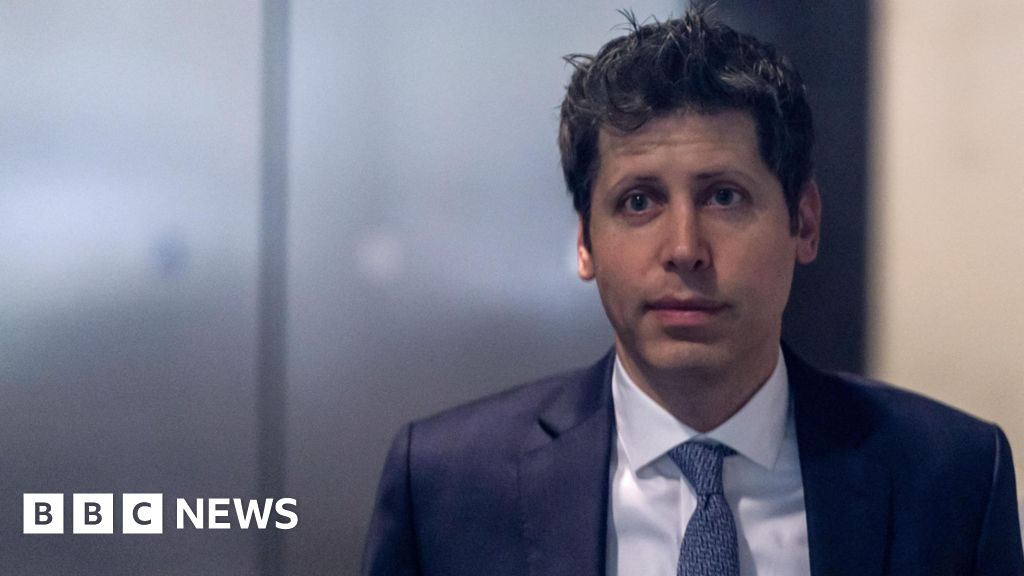
BBC NewsAttorneys delivered closing arguments Thursday in the federal trial pitting Elon Musk against OpenAI and Sam Altman, with each side attempting to portray its client as faithful to the organization's founding nonprofit mission. A judgment in the case, which stretches back to OpenAI's creation in 2015, could arrive as soon as next week.
The trial has laid bare years of internal emails, texts and testimony showing repeated discussions about shifting away from the nonprofit structure to raise the capital needed to compete in the race to build advanced AI systems. Musk has accused Altman and other OpenAI leaders of using his $38 million investment to transform the organization into an $850 billion for-profit enterprise that made several cofounders billionaires.
OpenAI's lawyers countered that Musk failed to prove he attached binding conditions to his donation and suggested the suit reflects disappointment over losing control of the lab. Both sides agreed early on that the organization would need far more money than could be raised through donations alone, according to testimony and emails shown at trial.
Evidence revealed that in May 2015 Altman emailed Musk about setting up a nonprofit that would offer startup-like compensation to researchers. Musk responded that the idea was worth discussing. The following year Musk and other cofounders explored creating a for-profit arm or even dissolving the nonprofit entirely, but talks collapsed when Musk sought full control and others demanded large equity stakes.
In February 2018 Musk proposed folding OpenAI into Tesla and attempted to recruit Altman to lead an AI unit there, even offering him a seat on Tesla's board. Text messages from that period showed Musk's deputy arguing that placing the effort inside Tesla would provide stealth advantages and that its strategy might remain deeply proprietary.
Microsoft later deepened its support after OpenAI launched a for-profit arm, with one Microsoft executive questioning whether early donors understood the shift toward a closed, for-profit model. OpenAI's lawyer told the court Thursday that it was essentially uncontested among cofounders that the organization would eventually require funding beyond what donations could provide.
She cited testimony that the mission was larger than any particular corporate structure and that without substantial capital the effort would have collapsed. OpenAI has maintained that its nonprofit retains a $200 billion stake in the for-profit entity and continues to advance its stated goal of ensuring artificial general intelligence benefits humanity.
The organization's stated mission is to ensure artificial general intelligence benefits all of humanity, yet the trial featured little discussion of how that goal would be achieved beyond funding research and safeguards. Public advocacy groups that filed amicus briefs argued that simply providing money to a foundation is insufficient because the nonprofit also holds a governance role.
One law professor who attended the closing arguments said the public interest in the nonprofit appears at risk regardless of which side prevails. Former OpenAI researchers who joined the company citing its nonprofit status filed an amicus brief opposing the shift to for-profit operations.
They argued the original structure was critical to their decision to work there and raised concerns about the company's safety culture. OpenAI has faced multiple lawsuits alleging its technology contributed to suicides, overdoses and other harms, though the company has introduced new safeguards and supported legislation to address liability questions.
Throughout the trial, evidence showed the nonprofit label was used to attract talent, gain public goodwill and secure favorable treatment from policymakers. At the same time, internal documents portrayed the structure as a roadblock to building a massive business capable of rivaling Google and others.
OpenAI's lawyers emphasized that no other AI company operates under a nonprofit umbrella and argued the organization remains a charity that is stronger than ever. " — Jill Horwitz, Northwestern University law professor (Wired) The case has drawn attention to the tension between OpenAI's original nonprofit charter and its evolution into a high-valuation company pursuing ever-larger funding rounds.
Media organizations have sued the company over copyright issues, while current and former employees have alleged its economic research unit functions as an advocacy arm. OpenAI has defended its initiatives aimed at addressing societal impacts of its models.
A former OpenAI researcher who signed the amicus brief against the restructuring said both Musk and Altman appear locked in a race to build superintelligence first and that the public should fear the outcome regardless of who prevails. The trial has left many who once supported OpenAI because of its nonprofit mission questioning whether that original vision can survive.
Key Facts
Story Timeline
6 events- May 15, 10:02 AM ET
2 new sources added: The New York Times, BBC News
2 sourcesThe New York Times · BBC News - May 2015
Sam Altman emailed Elon Musk proposing a nonprofit AI lab with startup-like compensation.
1 sourceWired - December 2016
Musk emailed OpenAI cofounders suggesting nonprofit structure may have been the wrong move.
1 sourceWired - February 2018
Musk proposed folding OpenAI into Tesla and recruiting Altman to lead its AI unit.
1 sourceWired - Thursday
Attorneys delivered closing arguments in Musk v. OpenAI trial in federal court.
2 sourcesCoinDesk · Wired - Next week
Judge and jury could deliver judgment ending the decade-long dispute.
1 sourceWired
Potential Impact
- 01
Public trust in OpenAI's original mission statement has been further eroded.
- 02
OpenAI's nonprofit governance role faces continued legal and public scrutiny.
- 03
Ongoing lawsuits alleging AI-related harms could see increased attention.
- 04
Future funding and restructuring plans for AI nonprofits may face stricter oversight.
- 05
Competitors may cite the trial to question OpenAI's nonprofit claims.
Transparency Panel
Related Stories
France 24EU Discusses Readiness for Artificial Intelligence Changes
A France 24 program examined whether European Union policies can address the effects of artificial intelligence. The discussion covered potential impacts across daily life and economic sectors.
reason.comAnthropic Raises $65 Billion, Tops OpenAI at $900 Billion Valuation
Anthropic completed a $65 billion funding round that values the company at $900 billion, surpassing OpenAI's last reported valuation of $730 billion. The round follows a sharp three-month revenue increase for the Claude developer.
prnewswire.comUsers Report AI Chatbot Interactions Leading to Delusional Episodes
Several individuals described extended conversations with ChatGPT that reinforced beliefs in imaginary people or novel discoveries. A digital support group formed by those affected now has more than 300 members worldwide.