Substrate
politics

Colombians Vote in First Round of Presidential Election, Setting Up Runoff Between Cepeda and de la Espriella

No candidate reached an outright majority in the first round of Colombia's presidential election held May 31, 2026. A runoff between the top two candidates is projected for June 21.

The Washington Times
France 24
truthout.org
abcnews.go.com
3 sources·Jun 1, 3:45 PM·3m read
Colombians Vote in First Round of Presidential Election, Setting Up Runoff Between Cepeda and de la Espriellariotimesonline.com
Audio version
Tap play to generate a narrated version.

Colombians voted in the first round of their presidential election on May 31, 2026. No candidate secured an outright majority, triggering a runoff between the top two finishers under Colombian election rules. A woman cast her vote at a polling station in Barranquilla during the balloting.

Officials have not yet announced a date for any potential second round. Iván Cepeda, senator for the Historic Pact party and the ruling party's candidate, is the former leader of the Movement for Victims of State Crimes and a former peace negotiator involved in National Liberation Army guerrilla peace dialogues.

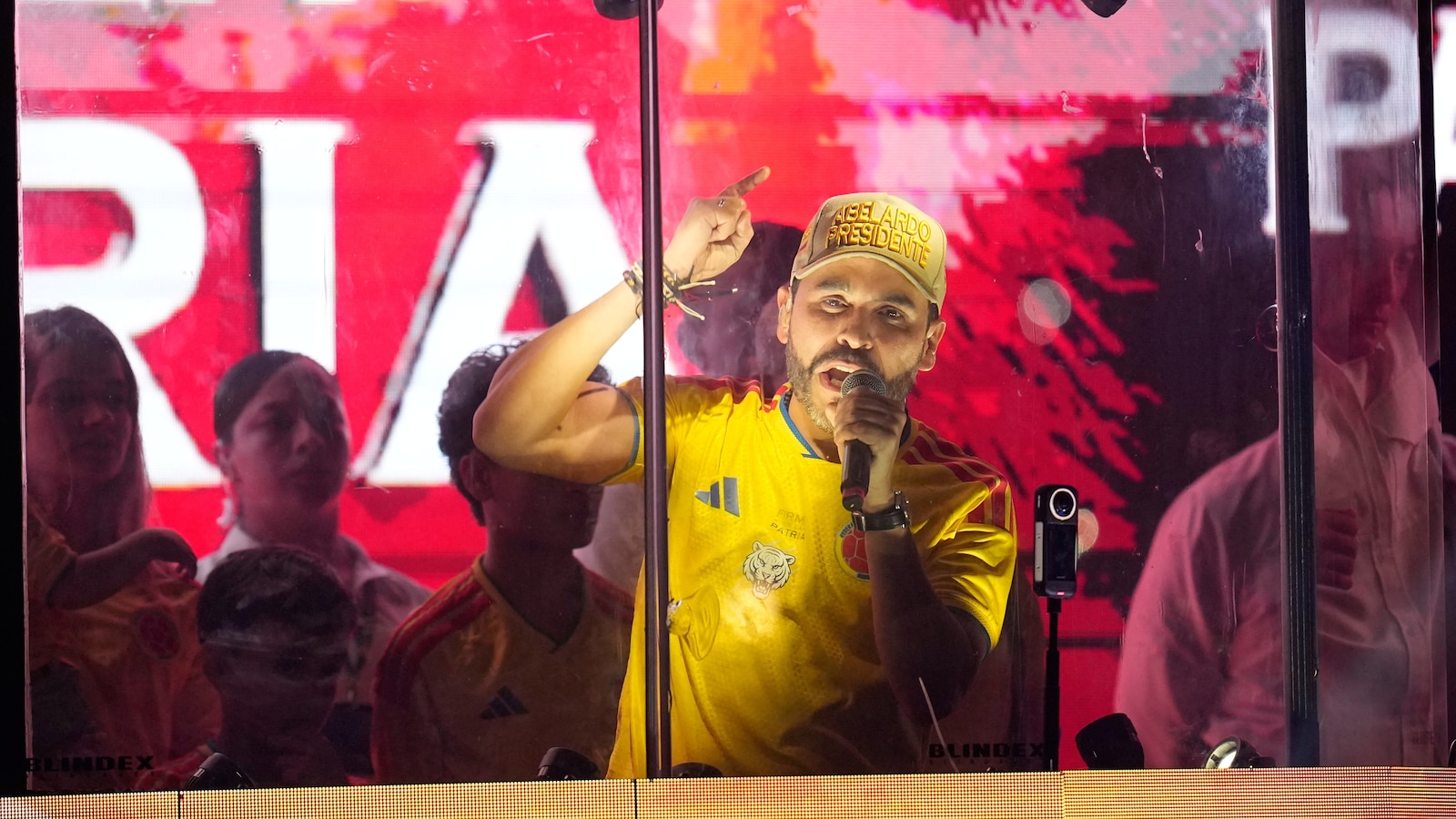
Abelardo de la Espriella, the candidate for Defensores de la Patria, is a conservative outsider and criminal lawyer with a controversial past who describes himself as not being a politician.

Paloma Valencia, a senator and candidate from former President Álvaro Uribe's center-right party Centro Democrático, also competed. No candidate polled over 50 percent ahead of the May 31 first round. De la Espriella advanced ahead of other candidates by focusing on promises to increase enforcement against criminal organizations.

The civil society Electoral Observation Mission reported 565 acts of political violence since January 2025. Those incidents included the assassination of a presidential hopeful, kidnappings, attacks targeting candidates and campaign staff, vandalism of campaign offices, and death threats.

Cepeda plans to advance peace and negotiations with illegal armed groups and focuses on truth and reconciliation.

He proposes advancing former President Gustavo Petro's agrarian reforms, pursuing an energy transition to curb climate change, and investing in education. His security proposal goes beyond an exclusively military response, focusing on improving human rights and dismantling the financial infrastructure of criminal groups.

De la Espriella's security proposal mirrors that of El Salvador's Nayib Bukele.

He would end peace negotiations and tackle narcotrafficking and organized crime with military force. He supports fracking, new oil contracts, and cutting taxes for the private sector. 0 aligned with the Trump administration's anti-narcotics strategy and resume aerial fumigation of coca crops halted by the Petro administration.

Valencia proposes a Plan 30-30 for security that would recruit 30,000 new members each to the military and police and increase the defense budget to 4 percent of Colombia's GDP. She would end the peace dialogues, militarize insecure areas, and resume aerial fumigation. She proposed opening a 22,000-capacity penitentiary with 19,000 spots and restricting social protests.

U.S. to refinance Colombia's external debt. Both Valencia and de la Espriella propose including Colombia in the Shield of the Americas, created by the Trump administration, and have engaged with administration officials and Republican members of Congress.

U.S. has faced growing strains. The Petro administration joined China's Belt and Road Initiative in May 2025.

U.S. decertified Colombia for failing to meet its counternarcotics commitments.

U.S. Overthrow of Venezuela's Nicolas Maduro. Tensions cooled after the two men met at the White House on February 7, but no sanctions were lifted, Colombia remains decertified, and no new aid for Colombia has been announced.

U.S. Assistance as part of the elimination of USAID and overall foreign aid cuts in 2025. The Trump administration held the Shield of the Americas Summit in Doral, Florida, in March as part of building a multinational military partnership against drug cartels and transnational criminal organizations.

The Trump administration's 2025 National Security Strategy advances a "Trump Corollary" to the Monroe Doctrine.

U.S. election observation mission of 86 government officials. The officials will be deployed across 15 areas to assess transparency, security, and voting in high-risk locations during both presidential rounds.

U.S. boat strikes in the Caribbean and Pacific have killed at least 196 people to date. Petro strongly criticized those strikes. Christopher Sabatini, Senior Research Fellow on the Americas at Chatham House, told France 24 that the outcome reflects what is sometimes called the "Donroe doctrine" in regional partisan politics.

The same pattern of voter preference for tough-on-crime platforms has appeared across several nations in the hemisphere.

Transparency

How sources framed this
truthout.org
France 24abcnews.go.com
The Washington Times
LeftNeutralRightPetro failurePragmatic shift

Story details

Related Stories

White House Issues First Presidential Message on Global Coptic Daynbcnews.com
politics7 hrs agoSourced

White House Issues First Presidential Message on Global Coptic Day

President Trump released an official statement marking June 1 as Global Coptic Day and recognizing the Coptic Orthodox Church's 2,000-year history in Egypt. The proclamation triggers no statutory changes but formally elevates Coptic heritage recognition within federal observances…

The White House
1 source
Trump Adjusts Steel Aluminum and Copper Tariffs to Bolster Domestic Productionindiatoday.intoday.in
politics5 hrs agoSourced

Trump Adjusts Steel Aluminum and Copper Tariffs to Bolster Domestic Production

President Donald J. Trump signed a proclamation updating tariffs on imports of steel, aluminum, and copper. The changes aim to protect national security, drive investment in U.S. manufacturing, agriculture, and housing, and expand domestic output of metals used in strategic produ…

The White House
1 source
Trump and Netanyahu Speak by Phone Amid Israel’s Operations in LebanonThe Hill
politics6 hrs agoFraming68Framing risk68/100Rewrite inherits heavy consensus framing by leading with Trump's personal rebuke and leaked vulgar insults rather than the substantive policy disagreement or military context.Click to jump to full framing analysis

Trump and Netanyahu Speak by Phone Amid Israel’s Operations in Lebanon

President Trump spoke by telephone with Israeli Prime Minister Benjamin Netanyahu on Monday and criticized the escalation of military operations in Lebanon. The call also addressed peace talks with Iran.

SE
SP
OS
The Hill
deccanchronicle.com
+1
6 sources