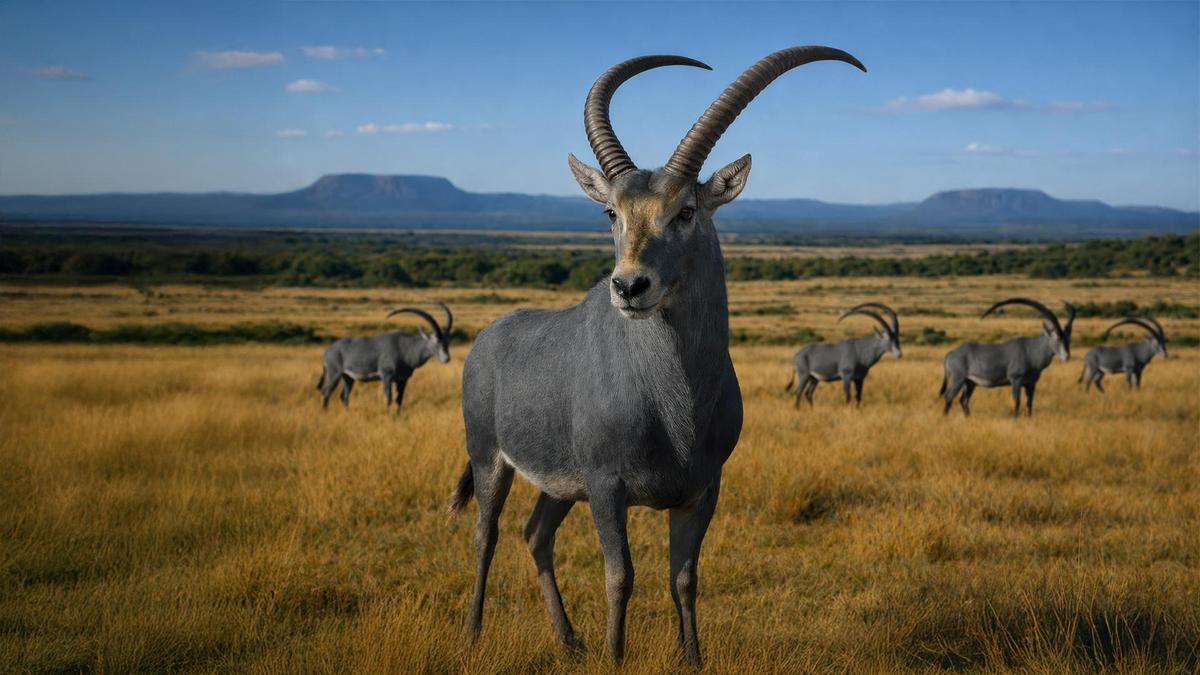
Colossal Biotech Launches De-Extinction Project for Extinct Bluebuck Antelope
Dallas-based Colossal announced a de-extinction effort for the extinct bluebuck antelope, emphasizing technologies applicable to conserving threatened species. CEO Ben Lamm said the company will open-source relevant tools for free. Ecologist Douglas McCauley praised the approach while critiquing potential distractions from ongoing extinction crises.
Dallas-based genetics and biotech startup Colossal announced its latest de-extinction project in April 2026, focusing on the bluebuck, a South African antelope species that went extinct around 1800. The Verge reported that the initiative includes technologies for facilitating reproduction and a technique for collecting and aspirating oocytes from live animals.
Colossal CEO Ben Lamm stated that the technology developed for the project can already be used in conservation efforts and will be made available as a resource outside the company.
Lamm described the oocyte harvesting procedure as 'ovum pickup,' where researchers use an ultrasound and a needle to go into a live animal’s ovary and flush out the eggs. The project builds on Colossal's previous efforts, including the presentation of dire wolf pups in 2025, which were gray wolves spliced with a few genetic traits to resemble dire wolves.
The company's de-extinction projects aim to bring back lost animals such as the woolly mammoth, the Tasmanian tiger, and the dire wolf.
Colossal has raised hundreds of millions of dollars from venture capitalists, the CIA, and Peter Thiel, among others. Ecologist Douglas McCauley, who co-authored an editorial about Colossal’s dire wolf project in Time magazine in 2025, stated that he stands by his assessment of that initiative.
He expressed concerns that such projects could draw attention away from efforts to save critically endangered species that still exist.

In response, Lamm stated, 'We don’t think that education and excitement around ‘de-extinction’ [are] diametrically opposed to saving species. The Verge reported that Colossal has a global biobanking initiative aimed at preserving the genetic records of existing at-risk species.
McCauley stated that Colossal’s policy of making its genomes and technologies available for conservation efforts is a really great best practice.
Colossal's focus on the bluebuck represents an adjustment in its public strategy, following criticisms of earlier projects like the dire wolf announcement. The technologies emphasize versatile techniques with applications beyond de-extinction, such as in antelope conservation where about 30 percent of species face extinction threats.
Lamm highlighted the company's aim to develop an end-to-end synthetic biology pipeline hardened on difficult use cases.
McCauley noted the potential of the ovum pickup technique for harvesting eggs from living animals in preservation efforts. He described it as a useful, exportable technology that could be applied before a species goes extinct. The biobanking effort, according to Colossal, seeks to create repositories of genetic material for future scientific use, with McCauley stating that the more such repositories exist, the better.
Lamm argued that de-extinction projects serve as a way to attract attention and funding to broader conservation and science goals. ’' McCauley remained skeptical, stating that he views the approach as creating more distraction than constructive attention. The bluebuck project underscores Colossal's dual emphasis on reviving extinct species and advancing tools for current conservation challenges.
The company's open-sourcing policy applies to all technologies with conservation relevance, as Lamm confirmed. This initiative follows the 2025 dire wolf presentation, which drew intensified criticism for potentially diverting resources from pressing extinction issues.
Key Facts
Story Timeline
5 events- Apr 30, 9:31 AM ET
1 new source added: The Independent
1 sourceThe Independent - 2026-04
Colossal announced its latest de-extinction project focused on the bluebuck.
1 sourceThe Verge - 2025
Colossal presented dire wolf pups that were gray wolves spliced with a few genetic traits to resemble dire wolves.
1 sourceThe Verge - 2025
Ecologist Douglas McCauley co-authored an editorial about Colossal’s dire wolf project in Time magazine.
1 sourceThe Verge - 1800
The bluebuck, a species of South African antelope, went extinct around this time.
1 sourceThe Verge
Potential Impact
- 01
Ongoing debate in scientific community about the ethics and accuracy of labeling hybrid animals as de-extincted species.
- 02
Potential advancement in antelope conservation through open-sourced reproductive technologies.
- 03
Expansion of biobanking repositories, aiding future genetic preservation efforts.
- 04
Increased public attention to de-extinction, possibly inspiring interest in science and conservation among younger audiences.
- 05
Risk of diverting funding and policy focus from existing endangered species to de-extinction projects.
Transparency Panel
Related Stories
SemaforSamsung Market Cap Tops $1 Trillion as Chip Stocks Rise Amid AI Demand
South Korea’s Samsung saw its market capitalization surpass $1 trillion as semiconductor demand rose. SK Hynix hit a record high and Alphabet advanced on a $200 billion Anthropic deal. AI firms DeepSeek and Anthropic pursue large valuations while analysts note sector momentum.
insurancejournal.comMajor Publishers and Author Sue Meta for Using Copyrighted Works to Train Llama AI
Five major publishing houses and author Scott Turow filed a lawsuit against Meta in Manhattan federal court, accusing the company of pirating millions of copyrighted works to train its Llama AI models. The suit claims Meta CEO Mark Zuckerberg personally authorized the infringemen…
Brockman Testifies About 2017 Dispute with Musk Over OpenAI For-Profit Shift
OpenAI President Greg Brockman detailed a heated 2017 confrontation with Elon Musk during testimony in the federal trial Musk v. Altman. He described Musk storming around a table and grabbing a painting after rejecting shared control proposals. The lawsuit seeks $150 billion in d…