Companies Seek Permits for Deep-Sea Mining After Executive Order
Businesses have raised millions from investors and stock prices have risen since an executive order directed federal agencies to speed up permitting for seabed minerals. At least nine companies are in talks with regulators for access to ocean floor resources.
 The Independent
Businesses have raised millions of dollars from investors and stock prices have risen in the year since an executive order directed federal agencies to speed up permitting for seabed minerals. At least nine companies are in talks with the government for access to seabed minerals, according to an Associated Press review.
Sections of the seafloor from American Samoa to Alaska could be auctioned for offshore mining this summer and through the fall. The action suggests the U.S. may soon give the green light for companies to commercially mine the seabed.
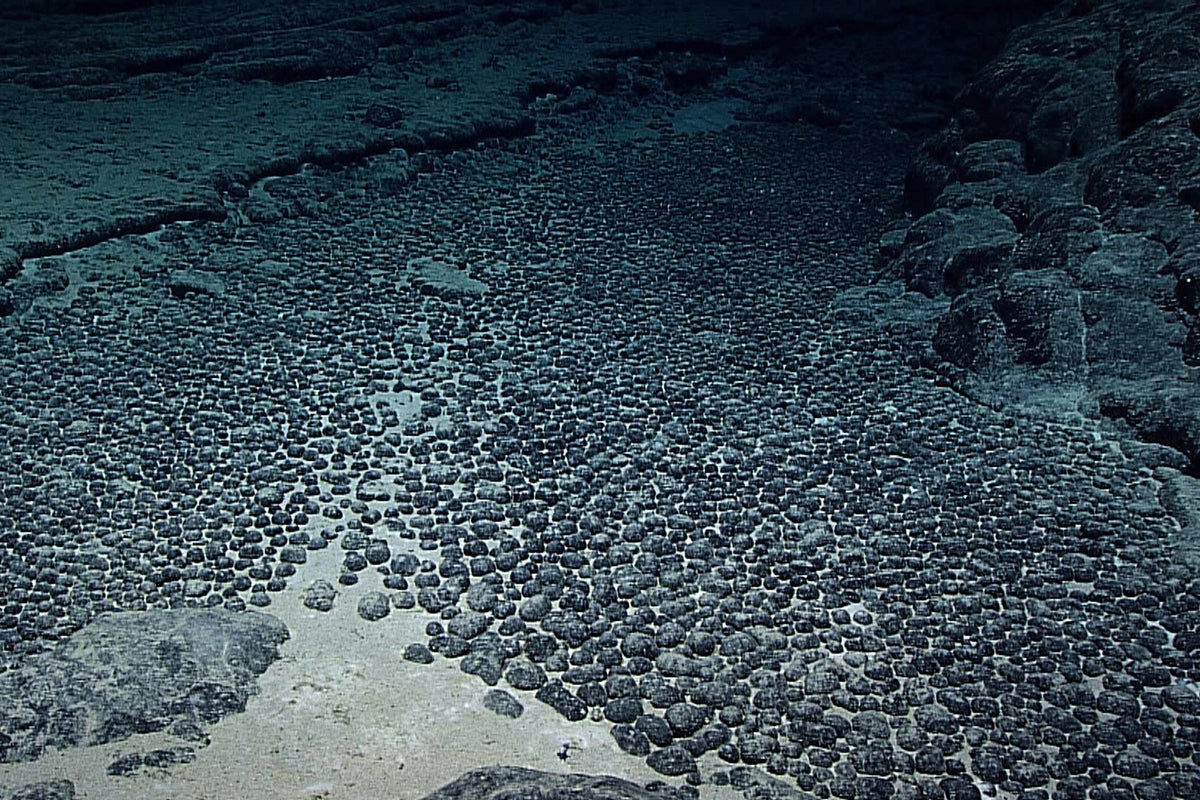
The most widely prized ores on the seafloor are fist-shaped rocks known as polymetallic nodules. They contain high grades of manganese, copper, nickel and cobalt, and some rare earth elements. Trillions of nodules lie on the international seabed between Mexico and Hawaii, scientists say. Nearer to shore, companies have proposed dredging ocean sands for titanium, zirconium and phosphorites.
The executive order hailed seafloor minerals as vital to America's future prosperity and its trade independence from China, and directed U.S. agencies to expedite permitting. Two U.S. agencies will enforce rules: the National Oceanic and Atmospheric Administration and the Bureau of Ocean Energy Management.
NOAA has never approved a commercial project for seabed mining. In June, Interior Secretary Doug Burgum announced a mandate for his staff to speed up the development of critical minerals offshore. The agency soon announced it was evaluating seabed mining in the waters of Alaska, Virginia, American Samoa and the Northern Mariana Islands.
It plans to hold the first lease sale as early as August. NOAA has shortened the timeline for companies pursuing commercial permits, and targets processing 16 applications next fiscal year.
Companies include a firm that once made its money hunting for sunken treasure, and a startup that sprung from an effort to find Amelia Earhart's long-lost plane. The Metals Company says it can commercially mine the seafloor before the end of next year if granted a permit.
The company has completed mining plans and seafloor surveys for the first eight years of the project. It is one of few companies to have tested equipment in deep-water conditions, hauling up 3,000 metric tons of nodules in a 2022 trial. Odyssey Marine Exploration formed in the 1990s with a mission to discover sunken treasure and sell the artifacts for profit.
In December, BOEM announced that Odyssey had requested the agency begin the regulatory process to consider mining off the coast of Virginia. The startup Impossible Metals has set its sights on seafloor nodules in U.S. waters near American Samoa and the Northern Mariana Islands.
Still other companies are lining up for U.S. permits, including Deep Sea Rare Minerals, which planned to change its name to Eco Minerals this week.
Analysts and investors question the economic merit of deep-sea mining. Ian Lange, a professor of mineral economics at the Colorado School of Mines, said deep-sea mining advocates seem to overlook the more affordable and widely available sources of minerals on land.
The Metals Company said at least three land-based mines were needed to produce the four minerals that exist in polymetallic nodules, and this variety makes the project resilient to economic headwinds and changing demand for metals.
The U.S. currently has no major processing facilities for nickel, manganese or cobalt. In the near term, companies will have to rely on existing supply chains abroad. The Metals Company has thus far explored processing in Japan, South Korea and Indonesia.
Transparency
Story details
Related Stories
 foxnews.com
Senate Blocks Vote on FISA Reauthorization Over Trump DNI Pick
The Senate failed to advance a bill to renew the Foreign Intelligence Surveillance Act after Democrats objected to President Trump's selection of Bill Pulte as Director of National Intelligence.
 Le Monde
Zelensky Proposes Ceasefire to Putin; France, Germany and UK Leaders to Meet Him in London
French President Emmanuel Macron, German Chancellor Friedrich Merz and UK Prime Minister Keir Starmer will join Ukrainian President Volodymyr Zelensky at Downing Street from around 1730 GMT.
 Substrate placeholder — needs review
House Panel Advances Defense Bill Including Amendment to Rename Pentagon as Department of War
Republicans on the panel voted 44-12 late Thursday to include the name change in the fiscal 2027 National Defense Authorization Act. The measure now moves to the full House.