science
Congo Sanctuary Cares for Orphaned Bonobos Rescued From Bushmeat Trade
A sanctuary on the outskirts of Kinshasa houses the world's only dedicated facility for orphaned bonobos, which are rescued from poachers or kept as pets. Staff provide foster care for the young apes, which share nearly 99 percent of their DNA with humans. Officials have proposed issuing bonobo credits to communities that preserve the animals' forest habitat.
 The Independent
Audio version
Tap play to generate a narrated version.
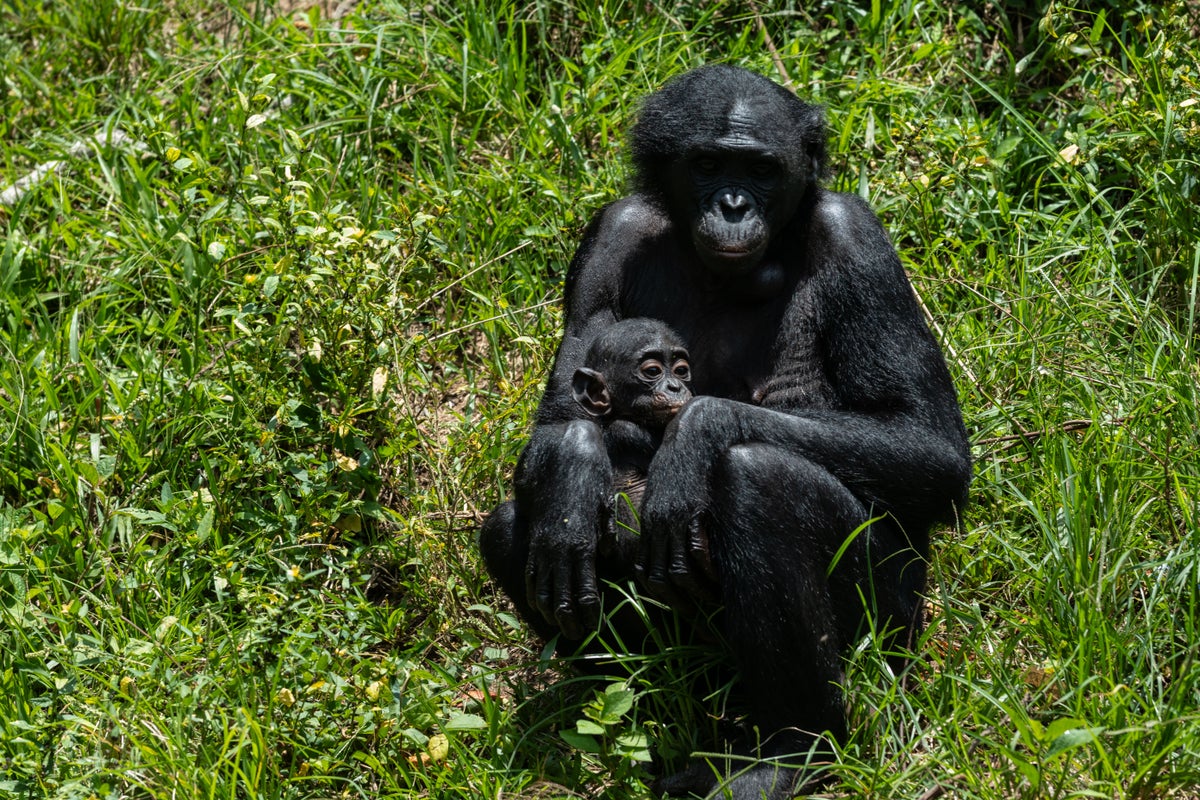
Micheline Nzonzi cradled a small, sleepy bonobo, an orphan whose life she will try to save over the next three years or so. The 1-year-old's chances are good, with motherly affection, milk from a bottle and frequent play with other babies. "Without me, without us, these bonobos cannot survive," said Nzonzi, who has been a bonobo foster mother for 24 years.
This primate nursery on the forested outskirts of the Congolese capital of Kinshasa is the world’s only sanctuary for orphaned bonobos. The animals are usually rescued from poachers or found trapped in the homes of locals who raise them for their meat.
Although great apes like the endangered bonobos are legally protected from hunters, they are still targeted to satisfy demand for bushmeat in areas far beyond the Congo Basin. The bushmeat trade ranges from rodents to antelopes, but a totemic ape like the bonobo may fetch a higher price.
An educator with the Lola ya Bonobo sanctuary said the bonobos are in danger and that the group is educating people not to kill them. "We can’t kill them, we can’t put them at home as pets, we can’t eat them," the educator said.
Congo has proposed issuing “bonobo credits,” similar to carbon credits, to reward communities for preserving forests. Bonobos raise their babies for four to five years and their low reproductive cycle means they are vulnerable to environmental disturbances.
The program is yet to take off. A primatologist and founder of the Uganda-based Conservation Through Public Health group said there is a cultural difference between Congo and neighboring Uganda, where apes are not hunted for meat.
There are dozens of grown bonobos at the sanctuary.
Some have lived there since 2002, when this sanctuary opened under the sponsorship of a conservation nonprofit known by its French name of Les Amis des Bonobos du Congo. The nursery also has 11 young bonobos, with the most recent arriving earlier this year.