Substrate
science

Crabs’ Sideways Walk Evolved Once 200 Million Years Ago

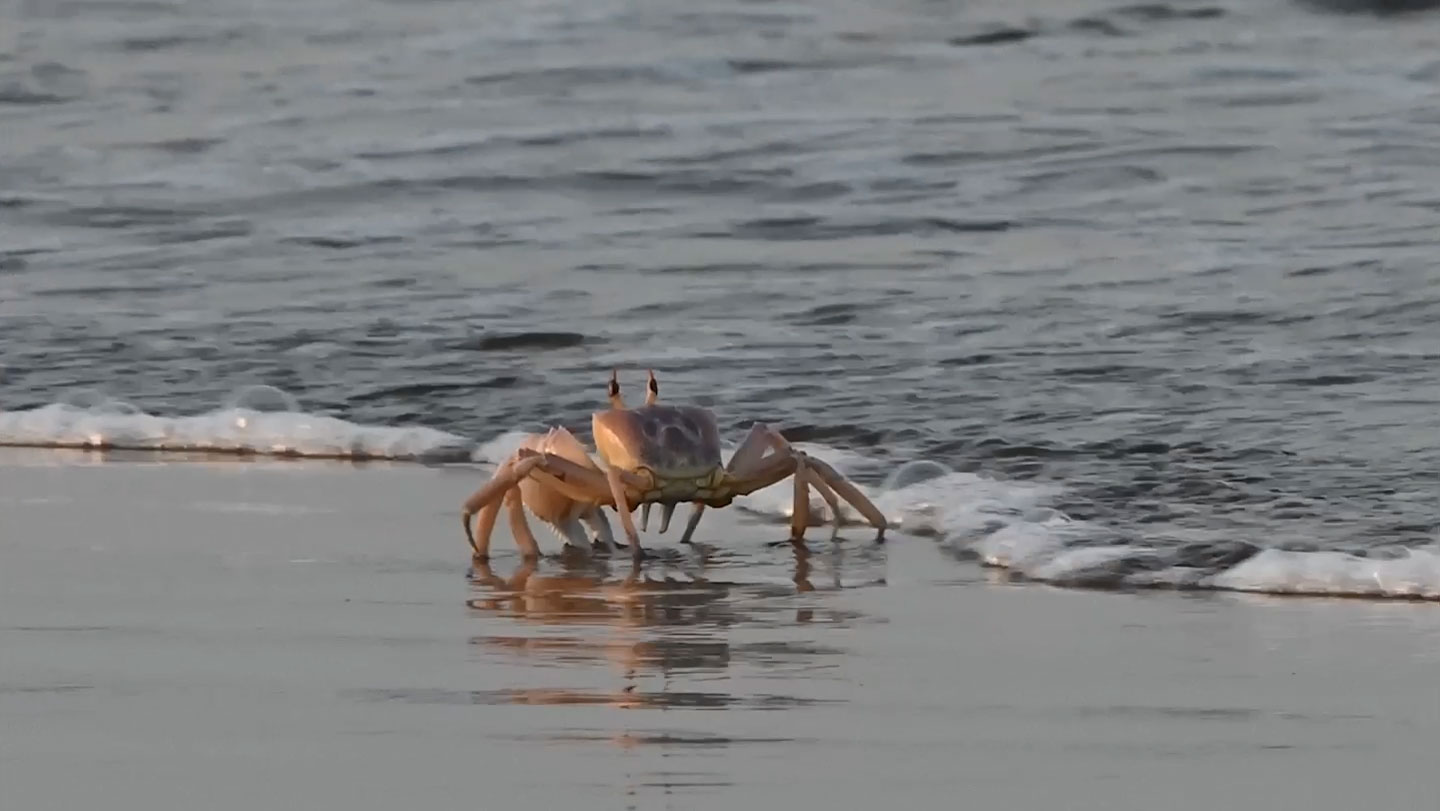
A study of 50 crab species found that sideways locomotion originated with a single ancestor roughly 200 million years ago. The trait is linked to the evolutionary success of the most diverse crab group, which now includes nearly 7,500 species. Researchers say the change required major rewiring of muscles, ligaments and neural systems.

Science News
1 source·May 15, 5:00 PM(14 days ago)·1m read
Crabs’ Sideways Walk Evolved Once 200 Million Years AgoScience News
Audio version
Tap play to generate a narrated version.
Developing·Limited corroboration so far. This page will refresh as more sources emerge.

The sideways walk characteristic of most crabs evolved only once, in a common ancestor that lived about 200 million years ago. That finding comes from a study published April 21 in eLife that examined the movement of 50 crab species collected across Japan and mapped the results onto a crab evolutionary tree constructed from DNA data.

Researchers recorded each crab’s locomotion in a controlled pool, noting whether the animal moved primarily forward or sideways. The analysis showed that all crabs exhibiting sideways movement descend from one group of ancestors dating to roughly 200 million years ago.

The lineage that adopted this form of locomotion, known as Eubrachyura, now contains nearly 7,500 modern species. By comparison, the two groups of crabs that move forward and backward together include only 156 species. The marked difference in diversity suggests that sideways walking may have functioned as a key innovation that contributed to the group’s evolutionary expansion.

Sideways locomotion required shifts in muscles and ligaments as well as a fundamental rewiring of neural activity. The changes affected multiple behaviors including foraging, burrowing, social interaction and mating. One researcher not involved in the study noted that sideways-walking crabs ultimately required fewer nerve cells to control leg movement than earlier forms.

“Instead of every joint in the leg of a crab having to play a more or less equal role, it boiled down to two main joints that did pretty much 90 percent of the work,” the neuroethologist said.

The first sideways-walking crabs appeared in the aftermath of the Triassic–Jurassic extinction, which eliminated about three-quarters of all species. The breakup of the supercontinent Pangaea at that time also expanded shallow marine habitats favorable to crustaceans.


These new ecological niches may have allowed the sideways-walking lineage to spread rapidly across land and sea environments. Other crustaceans later evolved a crablike body plan on at least three separate occasions. None of those “false” crabs developed sideways locomotion.

Key Facts

Single evolutionary origin
Sideways walk evolved once 200 million years ago
7,500 species
Eubrachyura diversity compared to 156 in other groups
50 crab species
Sampled from Japan for movement and DNA analysis
Neural simplification
Two joints perform 90 percent of leg work

Story Timeline

3 events
  1. April 21, 2026

    Study of 50 crab species published in eLife.

    1 sourceScience News
  2. 200 million years ago

    Sideways walking first appeared in a common crab ancestor.

    1 sourceScience News
  3. Triassic–Jurassic extinction

    Mass extinction created new habitats for early sideways-walking crabs.

    1 sourceScience News

Potential Impact

  1. 01

    The study provides a clearer picture of how a single locomotor change contributed to major species radiation in crustaceans.

  2. 02

    Findings may influence future research on neural rewiring during major evolutionary transitions.

  3. 03

    The work highlights the ecological opportunities created by mass extinctions and continental breakup.

Transparency Panel

Sources cross-referenced1
Confidence score75%
Synthesized bySubstrate AI
Word count329 words
PublishedMay 15, 2026, 5:00 PM
Bias signals removed2 across 2 outlets
Signal Breakdown
Editorializing 1Loaded 1

Related Stories

WHO Director Visits Congo as Ebola Outbreak SpreadsNpr
science4 hrs ago

WHO Director Visits Congo as Ebola Outbreak Spreads

The head of the World Health Organization arrived in Kinshasa to support efforts against a rare Ebola strain. Health workers face equipment shortages, community distrust, and armed conflict in affected provinces.

Npr
France 24
2 sources
FDA Panel Recommends XFG Variant for Fall Covid Shotsmedpagetoday.com
science2 hrs agoDeveloping

FDA Panel Recommends XFG Variant for Fall Covid Shots

Replimune will submit an application to the FDA for the third time. Pfizer and Innovent Biologics reached a collaboration agreement valued at up to $10.5 billion.

Stat
1 source
Benzinga Publishes Article on Biotech Stocks During Pandemic Recoveryfinance.yahoo.com
science6 hrs agoDeveloping

Benzinga Publishes Article on Biotech Stocks During Pandemic Recovery

Benzinga published an article titled 'Best Biotech Stocks Right Now' that addresses the sector's position during global recovery from the pandemic. The piece notes government institutions and professional traders are focusing on biotech companies for vaccine and booster developme…

Benzinga
1 source