Cuba Said CIA Director Visited Havana
The Cuban government said CIA Director John Ratcliffe met his Cuban counterpart in Havana. The meeting followed a renewed U.S. offer of $100 million in aid to address fuel shortages. Cuban officials stated the discussions focused on improving dialogue and bilateral cooperation on security matters.
BBC NewsThe Cuban government said CIA Director John Ratcliffe met his Cuban counterpart at the interior ministry in Havana. The reported visit occurred after the U.S. renewed an offer of $100 million in aid to ease the effects of fuel shortages in the country.
A Cuban statement said the meeting was an attempt to improve dialogue. Officials told American counterparts that Havana was not a threat to U.S. national security. Both sides also underscored their interest in developing bilateral cooperation between law enforcement agencies in the interest of the security of both countries, as well as regional and international security.
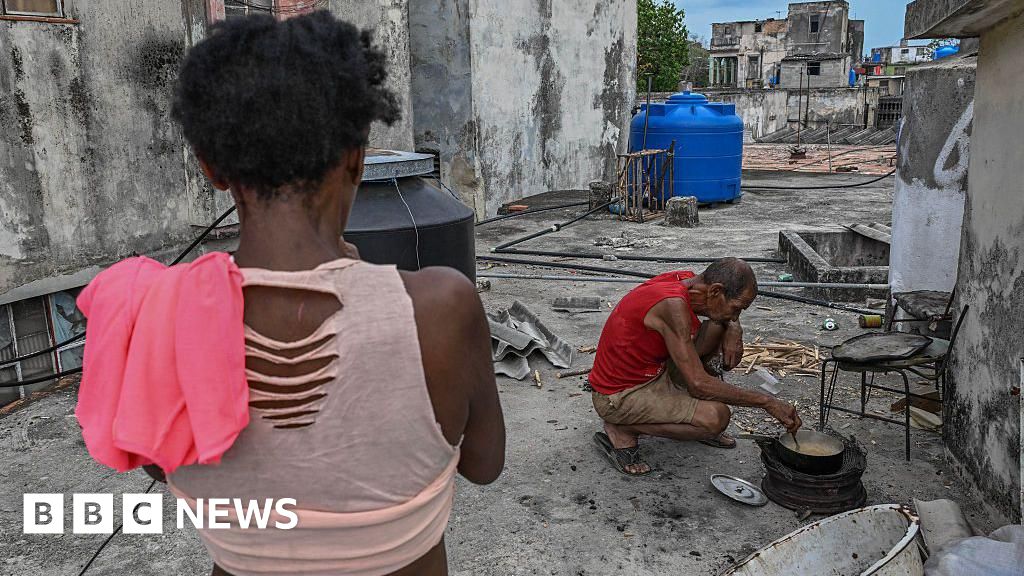
Fuel shortages have been exacerbated by U.S. measures squeezing supplies of essentials such as diesel and fuel oil. Hospitals have been unable to function normally while schools and government offices have closed. Cuban President Miguel Diaz-Canel said conditions could be eased faster if the U.S. lifted its blockade instead of offering aid.
Havana's confirmation of the meeting came after a U.S. government plane was seen taking off from José Martí international airport on Thursday afternoon. Cuba and the U.S. acknowledged earlier this year they were in talks, but negotiations appeared to stall as restrictions on oil supplies continued.
Cuba has in the past relied on Venezuela and Mexico to supply oil to its refinery system.
Earlier on Thursday, the foreign minister said Cuba was ready to hear the details of the U.S. aid proposal and how it would be implemented. The previous day, officials renewed an offer to provide generous assistance to the Cuban people. The offer specified that the aid would have to be distributed in coordination with the Catholic Church and other reliable independent humanitarian organisations.
The foreign minister added that it was unclear whether the U.S. aid offer would be in cash or in-kind assistance. He stated that the Cuban government does not, as a matter of practice, reject foreign aid offered in good faith and with genuine aims of cooperation.
He added that the best way the U.S. could help Cuba would be to de-escalate energy, economic, commercial, and financial blockade measures.
The country's energy minister warned that Cuba had completely run out of diesel and fuel oil. In an interview with state-run media, he said there were limited amounts of gas available but that Cuba's energy system was in a critical state. Cubans have been suffering from extensive blackouts, some of them nationwide, for months.
On Wednesday, after the latest power cut affecting large swathes of eastern Cuba as well as parts of the capital, hundreds took to the streets in Havana. Protesters blocked roads with burning rubbish and shouted anti-government slogans. It marked the biggest single night of demonstrations in the city since the energy crisis began in January.
Cuban President Miguel Diaz-Canel acknowledged the particularly tense situation across the island, which he attributed to U.S. measures. The Trump administration has essentially shut down all deliveries of crude oil to Cuba. The measures ramped up in early May when fresh sanctions were imposed on senior Cuban officials accused of committing human rights abuses.
Key Facts
Story Timeline
5 events- 2026-05-14
Cuban government announces CIA Director John Ratcliffe met counterpart in Havana.
1 sourceBBC News - 2026-05-13
Hundreds protest in Havana with burning rubbish after major power cuts.
1 sourceBBC News - 2026-05-13
U.S. officials renew $100 million humanitarian aid offer to Cuba.
1 sourceBBC News - 2026-05-08
U.S. imposes fresh sanctions on senior Cuban officials.
1 sourceBBC News - 2026-01-01
Cuba's current energy crisis begins with widespread blackouts.
1 sourceBBC News
Potential Impact
- 01
Hospitals in Cuba continue operating with reduced capacity due to fuel shortages.
- 02
Schools and government offices remain closed or limited by ongoing power cuts.
- 03
Further street protests may occur in Havana if blackouts persist.
- 04
Bilateral talks between Cuba and the U.S. could resume on security cooperation.
Transparency Panel
Related Stories
Los Angeles TimesEU Fines Temu €200 Million Over Unsafe Products
The European Commission imposed a €200 million fine on Chinese e-commerce platform Temu for failing to assess risks from illegal goods. The penalty is the second issued under the Digital Services Act.
Aggreko to Build Off-Grid Hybrid Plant for Eva Copper Mine
Global energy company Aggreko will construct Australia's largest off-grid renewable hybrid power facility at the Eva Copper Mine in North West Queensland. The 15-year project will supply 72 megawatts of power using solar, battery storage and thermal generation.
theyeshivaworld.comEU fines Temu more than $230 million over illegal product sales
The European Commission imposed a €200 million penalty on the Chinese e-commerce platform after finding consumers are very likely to encounter illegal items. Temu has until August 26 to submit a compliance plan or face further penalties.