Substrate
world

Cuba Expands Solar Capacity as Residents Use Charcoal During Power Shortages

Cuba’s government plans to reach 100 percent renewable energy by 2050. Most residents continue using charcoal for cooking because solar systems remain unaffordable for the average household.

Nbc News
1 source·May 23, 4:00 PM(6 days ago)·1m read
Cuba Expands Solar Capacity as Residents Use Charcoal During Power ShortagesNbc News
Audio version
Tap play to generate a narrated version.

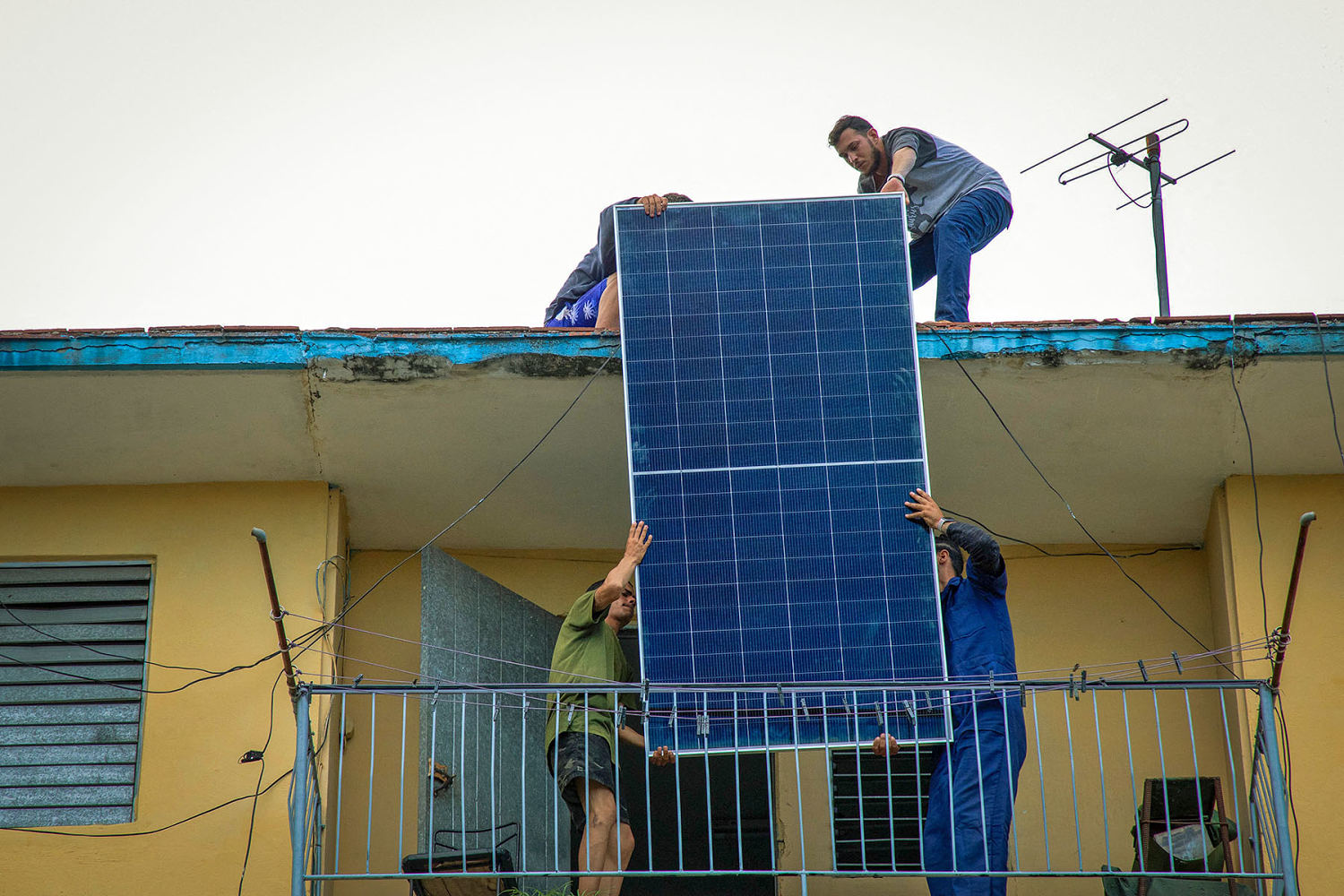
Cuba’s government has announced plans to shift entirely to renewable energy sources by 2050. Renewables currently supply 10 percent of electricity demand, up from 3 percent in 2024, and officials project they will cover 15 percent by the end of 2026. The country has installed 54 solar parks with financing and equipment from China. Officials expect the total to reach 92 parks by 2028.

Frequent blackouts have forced many residents to cook with charcoal. Havana resident Lisbet Reyes said rice that normally takes 15 minutes on an electric cooker takes about an hour on a charcoal grill, and smoke fills her unventilated kitchen. A small bag of charcoal costs about $1, while the average state salary is about $13 a month.

Reyes said she recently required antibiotics after smoke exposure affected her respiratory system.

A small number of residents and business owners have purchased solar panels. Gym owner Guillermo Sánchez said his family spent nearly $5,000 on a system that now allows uninterrupted operation during daytime outages. Massage business owner Rafael Huergo bought six panels for roughly $100 each with help from relatives abroad.

He said the panels supply all household power and eliminate his electricity bill. Foreign Minister Bruno Rodríguez stated on X that Cuba is advancing its energy transition program under party and government leadership. The Cuban Embassy in Washington did not respond to questions about the plan’s feasibility.

Energy expert Jorge Piñon of the University of Texas at Austin said reaching 100 percent renewables by 2050 is highly unlikely given Cuba’s current economic situation and infrastructure condition.


Key Facts

100 percent renewables target
Cuba aims for full renewable coverage by 2050
54 solar parks operating
Current total with Chinese equipment and financing
$13 monthly state salary
Average wage compared with $1 charcoal bag cost
10 percent renewables share
Current portion of electricity demand met by renewables

Story Timeline

3 events
  1. 2024

    Cuba’s renewables share stood at 3 percent of electricity demand.

    1 sourceNbc News
  2. 2025

    Cuba reached 10 percent renewables and installed 54 solar parks.

    1 sourceNbc News
  3. 2026

    Government projects renewables will supply 15 percent of demand by year end.

    1 sourceNbc News

Potential Impact

  1. 01

    Residents without solar systems will continue using charcoal for cooking during outages.

  2. 02

    Cuba plans to add 38 more solar parks by 2028 with Chinese assistance.

Transparency Panel

Sources cross-referenced1
Confidence score65%
Synthesized bySubstrate AI
Word count268 words
PublishedMay 23, 2026, 4:00 PM

Related Stories

Journalists in Gaza to Receive 2026 Golden Pen of Freedom Awardstraitstimes.com
world2 hrs ago

Journalists in Gaza to Receive 2026 Golden Pen of Freedom Award

Three international news agencies will accept the award on behalf of their local staff still reporting from the territory. The World Association of News Publishers cited the journalists' continued coverage under extreme conditions.

Al-Monitor
AF
2 sources
Supreme Court Revives Havana Docks Lawsuit Over Confiscated Cuban Propertyupi.com
world2 hrs ago

Supreme Court Revives Havana Docks Lawsuit Over Confiscated Cuban Property

The U.S. Supreme Court sent a Helms-Burton Act case back to lower courts for further argument. The suit seeks damages from cruise lines that used docks seized by Cuba in 1959.

FO
1 source
Pakistan Population Growth Outpaces Infrastructure as Male Contraception Stays TabooFrance 24
world2 hrs agoDeveloping

Pakistan Population Growth Outpaces Infrastructure as Male Contraception Stays Taboo

Pakistan's population exceeds 258 million and could reach 300 million by 2030. Contraception remains largely taboo in a society shaped by traditional values. The country continues to lag behind neighbors India and Bangladesh in key social sectors.

FR
France 24
2 sources