Substrate
politics

Cuba Turns to Solar Power and Electric Vehicles as Fuel Shortages Persist

Small businesses and consumers in Cuba are adopting solar energy and electric tricycles amid ongoing fuel shortages. Officials reported that fuel supplies for power generation have been depleted. The government is increasing use of photovoltaic systems with support from China.

Le Monde
1 source·May 15, 1:07 PM(14 days ago)·1m read
Cuba Turns to Solar Power and Electric Vehicles as Fuel Shortages PersistLe Monde
Audio version
Tap play to generate a narrated version.
Developing·Limited corroboration so far. This page will refresh as more sources emerge.

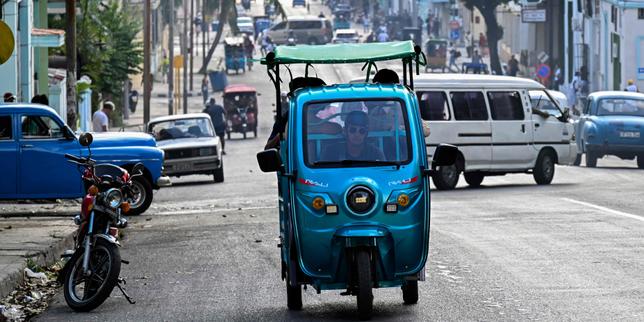
Small businesses in Cuba are turning to solar energy solutions to offset persistent fuel shortages that have led to increased power outages. On a Monday morning in late April, customers gathered around an electric tricycle on display at Casalinda, an upscale supermarket in central Havana.

The metallic green vehicle manufactured in China drew interest from shoppers who photographed it from multiple angles. A sign indicated it would be available in June. A potential buyer measured the utility tricycle with a tape measure while questioning the department manager.

The previous model sold for $2,550 while the new one is expected to cost around $2,600, according to a store employee who requested anonymity. Ten containers of these vehicles were expected to be delivered to the supermarket's warehouse on the outskirts of the capital over the coming months.

"Demand is very strong, since there's no more gasoline to run cars," the employee said. More than three months after the U.S. imposed an oil blockade against Cuba on January 29, the energy crisis on the island shows no sign of abating. The same official added that fuel delivered at the end of March by a Russian tanker had already been depleted.

Nearly four months after the blockade began, officials are betting on solar power to help address the shortages. Electric tricycles and solar installations represent practical adaptations for businesses and residents facing limited access to traditional fuel. The developments come as power outages have become more frequent across the Caribbean island.
Key Facts

January 29, 2026
date U.S. imposed oil blockade on Cuba
No fuel left
minister reported zero diesel for power plants
$2,600
expected price of new Chinese electric tricycle
Ten containers
of electric tricycles due at Havana warehouse
Photovoltaic energy
government betting on solar with Chinese support

Story Timeline

5 events
  1. January 29, 2026

    The U.S. imposed an oil blockade against Cuba.

    1 sourceLe Monde
  2. End of March 2026

    A Russian tanker delivered fuel to Cuba.

    1 sourceLe Monde
  3. Late April 2026

    Customers examined electric tricycles at a Havana supermarket.

    1 sourceLe Monde
  4. May 13, 2026

    Officials stated there was absolutely no fuel or diesel left.

    1 sourceLe Monde
  5. June 2026

    New electric tricycles are scheduled to become available for purchase.

    1 sourceLe Monde

Potential Impact

  1. 01

    Power outages continue to affect daily life and economic activity in Cuba.

  2. 02

    Cuban small businesses are purchasing electric tricycles to replace gasoline vehicles.

  3. 03

    Supermarkets in Havana are selling Chinese-manufactured electric vehicles.

  4. 04

    Increased adoption of solar power systems is occurring across the island.

Transparency Panel

Sources cross-referenced1
Confidence score65%
Synthesized bySubstrate AI
Word count251 words
PublishedMay 15, 2026, 1:07 PM
Bias signals removed4 across 2 outlets
Signal Breakdown
Loaded 2Framing 1Editorializing 1

Related Stories

Russian Drone Strikes Romanian Apartment Building, Injuring TwoFrance 24
politics2 hrs agoUpdated

Russian Drone Strikes Romanian Apartment Building, Injuring Two

A Russian drone crashed into a residential building in eastern Romania during an overnight attack on Ukraine. Two people were injured and Romania requested faster NATO anti-drone support.

AB
Cbs News
SK
The Hill
France 24
+8
14 sources
Trump Says U.S. Will Lift Iran Naval Blockade After Nuclear and Hormuz Pledgesrealitytea.com
politics2 hrs agoDeveloping

Trump Says U.S. Will Lift Iran Naval Blockade After Nuclear and Hormuz Pledges

President Trump stated the U.S. will end its naval blockade of Iran once Tehran commits to forgoing nuclear weapons and opens the Strait of Hormuz to unrestricted shipping. The announcement came via Truth Social and a live statement.

FI
LI
MA
3 sources
Lebanese President Urges Ceasefire in Call With U.S. Secretary of Statednaindia.com
politics2 hrs ago

Lebanese President Urges Ceasefire in Call With U.S. Secretary of State

Lebanese President Joseph Aoun spoke with U.S. Secretary of State Marco Rubio about the need for a ceasefire with Israel. Israeli and Lebanese military delegations met at the Pentagon on the same day.

SE
AJ
2 sources