Mario Adorf, Actor Known for Roles in 'The Tin Drum' and 'Winnetou,' Dies at 95
Mario Adorf, a German-Italian actor recognized for his roles in European films and television, died on Wednesday at his home in Paris at age 95 following a short illness. His career spanned decades and included appearances in crime thrillers, Westerns, and dramas. Adorf received multiple awards for his work in German cinema.
 The Hollywood Reporter
Mario Adorf, a German-Italian actor, died on Wednesday at his home in Paris after a short illness. He was 95. Adorf gained recognition in Europe for roles in crime thrillers, spaghetti Westerns, and dramas, including the Oscar-winning film The Tin Drum.
Adorf's career extended across various genres and cinematic periods. His breakthrough role was as a Nazi-era serial killer in the 1957 thriller The Devil Strikes at Night, directed by Robert Siodmak, which received an Oscar nomination. He later worked with directors associated with the New German Cinema movement in the 1960s and 1970s.
In Volker Schlöndorff's The Tin Drum (1979), Adorf portrayed the father of the protagonist, Oscar Matzerath. Adorf also appeared in supporting roles in The Lost Honor of Katharina Blum (1975), directed by Schlöndorff and Margarethe von Trotta, and Lola (1981), directed by Rainer Werner Fassbinder.
Early Career and Western Roles Prior to The Tin Drum, Adorf appeared in 1960s spaghetti Westerns and Italian mafia films, often in antagonistic roles.
In Germany, he is known for his role as the black-hatted cowboy who kills the Apache hero's family in Winnetou (1963), a Euro Western filmed in what was then Yugoslavia. The film maintains a cult following. Born in Switzerland as the child of an Italian surgeon and a German medical assistant, Adorf was raised by his mother in Germany.
He studied criminology briefly before leaving to pursue acting. Adorf collaborated with directors including Claude Chabrol, Damiano Damiani, and Billy Wilder, frequently playing villainous characters. In an early career interview, Adorf stated that villain roles were the most interesting.
He noted that he did not love the villains as people but recognized their significance as characters, and he was willing to portray them.
Later Work and Awards Adorf declined roles in films such as Billy Wilder's One, Two, Three (1961), Sam Peckinpah's The Wild Bunch (1969), and Francis Ford Coppola's The Godfather (1972).
His role in Peckinpah's Major Dundee (1965) was largely cut from the final version. He did appear in Wilder's Fedora (1978) and had supporting roles in international productions, including a 1982 BBC adaptation of John le Carré's Smiley's People and Bille August's Smilla's Sense of Snow (1997).
Adorf maintained a presence on German television, with notable collaborations with director Dieter Wedel in the 1990s and early 2000s.
These included Der grosse Bellheim (1992), Der Schattenmann (1995), and Die Affäre Semmeling (2002). His role as a foul-mouthed glue magnate in Helmut Dietl's 1985 satirical TV show Kir Royal involved attempts to bribe a reporter for media coverage. Adorf received five best actor awards at the German Film Awards and a lifetime achievement award in 2004.
The Locarno Film Festival presented him with a career achievement award in 2016. He continued working into his 90s, with his final role in Ahmet Tas's Real Fight (2023). Adorf's contributions to European cinema spanned over six decades, influencing films and television across multiple countries.
His portrayals of complex antagonists left a lasting impact on audiences and filmmakers. Details of his illness were not specified beyond its short duration.
Story Timeline
5 events- 2026-04-08
Mario Adorf died at his home in Paris after a short illness at age 95.
1 sourceThe Hollywood Reporter - 2023
Adorf's final role was in Ahmet Tas's film Real Fight.
1 sourceThe Hollywood Reporter - 2016
Adorf received a career achievement award from the Locarno Film Festival.
1 sourceThe Hollywood Reporter - 2004
Adorf was awarded a lifetime achievement prize at the German Film Awards.
1 sourceThe Hollywood Reporter - 1979
Adorf appeared in The Tin Drum, which won the Palme d'Or and an Academy Award.
1 sourceThe Hollywood Reporter
Potential Impact
- 01
Tributes from European film communities may highlight Adorf's contributions to cinema.
- 02
Retrospectives of Adorf's films could increase viewership on streaming platforms.
- 03
Film festivals might screen Adorf's works to honor his legacy.
- 04
Discussions in film education may reference Adorf's villain portrayals.
Transparency Panel
Related Stories
 Nbc News
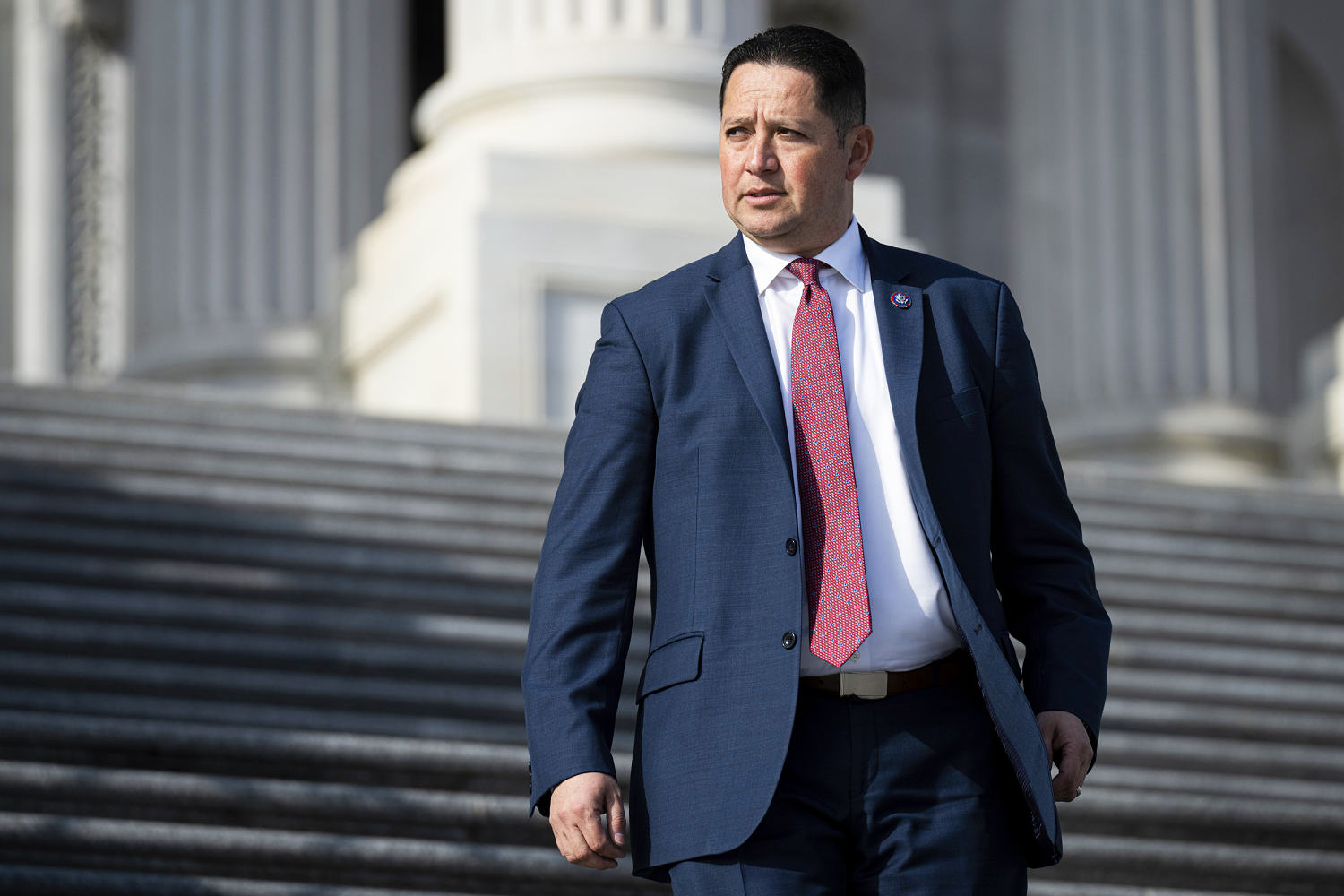
Rep. Tony Gonzales Announces Retirement from Congress Amid Ethics Probe Over Staffer Relationship
Rep. Tony Gonzales, R-Texas, announced on Monday that he will retire from Congress following a House Ethics Committee probe into his relationship with a former staffer who died by suicide. The announcement follows his decision last month to drop his re-election bid. Separately, R…
 reason.com
US Imposes Blockade on Strait of Hormuz Amid Tensions with Iran
President Trump has ordered a blockade of the Strait of Hormuz, with the measure coming into force as the United States blocks vessels doing business with Iran. Trump warned that Iranian fast attack ships approaching the blockade will be eliminated. TotalEnergies CEO Patrick Pouy…
 The Washington Post
Brazil's Former Intelligence Chief Alexandre Ramagem Detained by ICE in the United States
Alexandre Ramagem, Brazil's former intelligence agency chief and congressman, was arrested by U.S. Immigration and Customs Enforcement agents in Orlando. He had fled Brazil after his conviction for involvement in an alleged coup attempt with former President Jair Bolsonaro. The d…