Substrate
health

Damaged DNA Travels Between Human Cells via Nanotubes

Researchers observed DNA fragments moving from one human cell to another through tunneling nanotubes after genome damage. The study, published May 19 in Cell, shows the transferred DNA can carry functional genes.

Science News
1 source·May 19, 3:12 PM(10 days ago)·1m read
Damaged DNA Travels Between Human Cells via NanotubesScience News
Audio version
Tap play to generate a narrated version.

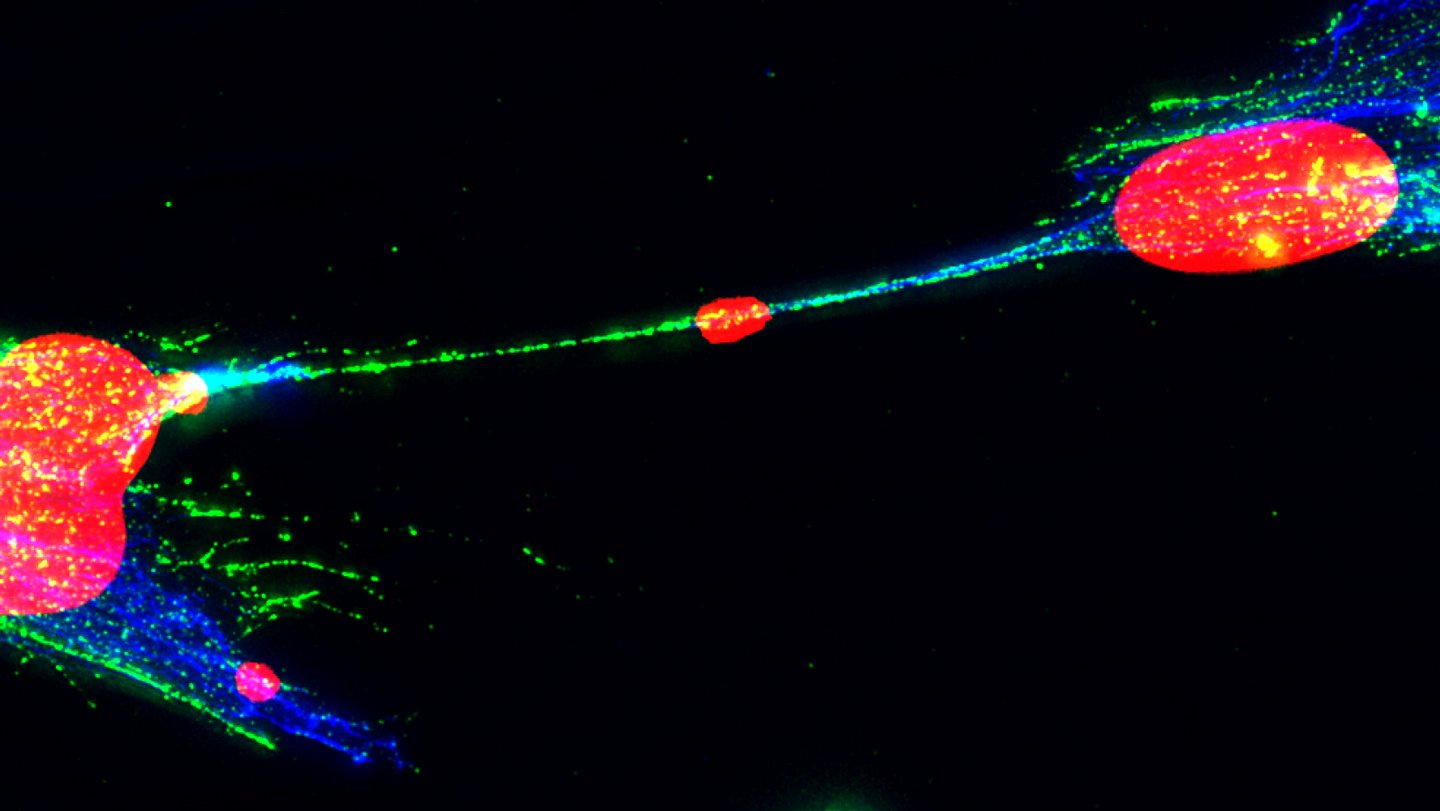
Damaged DNA can move from one human cell to another through thin tube-like structures called tunneling nanotubes, according to a study published May 19 in Cell. Researchers at the Children’s Medical Center Research Institute at UT Southwestern in Dallas mixed two types of cells in the lab and induced genome damage.

They observed DNA fragments traveling along the nanotubes and reaching neighboring cells. The transferred DNA carried functional traits. In one test, an antibiotic-resistance gene from male cells moved to female cells.

Tunneling nanotubes are known structures that connect living cells and allow transport of materials such as mitochondria. Until this study, DNA had not been observed moving along these pathways. Cancer cells have previously used nanotubes to exchange mitochondria with neighboring cells.

Cancer biologist Paul Mischel of Stanford University called the findings an important and exciting discovery. Cancer cell biologist Peter Ly said the work raises questions about whether tumors could spread harmful mutations through this mechanism. Physician-scientist Christoph Gerdes of Princess Margaret Cancer Centre noted that fragments conferring chemotherapy resistance might move between cells, though it is too early to confirm this occurs.

Geneticist Buket Basmanav of the University of Bonn said the study provides strong evidence that DNA transfer occurs via nanotubes and connects earlier observations. Peter Ly stated that researchers still need to determine how often the transfer happens and whether it can be detected in different tumor types.

Key Facts

DNA transfer via nanotubes
Observed after genome damage in lab cell mixtures
Functional gene transfer
Antibiotic-resistance gene moved from male to female cells
Tunneling nanotubes
Known structures previously shown to carry mitochondria

Story Timeline

2 events
  1. May 19, 2026

    Study published in Cell showing DNA transfer via tunneling nanotubes.

    1 sourceScience News
  2. Prior to publication

    Researchers mixed cell types and induced genome damage in lab experiments.

    1 sourceScience News

Potential Impact

  1. 01

    Researchers may investigate whether DNA transfer occurs in human tumors.

  2. 02

    New experiments could test if chemotherapy-resistance genes spread between cancer cells.

Transparency Panel

Sources cross-referenced1
Confidence score75%
Synthesized bySubstrate AI
Word count244 words
PublishedMay 19, 2026, 3:12 PM
Bias signals removed3 across 2 outlets
Signal Breakdown
Loaded 2Editorializing 1

Related Stories

Zambia’s Kabwe Residents Sue Mining Company Over Lead ContaminationFrance 24
health4 hrs agoDeveloping

Zambia’s Kabwe Residents Sue Mining Company Over Lead Contamination

Children in Kabwe, Zambia, show blood lead levels above World Health Organization limits after decades of mining. An estimated 140,000 women and children have joined a class-action lawsuit against Anglo American South Africa Limited.

France 24
FR
2 sources
Ebola Outbreak in Eastern DRC Kills at Least 240 Since Early Maycitizen.co.za
health10 hrs ago

Ebola Outbreak in Eastern DRC Kills at Least 240 Since Early May

The virus has spread from Ituri province into other eastern DRC regions and Uganda. Health workers report reduced international aid and limited local resources as they attempt to contain transmission.

The Guardian
1 source
Outbreaks of hantavirus and Ebola prompt U.S. quarantine and travel measuresmanilatimes.net
health8 hrs ago

Outbreaks of hantavirus and Ebola prompt U.S. quarantine and travel measures

The U.S. government ordered quarantines after a hantavirus outbreak on a cruise ship and imposed new traveler restrictions during an Ebola outbreak in Africa. Federal agencies stated that response operations continue despite recent staffing reductions at health agencies.

Cbs News
1 source