Defense Startup Furientis Emerges From Stealth With $5 Million in Pre-Seed Funding
Furientis, a defense startup based in Los Angeles, announced $5 million in pre-seed funding led by Silent Ventures. The company develops low-cost ship-based interceptor missiles using automotive manufacturing techniques and commercial components. It aims to address U.S. military production shortfalls for missiles amid geopolitical tensions.
fortune.comDefense startup Furientis emerged from stealth with $5 million in pre-seed funding, Fortune reported exclusively. The company operates out of a former studio in Los Angeles previously used by Lenny Kravitz. Its missiles feature nose cones marked by browning from supersonic airflow reaching three times the speed of sound.
Post by @FortuneMagazine on X
Silent Ventures led the funding round. Participants included Bessemer Venture Partners, SV Angel, Vanderbilt University, Channel 39 Ventures, and founders of companies including Anduril and Armada. The company said its approach responds to U.S. military consumption of missiles that exceeds current production capacity.
According to the Center for Strategic and International Studies, the U.S. has depleted its stockpile of seven major missile types, including more than 150 THAAD interceptors. Lockheed Martin produces about 96 of those per year. Furientis noted that U.S. forces have used multi-million-dollar interceptors against drones costing as little as $5,000.
The company stated this cost mismatch, combined with limited production capacity, prompted its formation.
In the 1990s more than 50 defense prime contractors built complete weapons systems. Today five remain. For ship-borne interceptors, only one prime contractor exists. Adversaries such as China have stated they can produce thousands of anti-ship cruise missiles per week.
Furientis said current U.S. production mathematics do not support matching that output at prevailing costs. The company designs its interceptors for manufacture using automotive-style materials, assembly processes and commercial off-the-shelf components.

This replaces the specialized bespoke hardware traditionally used in such systems.
A Furientis missile is projected to cost $250,000.
That compares with $1 million to $5 million for missiles produced by established prime contractors. The company targets output of 1,000 missiles per year from each factory. Its initial facility occupies 9,000 square feet in Los Angeles. Furientis conducts four-week design cycles followed by monthly flight tests.
Traditional prime contractors often spend a year or more on computer modeling before initial hardware tests. The startup manufactures its own solid rocket motors in-house. Most prime contractors outsource that production step, which the company identified as a primary supply-chain bottleneck.
Leadership at Furientis previously worked at Virgin Galactic, where one cofounder served as deputy chief engineer and contributed to a flight that sent Richard Branson to space. That cofounder later joined Castelion, a hypersonics startup that closed a $350 million Series B in 2025.
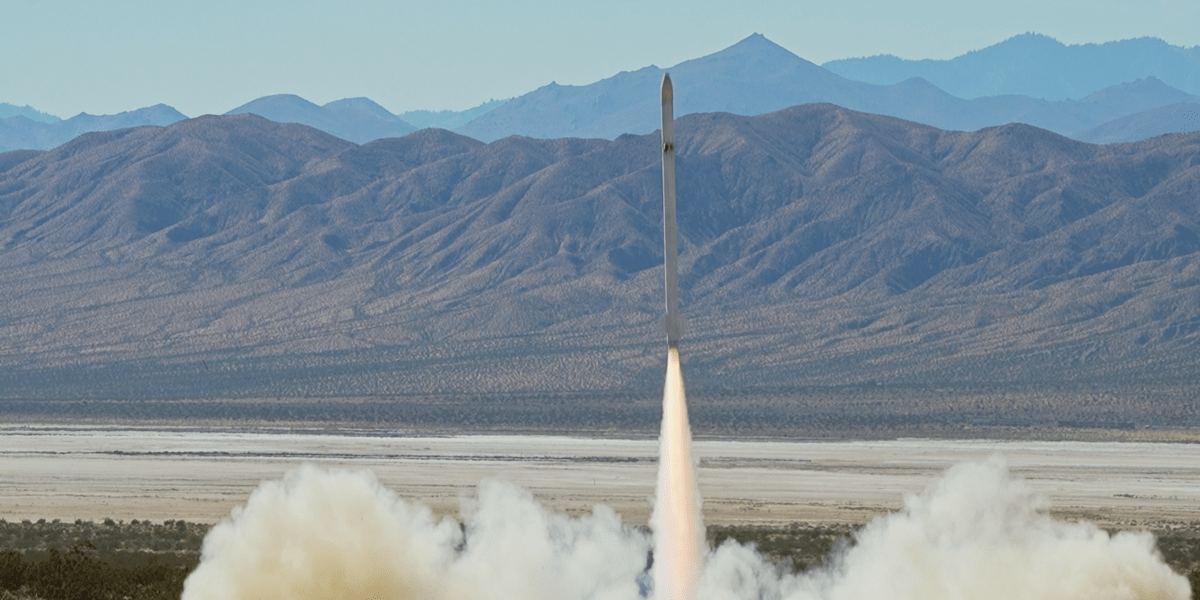
The other cofounder oversaw rocket engine testing at Virgin Orbit. The company said it plans significant product demonstrations later in 2026. It released video of a recent test of its F 1.0 missile that showed white smoke rising from the ground followed by rapid ascent.
Key Facts
Story Timeline
4 events- 2026-05-14
Furientis emerged from stealth and announced $5 million pre-seed funding.
1 source@FortuneMagazine - 2025
Castelion, where one Furientis cofounder worked, closed a $350 million Series B.
1 source@FortuneMagazine - Recent months
Furientis conducted a successful test flight of its F 1.0 missile.
1 source@FortuneMagazine - Later in 2026
Furientis plans to conduct significant product demonstrations.
1 source@FortuneMagazine
Potential Impact
- 01
Furientis may increase annual U.S. production of low-cost ship-based interceptors.
- 02
Adoption of automotive manufacturing methods could reduce costs for missile programs.
- 03
In-house solid rocket motor production may ease supply chain bottlenecks for the sector.
- 04
Monthly flight tests could accelerate development timelines compared to traditional primes.
Transparency Panel
Related Stories
The GuardianWHO Chief Visits DRC as Ebola Death Rate Reaches 30-50%
World Health Organization director-general Tedros Adhanom Ghebreyesus arrived in the Democratic Republic of the Congo to support containment of a new Ebola outbreak. The agency revised the death rate to 30-50% based on confirmed cases and recorded 10 confirmed and 223 suspected d…
westernjournal.comGreek National Charged in UK With Aiding Iran-Linked Intelligence Service
A 46-year-old Greek man living in Germany was charged under the UK National Security Act with assisting an intelligence service believed to be Iran by targeting a journalist at Iran International.
straitstimes.comJournalists in Gaza to Receive 2026 Golden Pen of Freedom Award
Three international news agencies will accept the award on behalf of their local staff still reporting from the territory. The World Association of News Publishers cited the journalists' continued coverage under extreme conditions.