ai
Divergent Technologies Develops 3D-Printed Cruise Missile Using AI-Powered Manufacturing
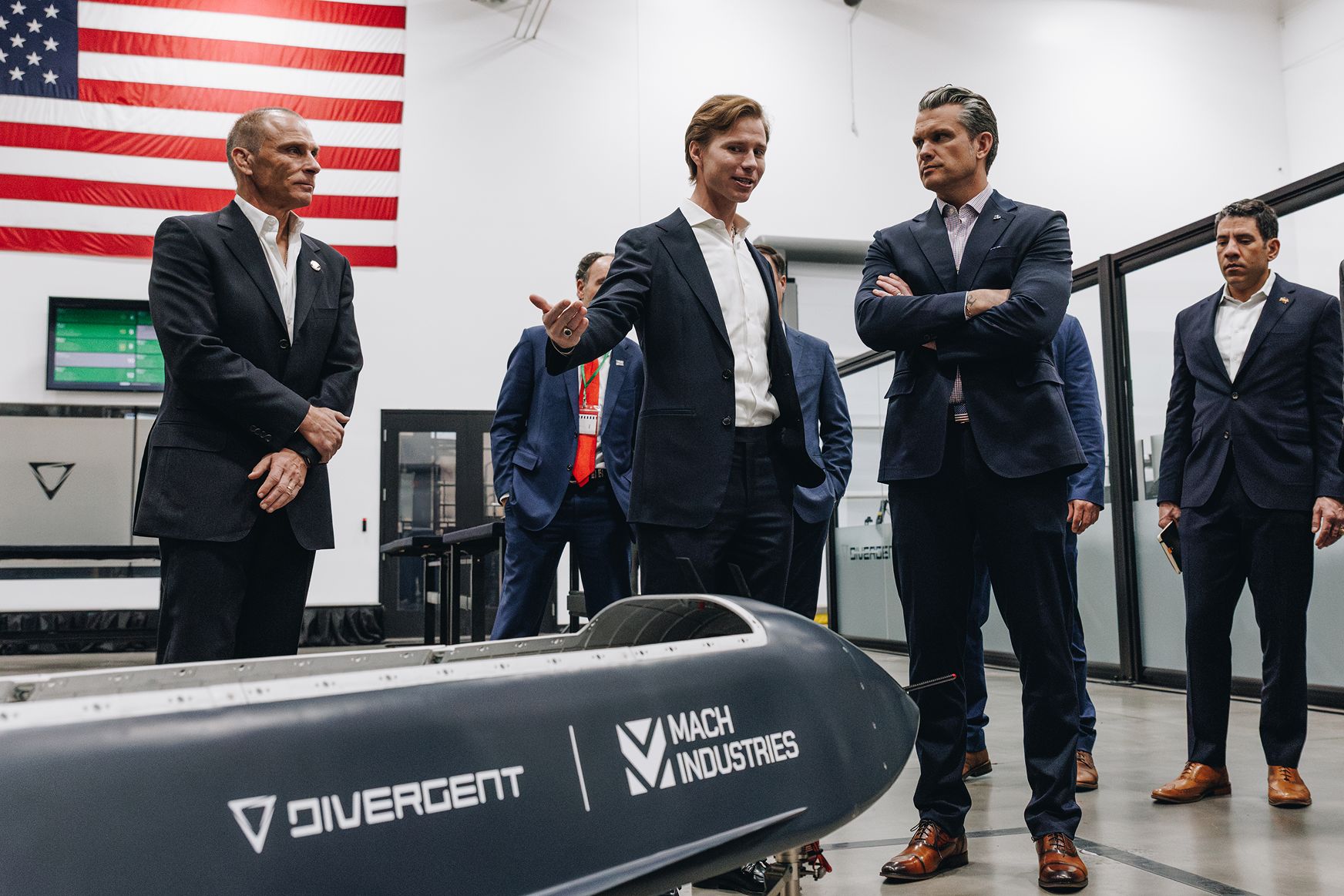
Divergent Technologies has produced what it describes as the world's first fully 3D-printed cruise missile. The company employs AI-powered additive manufacturing to construct the missile, which costs one-tenth of traditional models and takes weeks to build instead of years. This development aims to redesign aspects of weapons production.
Apr 10, 10:00 PM·1m read1 source
MA
 3dprintingindustry.com
Audio version
Tap play to generate a narrated version.
Divergent Technologies, a company specializing in advanced manufacturing, has announced the creation of a fully 3D-printed cruise missile. This marks the first such missile produced entirely through additive manufacturing processes powered by artificial intelligence. The technology integrates AI to optimize design and production efficiency.
The missile's production method differs from conventional approaches, which typically involve multiple stages and longer timelines. The 3D-printed version reduces costs compared to traditional cruise missiles. Build time is shortened compared to traditional methods, enabling faster iteration in weapons development.
manufacturing, commonly known as 3D printing, allows for the layer-by-layer construction of complex components.
Divergent Technologies applies this to defense applications, focusing on redesigning weapons systems. The company's approach combines AI algorithms with 3D printing to streamline the process from design to final assembly. This project builds on the company's prior work in aerospace and automotive sectors, where similar technologies have been used to produce lightweight structures.
In the context of defense, the missile represents an effort to adapt these methods to military hardware. The potential for broader application in weapons of war has been noted, though specifics on testing or deployment remain undisclosed.
The cost and time reductions could affect how defense contractors approach missile manufacturing.
Traditional methods often require extensive supply chains and specialized facilities, whereas 3D printing centralizes production. Stakeholders in the defense industry, including governments and manufacturers, may evaluate these advancements for integration into existing programs. No details were provided on the missile's specifications, such as range, payload, or guidance systems.